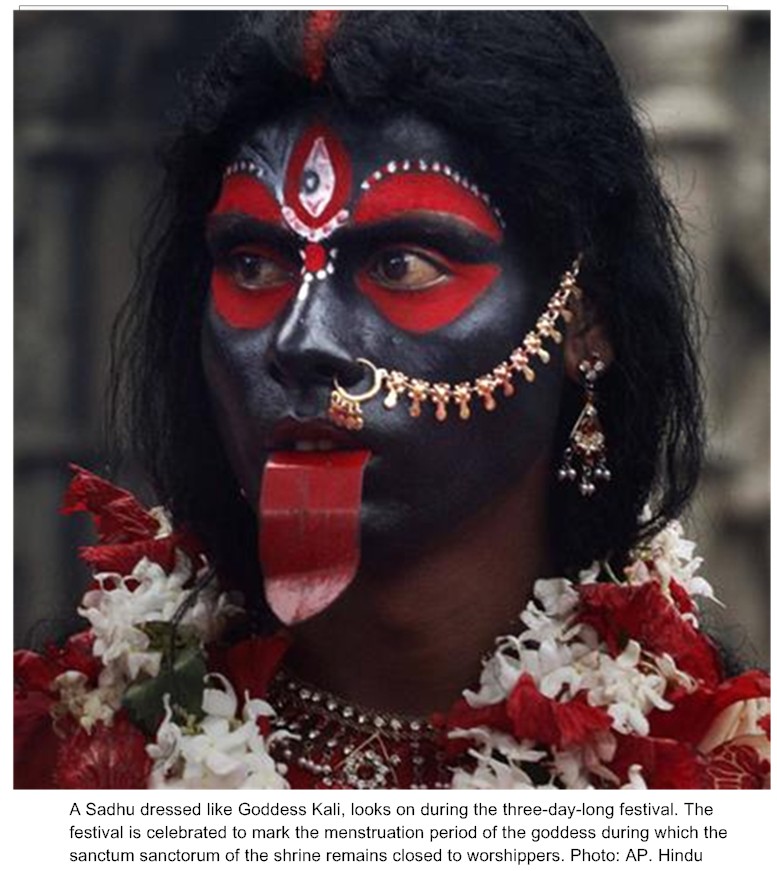
Menstruation
in ancient Hindu texts is equated with fertility. The mixture of vital fluid
(semen) of
man and the menstrual fluid of woman results in conception, according to the
Hindu lore. They are the Sita (white) Bindu (drop) of man and the Sona (red)
Bindu of woman. The concept of ovum, as separate from Sona Bindu (= Red dot =
menses), did not exist in the ancient Hindu sacred lore. Lately in an
attempt to sanitize the sacred texts, Red Copuscle in the blood earned the
moniker Sona Bindu. The White Corpuscle in the blood earned the name Sita Bindu.
This is the variant and distorted modern version not in line with sacred texts
and known only to medical profession and related disciplines with microscope on
hand. Why such distorsion? In the sacred lore, the burden of the gender of
the newborn lays squarely on the women. The aspiring parents many times and not
invariably show dissatisfaction to see a girl at birth.
In this
article, the word 'Sastra' is used in general terms to include all Sacred and
secular Hindu Texts, irrespective of their origin and time.
Bindu in its cosmic and
terrestrial aspects.---Veeraswamy Krishnaraj, M.D
Supreme Bindu
degenerates into Semen and menstrual fluid (Ovum).
Noumenal
Bindu becomes the phenomenal Semen and Menstrual Fluid (Ovum), according
to ancient Hindu thinking.
Ontic Bindu is a Circle with Void
inside--O. The Circle is Sakti, while the Void is Siva. Siva is Supreme
Brahman. Sakti is in a subtle state before it becomes active, florid and
full of life. Think of Bindu as Singularity with no dimension, from which
everything proceeds. Bindu is a point from which radiations emerge in a
centrifugal manner and into which the radiations return in a centripetal
manner. It is a point of emergence and a point of return and
convergence. It is obvious that this single point is one and many at the
same time. This is the point from which universes emerge and to which
universes return. Bindu is an aspect of Sakti and contains Supreme
Consciousness. The Yogi makes a spiritual journey from the periphery of
Yantra to the central Bindu in his quest for merger with the Universal
Consciousness.
Sri Chakra: Also
known as Sri Yantra.
Yantra is a
diagramatic chart (a restraining instrument, a chart, a machine, a
line diagram, a mechanical device) used by Yogis to visualize, meditate,
leave the physical world mentally, and proceed from the outer world to the
highest state in the spiritual center (Bindu).
Goddess
Tripurasundari
(TPS--Three-city
Beauty; one form of Sakti) the central deity (Bindu), sports three forms:
Physical (Mudra), mental (Yantra) and cognitive (Mantra). To attain
spiritual union with the deity by way of involution, one makes an inner
journey centripetally from the peripheral physical world of wakefulness to
Savikalpa Samadhi in the domain of Bindu; all
these are achieved by mental journey layer by layer from the periphery of
the Square wall of Sri Yantra, the domains of 16-petal lotus, 8-petal
lotus, outer fourteen (blue) triangles, outer ten (red) triangles, inner
ten (black) triangles, eight (green) triangles, the central (yellow)
triangle and on to (red) Bindu. As you make
this centripetal journey, you leave the physical world, the body, the
tattvas and take only your spirit and soul to Bindu.
The up
triangles in Sri Chakra
represent the male principle (Siva) and the down triangles the female
principle (Sakti). The Central Bindu is the eternal undifferentiated
Brahman and the point of concentration of all creative forces. There are
Four Major Up Triangles representing the male
principle Siva and Five Major Down Triangles
representing female principle Sakti or TPS. The dominance of the 5
female triangles over the 4 male triangles abides with the Female
Principle. The intersection of these nine triangles create 43 smaller
triangles (14 blue ∆, 10 red ∆, 10 black ∆, 8
green ∆, and 1 central yellow ∆). See the smaller diagram.
Triangle in many cultures indicates the gender
of human or Deity, based primarily on
Escutcheon.
Up triangle = Male; Down triangle = Female. If you see the pattern of
distribution of pubic hair (Escutcheon),
the female escutcheon is a Down Triangle with apex pointing down on the
Mons Veneris (Mound of Venus), while the mature male escutcheon tapers
upwards towards the navel as in Up Triangle. Interlocking triangles in
Judaism has many explanations. One such explanation is the layout of
directions by the points and the center. If you see the Hindu Mandalas or
Yantras, you will notice triangles. The up triangle represents a God while
down triangle is Goddess.
Escutcheon:
Type: Term. Pronunciation:
es-kŭtch′ŏn. Definitions: 1. Pattern of distribution of pubic hair.
By Stedman's Medical Dictionary.
Each Avarana
(enclosure) depicts one level of consciousness and or spiritual knowledge;
there are deities at each Avarana with Tripurasundari (TPS) in one of her
many forms. One has to be spiritually fit to make this journey from the
mundane world of wakefulness to the world of
Savikalpa Samadhi, when you become acutely aware of a distinction
between you and Brahman (duality).
When the Yogi goes deeper in his Samadhi, he attains Nirvikalpa Samadhi
(lack of distinction between the Yogi and the Brahman, becoming one with
One). Let me give you examples as to
how you become one with One (disappearance of duality). When you see an
apple, in the mind's eye you become the apple and forget everything else.
When you hear music you become the music. When you are in love you become
one with your love. Go to
MAHAVIDYAS for more details.
Bindu, the pure
counterpart of impure Māyāundergoes change under the stress of Cit Sakti.
Cit = Consciousness of Siva through Sakti) Siva is the agent and Sakti is
the instrument in relation to Bindu. The five Suddha Tattvas (Siva1,Sakti2,Sadasiva3,Isvara4,Sadvidya5,) are the functional aspects of Siva and the
evolutes of Bindu. God is prius (Munnavan = முன்னவன்) and creates
everything out of non-intelligent Māyā, which does not assume priority or
parity with Him. Suddha = Pure. Tattva = principle or building
block.
Nada and Bindu are
two saktis (power). Naada (NAda) is sound and Bindu is dot, or point. Nada
and Bindu are the progenitors of Tattvas, the building blocks of the
universe. (Sadasiva, Isa, Brahma, Vishnu, Rudra are collectively called
five Sivas.) Nada and Bindu are a power-pack sizzling with energy
and readiness to create. Bindu is a massive state (Ghana-avasthaa) of
Sakti. Scientists say the world came from nothing (Avyakta = Unmanifest).
When it becomes manifest, Universe unfolds. Likewise Bindu is unmanifest
and unseen; when it becomes massive and manifest, the universe of objects
and beings manifest. Massiveness could be construed as pregnancy at the
terrestrial level.
Sakti initially is
in a subtle state in Sakti Tattva, unrelenting in its desire to create and
moves to the state of active manifestation, which is one stage of Bindu (Mahabindu
or Parabindu). This noumenal Bindu lives in Satyaloka and exists in the
human body in the pericarp of the thousand-petalled Sahasrara Lotus in the
highest cerebral center, according to Woodroffe.
Supreme Consciousness divides
itself into subject and object in time and space.--Woodroffe. Causal
(kāraṇa)
Bindu Sakti divides again into effector (Kārya)
Bindu, effector Nada and effector Bija. Bindu is Siva and Bija is Sakti.
Nada is the relationship between the two. Nada is action (kinetic =
Rajasik) and Bindu is static; Nada is white and Bindu is red. There are a
lot of contextual variations in the interpretation of these terms: Nada
and Bindu.
Siva holds many titles and
portfolios: Siva Tattva, Sadasiva Tattva, Isvara Tattva, Sakti Tattva;
accordingly his title changes. Siva and Sakti are one but appear as two.
Sakti is Sakti Tattva;
Nāda is Sadasiva Tattva; Parabindu is Isvara Tattva.
For our purpose, we
confine ourselves to Sita Bindu and Sona Bindu.
Skanda Purana says that Siva-Sadasiva is of the nature of Nada (divine
sound) sitting in AkArapIthikA (Pedestal of the letter A) and Five-letter
Mantra Na-ma-si-va-ya. Parasiva and ParAsakti, ontologically
superior to Nada and Bindu, are Soundless and motionless (NiSabda) and
NiSpanda). Sabda = sound. Spanda = contraction and expansion, vibration,
motion. Nada transforms into Bindu which is Isvara Tattva, the
origin of the worlds. Bindu's abode is Satyaloka, which abides in the
pericarp of the thousand-petalled Lotus, Sahasrara Chakra in the highest
cerebral Center, according to Woodroffe. The Bindu should be
worshipped as the inseparable Siva and Sakti (like a grain of gram, which
are the two cotyledons).
Explanation. You
need three things to do anything in this world: Knowledge, Will and
Action. Siva is Knowledge, which alone by itself does not serve any
purpose. Siva is Static, just like the computer without the juice. Will
and Action are necessary to go forward. Sakti is the dynamic power of
Siva. She is Action; She is the Powerhouse. She is the Mother (அம்மை =
அம்மன்) and begets beings and universe. Siva is the Father (அப்பன்) and
the Inert. Siva is Sita Bindu; Sakti is Sona Bindu.
One sources tells
Parabindu divides into two parts; the right is Bindu, Male, Purusa or Ham
and the left is Visarga, Female, Prakrti or sah. Together Hamsah
Mantra is the union of Prakrti and Purusa and the universe is also Hamsah.
Parabindu is Siva- Sakti. Does it not remind you of Ardhanarisvara,
androgynous Siva; left half of the body is Sakti and the right half is
Siva.
Bindu in Sanskrit is Vindu
(விந்து) in Tamil meaning dot or point, drop, semen, sperm, mercury, a
flaw in the diamond, the middle portion of the forehead between the
eyebrows; circle, Sivatattva--sphere of knowledge presided over by Siva
Jnana Sakti; Pure Maya (Suddha Maaya) according to Tamil Lexicon of Madras
University. Bindu in its supreme state is the nucleus of the
universe (Singularity), from which everything proceeds. Compare it to the
nucleus of the cell, which is an universe unto itself. When the cell and
its nucleus undergo apoptosis, they degenerate and become mushy, waiting
for scavenger cells to remove them.
Likewise when the cerebral-dwelling Supreme Bindu undergoes "apoptosis or
lysis = Sanskrit Laya = लय" it becomes the
(testicular) semen or (ovarian) ovum at a lower level of existence.
Don't expect a scientist to prove or disprove such a hypothesis. Bindu as
a point and semen have creative potentialities; the former
(Bindu) is at a cosmic level; the latter at microcosmic level.
Pundits and Gurus are of the opinion that Rajas Guna (motion, passion)
makes the Bindu degenerate into sperm or ovum. The Apotheosis of (ontic)
Bindu undergoes apoptosis. (Every
cell has a lifespan; it has to die its programmed death; otherwise, the
cells accumulate and give rise to a tumor, cancer, leukemia or malignant
growth. Apoptosis is programmed cell suicide; if this happens too
efficiently, there is grave cell damage leading to neurodegenerative
diseases like
Alzheimer,
Huntington
and
Parkinson.
Normal body has a balance between dying cells and new cells. When the
cells degenerate but not renewed or removed, the debris accumulates and
compromises its function.)
Apoptosis:
1.
Programmed cell death; deletion of individual cells by fragmentation into
membrane-bound particles, which are phagocytized by other cells.
Synonym:programmed cell death.
Ūrdhvaretas:
ऊर्ध्वरेतस्
(Ūrdhva
+ retas) = (ascending + stream)
Vital fluid or semen, according to Hindu belief, exists in a subtle state
throughout the body. Sukra = White, Silver, Vital fluid, Essence, Semen.
Yogis are said to have the ability to channel the principle of the seminal
fluid up the Susumna Nadi to reach the A-Ka-Tha Triangle. The Yogi goes
with Kundalini to the Triangle, wherein she meets KAmesvara (the God or
Lord of Love, Siva) for union. The Yogi enjoys both
Bhoga and Yoga upon
reaching the Triangle in the Soma Chakra.
Bhoga = enjoyment of
worldly things. Yoga =
union of individual soul with the Universal Soul.
The Sādhaka, thinking of himself
as Śakti and the Paramātma as Puruṣa, feels himself in union (Saṅgama)
with Śiva; and enjoys with Him the bliss which is
Śṛṅgāra-rasa,
and becomes Bliss itself, or the Brahman. Śṛṅgāra is the
love sentiment or sexual passion and sexual union. Here Śṛṅgāra-rasa
is the cosmic root of that. The first of the eight or nine Rasas
(sentiments) - viz., Śṛṅgāra, Vīra (heroism),
Karuṇa (compassion), Adbhūta (wondering),
Hasya (humour),) Bhayānaka (fear),
Bībhatsa (disgust), Raudra (wrath),
to which Mammata-bhatta, author of the Kāvyaprakāśa,
adds Śānti
(peace).
What the Yogi enjoys is that supersensual bliss which manifests on the
earthly plane as material Śrīngara. --Woodroffe, Page 219-220, Serpent
Power.
All this
sexual connotation is the only
analogical way to
simplify an idea of union of individual soul with Supreme Soul with the
attendant supersensual bliss. (It is somewhat similar to the nuns
who become the brides of Jesus Christ or the church.) All this is
happening inside the head. It is all an inner experience. This union
results in the flow of Amrta (Ambrosia) that can be conserved or allowed
to trickle down to Manipura Chakra (via the upper Chakras), wherein it is
used for digestive process. They, who conserve this Ambrosial flow and
prevent its descent, enjoy physical, mental and spiritual health. This
sexual analogy is parlayed to give us an idea of the Bliss that the Yogi
enjoys uniting (Yoga) with the Universal Soul.
When sexual urge finds expression, the
circulating subtle substance gathers at the gonads and prostate and
assumes a gross form as opposed to the subtle form of its existence
throughout the body. To rise to the level of Urdhvaretas is to prevent
emission and facilitate reabsorption into the body of the stored seeds for
in the perfected one it remains subtle for ever with atrophy of the testes
and involution of phallus -- signs of Urdhvaretas. Because of the subtle
nature of pre-Sukra (pre-semen) and its pervasion throughout the chaste
body in Urdhvaretas and lack of it in the gonadal and prostatic fluid, the
Yogi smells like a lotus.
(On the other hand, ordinary mortals (men) smell
like goats for obvious reasons: Blame it on pheromones.) In perfect ones, the seminal energy rises to
become the nectar (Amrta) of Siva Sakti, according to Tantric Texts. This
diffuse radiant energy (Tejas) circulating in the body of the perfected
ones, it is said, they, when cut, bleed not blood but Tejas in the form of
semen (serous fluid).
Body odor:
is due to bacterial interaction with the sweat of Apocrine sweat glands in
the armpit and groin of adults stimulated by hormones at puberty and
thereafter. This apocrine secretion serves as the olfactory
pheromone,
a chemical by which a dog is known to hone in on the bitch a mile away.
This ascent
of conserved seminal energy is called Urdhvaretas. The
message is orgasm is for the flesh and a spent energy, and beatitude is
for the spirit and a conserved energy; between the two, beatitude is
superior and eternal. Physical union is a weak emulation of union of Siva
and Sakti or union of the individual soul with the Universal Soul. Some
Gurus recommend prolonging the sexual act without ejaculation; thus
conservation of the seed is maintained. Some of the modern pseudo-Gurus of
the East and the West have used this kind of information to build a
clientele with a promise to transform one into a marathon love-machine.
An
unproven thought: Since yogis sit in Lotus and other positions over long
periods, they compress the nerves, and blood supply to the testicles for
hours on end. Over many years of this practice, my suspicion is that the
testicles atrophy. Of course I did not have a chance to examine them. One
can avoid this problem by proper sitting by western standards. Bicyclists
sometimes develop numbness of perineum after prolonged riding and
consequent pressure on the nerves in the perineum. Some feel that the
blood supply to the testicles is compromised, resulting in low sperm
count.
By
sublimating and conserving sexual energy, it is said that the vital fluid
rises to Sahasrara, becomes Soma, the nectar of immortality and spreads
throughout the lymphatic system eventually finding its way to the
brain where it becomes Ojas and Tejas (Vigor and splendor), which are
essential for obtaining Superconsciousness.
The
credit for the recognition of ovum as a haploid gamete goes to the western
physiologists. The celebration and drinking of perceived menstrual fluid of
Goddess Kamakhya by the pilgrims to the temple goes on yearly for four days. A
Deity's life is 12 times longer than a human and because they drank the nectar
of immortality, they live for ever. A human's life extends to 100 years. Based
on this calculation, a life of one month for the human extends to one year (12
months) for the deity. What is or a life of 1 year for human is lived for 12
years by the deity. [That is why a deity is consecrated by
Kumbabishekam
(கும்பாபிஷேகம்
kumpāpiṣēkam = Consecration of the idol.)
once in 12 years.]
Naturally, humans menstruate every month, while the deity menstruates once a
year for four days (and not for 48 days). Since Kamakhya is the Goddess of
Fertility, the women, and men drink the perceived menstrual fluid to enhance
their chances of becoming parents. Kamakhya Goddess is a cleft in the rock,
wherefrom the alleged menstrual fluid seeps out. Sometimes the earth's iron
oxide colors the water red and the believers cognize this as menstruation. (She
is Mother Goddess or Mother Earth.) Think of the red bricks which have iron
oxide, making them look red. Many regard Kamakhya as the Mother Goddess of earth
for the simple reason the water laced with iron oxide runs red from the cleft.
Other times, the priests throw red powder or liquid on to the cleft, so as to
simulate menstruation. The pilgrims receive two sacraments [Prasada]: a small
piece of red cloth [Angabastra] and red liquid [angadok], which will ensure
fertility. It is worthwhile to remember that devotees get
white ash from Ganesa and Siva temples, red Kum Kum from Goddess temple,
Sandalwood paste from Gurvayurappan temple and two red sacraments from Kamakhya
temple. The cleft is appropriately covered
with a red cloth. In the Indian villages and towns and most of western countries
before the advent of feminine hygiene products, women use/used rags to soak up
the menstrual fluid. Think of Eve and Adam who adroitly covered their genitalia
with well-placed fig leaves, after she and Adam ate the forbidden fruit. If Adam
and Eve (4004 BC, when they were born) were born in India, thy would have worn
cotton clothes and not leaves, since cotton clothes were existent for more than
7000 years in India. It is always the location that counts.
Tamil Lexicon
கும்பாபிஷேகம்
Kumbabishekam:
kumbhaabhi-ṣēka. Consecration of a temple causing the deity to take up
its abode in the idol; கும்பாபிஷேகம்
Ceremony of consecration or purification in a temple. கோயில்களில்
பிரதிஷ்டைசெய்வதற்கும்.
பிரதிஷ்டை piratiṣṭai , n. < prati-ṣṭhā. 1. Establishing a deity, as in
a newly-built temple.
Menstrual Age Woman faces charges for entering temple.
Yet
We celebrate menstruating Goddess, Kamakhya.
Even religious belief, ironically enough, can
invite prosecution by the pious. Last year, the Kannada
movie actress, Jayamala, was summoned
before a Kerala court, along with astrologer P. Unnikrishna and his
assistant Reghupathy, to face
police charges that she had violated a taboo against women in the
menstruating age from entering the Sabrimala temple. May/2012
Ms.
Taylor Alison Swift on Misogyny. Note dated May 19,
2015
And in a recent interview
withMaxim –
where she tops this year’s Hot 100 list — Swift showed once again just
how far she has come, speaking candidly about what the idea means to
her. As she put it,
“Misogyny is
ingrained in people from the time they are born. So to me, feminism is
probably the most important movement that you could embrace, because
it’s just basically another word for equality.”
She continued:
“Honestly, I didn’t have an
accurate definition of feminism when I was younger. I didn’t quite see
all the ways that feminism is vital to growing up in the world we live
in. I think that when I used to say, ‘Oh, feminism’s not really on my
radar,’ it was because when I was just seen as a kid, I wasn’t as
threatening. I didn’t see myself being held back until I was a woman.
Or the double standards in headlines, the double standards in the way
stories are told, the double standards in the way things are
perceived. A man writing about his feelings from a vulnerable place is
brave; a woman writing about her feelings from a vulnerable place is
oversharing or whining.”
It is dedicated to goddess Kāmākhyā , the temple
being one of the 51 Sakti Pitas. Kāmākhyā Temple is the star temple
on Nilachal Hill (700 feet ASL) with the central deity Kāmākhyā , housing
also shrines of TPS, Mātaṅgī and Kamala with seven satellite temples
dedicated to the other seven Mahāvidyās:
Kali, Tara, Bhuvaneshwari, Bhairavi, Chinnamasta, Dhumavati, and
Bagalamukhi. Tantric and mother goddess worshippers are her staunch
devotees. The temple has a cruciform base with hemi-dome. The temple has
four connected chambers inclusive of the east-end Garbhagṛiham.
The inner sanctum, worshipped as Kāmākhyā , has no idol but is a
10-inch-deep yoni-like depression always full with water fed by a
perennial stream.
The inner sanctums of other Vidyas are also
yoni-shaped depressions in stones filled with water below the ground
level.
The Kāmākhyā temple chamber (Calanta) adjoining
the Garbhagṛiham
to the west has an opening on the north side. Calanta house a movable idol
of Kāmākhyā . To the west of Calanta is Pancharatna the rectangular
chamber with a flat roof and five domes, of which the central dome is
larger. To its west is the Nityamandapa chamber.
Nearby this temple complex is the Ashvagirantā,
wherein is a temple for Krishna who killed Narakāsuran.
The pilgrims worship Kāmākhyā goddess for
progeny, removal of impediments to marriage, success in studies...
The 10th century kings helped renovate the temple
with follow-up in 1665. The outer structure resembles the temple. Once
entrance inside takes place, it is all a cave. One must climb down 10
steps with no lights to guide you. One must use the wall as the guide. In
the subterranean Garbhagṛiham
there is one oil lamp, the light of which ceremonial worship of Kāmākhyā
takes place.
There is a small rocky mound known as Meru Form. The
water flows around the Meru along a circular fashion. The Yoni Pitam is
below the water level. The Pujari guides the hand of the votary to touch
the Pitam with the head resting on the Meru.
The sacrificed sheep, chicken... carcasses lay around
floating submerged in the water. If you were inclined to touch Yoni Pita,
you approach the assistant Pujaris. The flowing water below the Meru is
SaubhāgyaKundam. Exiting the central shrine, one can see eight kinds of Kāmeśvarī-Kāmeśvara metal statues.
This is the spot where Siva and Sati sported. When
Sati died and Vishnu dismembered the dead body, the Yoni fell here. There
were 108 places where her body parts fell; each was a
śakti
Pita. Fifty-one Sakti Pitas are identified and existing today.
Kamaakhya is an
aspect of the Hindu goddess Sati (Sakti, Parvati, the Consort of Siva). A
temple in her honour exists in the Kamrup district of Assam state, India.
The temple is one of the 52 holy Shakti Peethas related to Sati. A lot of
foreigners esp. females from Europe and America visit the temple.
According to legend,
the goddess Sati burned herself at the sacrificial fire at her father
Dakshya's abode because her father was scornful of her husband the God
Shiva. (This incident gave rise to the custom of sati in India). In a
rage, Shiva began his Dance of Death (tandava) to bring the destruction of
the Universe. The other gods, afraid of their annihilation, pleaded with
Vishnu to intervene and stop Shiva. Thus, wherever Shiva wandered while
dancing, Vishnu followed. He dare not come close to the terrible Shiva, so
he starts hacking with his sword (or Sudarshan Chakra) the corpse of
Sati. Slowly, pieces fall off until Shiva is left without a body to hold.
Seeing this, Shiva sits down to Mahatapasya (great penance). Eons later,
when his hair has grown tangled, the river Ganges emerges from his hair.
There are supposedly
52 pieces of Sati scattered across the Indian subcontinent. Her vagina is
said to have fallen on the spot where the Kamakhya temple stands today.
The idol in the
temple Kamakhya is in fact a large block of granite on which sindoor
(vermillion) is scattered, with a golden mask representing the goddess. It
is a major tourist attraction.
Aug 31, 2011:
Discussion of why segregation and isolation of women having monthly periods is
discriminatory, against women, Hindu religion and egalitarian principles.
Menstrual Taboo was/is
universal in its practice. Bible and Hindu scriptures and their protagonists
believe in the isolation of women for the duration of menstrual period. I submit
here respectfully and empathetically the practical aspects of monthly periods in
the Hindu household.
You have your Google search engine
tailored for this site.
Please enter the word(s) in the search box; it
will take you to the file with that word in this web site. Enjoy your visit
here.
Treatment of Woman as proclaimed
by Siva
Siva tells His
Divine Consort Parvati the following:
The householder should never punish his wife, but should cherish her like
a mother. If she is virtuous and devoted to her husband, he should never
forsake her even in times of greatest misfortune (39). The wise man,
whilst his own wife is living, should never with wicked intent touch
another woman, otherwise he will go to hell (40). The wise man should not,
when in a private place, live and sleep or lie down close to another man's
wife. He should avoid all improper speech and braggart boldness in her
presence (41). By riches, clothes, love, respect and pleasing words should
one's wife be pleased. The husband should never do anything displeasing to
her (42). The wise man should not send his wife to any festival, concourse
of people, pilgrimage or to another's house, except she be attended by his
son or an inmate of his own house 1(43).
O Mahesvari!
that man whose wife is both faithful and happy is surely looked upon as if
he had performed all Dharma, and is truly Thy favourite also (44).
A father
should fondle and nurture his sons (daughters) until their fourth year,
and then until their sixteenth they should be taught learning and their
duties2(45).Up to their
twentieth year they should be kept engaged in household duties, and
thenceforward, considering them as equals, he should ever show affection
towards them (46). In the same
manner a daughter should be cherished and taught
with great care, and then given away with money and jewels to a good
husband 3(47). (Now
you know why the groom demands money and jewels (dowry) from the girl's
parents.)
1Amātya—Friend, or counsellor.
2 Charity, self-abnegation,
self-control, truthfulness, beneficence, etc.
3
Vara (Bridegroom), from " vṛ = "to
adore," because the bride's father pays homage to him. Vara also means the
" Chosen One ". The girl should be married before puberty but the Sāstras
say that the girl should be kept unmarried unless a qualified husband be
secured. (Tarkalamkara).
January 10,
2013. What is prevalent today is not in line with what Siva says.
The audit (survey), conducted by the Centre for Social
Research (CSR), has also revealed that people are quite open about their
preference for boys and justified it by saying that a son is essential for
maintenance and retention of property while daughters will have to be
married off.
“In my experience of working in Delhi and Haryana,
maintaining female chastity is cited as a major reason as a preference for
boys,” she said, apart from reasons such as payment of dowry, preserving
familial legacy and share in property.
“Among the institutional challenges is the lack of
dedicated manpower at the district level, insensitivity of the police
towards crime against women and sex selective abortion (of female fetuses)
not being a priority for the system” he said. “However, among some of the
efforts to curb this practice is during marriage registrations obtaining
an oath from newly wed couples that they will not go for sex determination
of their child.” Thehindu.com
The Great Liberation Page
212-213. Woodroffe
December 03, 2012
According to a UN report, one in every three
women in the world experiences some kind of violence in her lifetime.
In India, every 22 minutes a woman
is sexually harassed, every 58 minutes a woman is killed for dowry and
every three minutes a woman is subjected to some sort of violence. India
stands fourth in the world for the number of cases of violence against
women. A team from ASMITA Resource Centre for Women, Hyderabad,
performed the ballet to launch the One Billion Rising campaign to end
violence against women. The speakers at the function also expressed their
concern over the declining sex ratio, which is now 1000:914 in the
country. (One reason is selective abortion of the female
fetuses.--Krishnaraj)
UDAIPUR, INDIA, October 4, 2013 (Times Of India): Devasthan temples in
Rajasthan are likely to get women priests/poojaris to conduct the
rituals. This comes after the devasthan department has announced
recruitment for the posts of manager, poojari and sevagir for its
various temples in the state through written tests.
As the department's announcement did not put any restrictions on female
candidates, any woman can be appointed for the posts based on her merit
in the written examinations.
The recruitment notice comes after 24 years and it is for the first time
that a written exam procedure has been taken up. Aspirants will have to
clear a written examination of 100 marks for the appointment. While a
managerial post candidate needs to be well versed in Hindi and English,
an examinee contesting for the post of poojari require to exhibit his or
her intensive knowledge in Hindu mythology especially in hymns and
mantra chantings like Durga Saptashati, Vishnu Sahasranamam and Shiva
Mahimna Stotras among others.
A poojari is expected to have a good knowledge of the Hindu calendar or
Panchang. Apart from a good understanding of Sanskrit language, folk
customs and Vedic rituals, candidates appearing for all posts shall have
to prove their awareness on current affairs and general science.
One of the conditions listed under the eligibility criteria is that the
candidates should not have been a recipient of dowry during their
marriage. While the upper age limit for the appointment for male
candidates is 35, divorcees or separated female candidates will be free
of such limitations.
1 The
Lord spoke to Moses, 2 “Tell
the Israelites: When a woman gives birth to a boy, she will be unclean for
seven days. This is the same number of days she is
unclean for her monthly period. 3 The
boy must be circumcised when he is eight days old. 4 Then
she must stay at home for 33 days in order to be
made clean from
her bleeding. She must
not touch anything holy or go into the
holy place until the days needed to make her clean are over.5 “When
a woman gives birth to a girl, she will be
unclean as in
her monthly period. However, she will be
unclean for two
weeks. Then she must stay at home for 66 days in order to be
made clean from her bleeding.6 “When
the days needed to make her clean are over, she must bring a one-year-old lamb
for a burnt offering and a pigeon or a mourning dove as an offering for sin.
She must bring them to the priest at the entrance to the tent of meeting.
7 The
priest will offer them in the Lord's
presence to make peace with the Lord
for her. Then she will be clean from her flow of blood.“These are the instructions for the woman who gives
birth to a boy or a girl. 8 If
she cannot afford a lamb, she must use two mourning doves or two pigeons. One
will be the burnt offering and the other the offering for sin. So the priest
will make peace with the Lord
for her, and she will be clean.” Lev
12:1-8
Chapter 15
Bodily Discharges From Men
1 The
Lord spoke to Moses and Aaron,
2 “Tell
the Israelites:
If a man has a discharge from his penis, his discharge
is unclean. 3 He
is unclean because of the discharge from his penis. Whether it is chronic or
not makes no difference; he is still unclean.4 “The
man who has a discharge makes everything he lies on or sits on unclean.
5 Those
who touch his bed must wash their clothes and their bodies. They will be
unclean until evening. 6 Those
who sit on anything he sat on must wash their clothes and their bodies. They
will be unclean until evening. 7 Those
who touch a man who has a discharge must wash their clothes and their
bodies. They will be unclean until evening. 8 If
a man who has a discharge spits on anyone who is clean, the person he spits
on must wash his clothes and his body. He will be unclean until evening.
9 When
a man who has a discharge sits on a saddle, it becomes unclean. 10 Those
who carry such things must wash their clothes and their bodies. They will be
unclean until evening. 11 If
a man who has a discharge touches anyone without first rinsing his hands,
the person he touched must wash his clothes and his body. He will be unclean
until evening. 12 When
a man who has a discharge touches pottery, it must be broken, and any wooden
bucket he touches must be rinsed.13 “When
a man's discharge stops, he must wait seven days to be cleansed. He must
wash his clothes and his body in fresh water. Then he will be clean. 14 On
the eighth day he must take two mourning doves or two pigeons and come into
the Lord's presence at the
entrance to the tent of meeting. He will give these birds to the priest.
15 The
priest will sacrifice one as an offering for sin and the other as a burnt
offering. So in the Lord's
presence, the priest will make peace with the
Lord for the man who had a
discharge.16 “If
a man has an emission of semen, he must bathe his whole body. He will be
unclean until evening. 17 Any
clothes or any leather with semen on it must be washed. It will be unclean
until evening.18 “When
a man has sexual intercourse with a woman and has an emission of semen, they
must wash themselves. They will be unclean until evening.
Bodily Discharges From Women
19 “When
a woman has her monthly period, she will be unclean for seven days.
Those who touch her will be unclean until evening. 20 Everything
she lies on or sits on during her period will be unclean. 21 Those
who touch her bed must wash their clothes and their bodies. They will be
unclean until evening. 22 Those
who touch anything she sits on must wash their clothes and their bodies.
They will be unclean until evening. 23 If
her blood touches anything on the bed or anything she sits on, it will be
unclean until evening. 24If
a man has sexual intercourse with her while she has her period, he will be
unclean for seven days. Any bed he
lies on will become unclean.25 “If
a woman has a discharge of blood for many days other than her monthly
period, she is unclean.
If her period lasts longer than usual, she will be
unclean as long as she has a discharge. It is like her period.
26 As
long as she has a discharge, any bed she lies on or anything she sits on is
unclean. It is like her period. 27 Those
who touch these things are unclean and must wash their clothes and their
bodies. They will be unclean until evening.28 “When
her discharge stops, she must wait seven days. After that, she will be
clean. 29 On
the eighth day she must take two mourning doves or two pigeons and bring
them to the priest at the entrance to the tent of meeting. 30 The
priest will offer one as an offering for sin and the other as a burnt
offering. So in the Lord's
presence the priest will make peace with the
Lord for the woman who had an
unclean discharge.31 “You
must separate the Israelites from anything that keeps them from being
presentable to me. Otherwise, they will die because they make my tent, which
is among them, unclean.32 “These
are the instructions for any man who has a discharge or an emission of semen
that makes him unclean, 33 for
any woman who has her period, for any man or woman who has a discharge, or
for any man who has sexual intercourse with a woman when she is unclean.”
Lev 15:1-33
The view from the West on priests from Vedic
period: ref: Harpers dictionary of Hinduism
In Rg Vedic period, a Brahmana did not claim
any superiority over others. During early Vedic period, anyone in
the Aryan
tribe could become a priest by showing competence. The
introduction of class came about with the social changes, when Saṁhitās,
Brāhmaṇas and Sūtras were composed. The priests of that period possessing
knowledge of the sacred compositions claimed the dominant positions over
other members of the tribe. They took on the privileged positions in the
performance of sacrifices, which was once shared with the Kṣatriyas.
The Brahmanas
extracted guarantees from the ruling Ksatriyas, the title of gods on earth
and claimed direct lineage from Rishis. (This is when the
Gotra system started. More later.) The ruling class upon demand from the
priests granted the priests the right to honor, gifts (dakṣiṇā), freedom
from oppression (ajyeyatā =
state of anything which is not to be hurt or overpowered)
and death penalty (avadhyatā) when they are found guilty of capital crimes.
The
Aryan tribe:
Population genetics of Indians
In a 2009 study of
132 individuals, 560,000
single-nucleotide polymorphisms in 25 different Indian groups were
analyzed, providing strong evidence in support of the notion that
modern Indians (both
Indo-Aryan and Dravidian groups) are a
hybrid population
descending from two pre-historic, genetically divergent populations[citation
needed], one of which, referred to as the 'Ancestral
North Indians', 40,000 years ago and the other, called the 'Ancestral
South Indians', 60,000 years ago. The intermingling of ANI's and
ASI's happened in the same period as the ANI's first appeared, 40,000
years ago.[18]
The study also holds, that the caste system grew out of tribal-like
organizations of the Indian society. In another study of 2009
conducted among 10 Asian countries, Dravidian peoples showed
similarities with north Indians as well as peoples of
Malaysia,
Singapore and
China.[19]Dravidian grammatical impact on the structure and syntax of
Indo-Aryan languages is considered far greater than the Indo-Aryan
grammatical impact on Dravidian. Some linguists explain this anomaly
by arguing that Middle Indo-Aryan and New Indo-Aryan were built on a
Dravidian
substratum.[20]http://en.wikipedia.org/wiki/Dravidian_peoples
They also received the exclusive
privilege to drink Soma and eat the remains (Uchiṣta) of the sacrifice.
All others were excluded from consuming Soma and Uchiṣta, because the rest
were not holy enough to partake sacrificial sacraments (Prasada). The
priest's wife and cow were declared sacred. (The wandering of the cows on
the streets of India is the reminder of that period.) The learned priest
became the priest of the king, the adviser, and even the prime minister.
I always get a
kick, whenever I touch on the subject of Soma, though I am a
teetotalist. Soma (सोम = சோமரசம்), the most
celebrated drink in Vedic India next only to Amrta (அமிர்தம் =
अमृत = Ambrosia = nectar of eternal life), is
the centerpiece of the happy hour of the divine nature with a
sacrificial element to make it acceptable. The Vedic Brahmanas and the
gods get together to revel in libation of this mysterious elixir. Soma
is so great it is personified as the Moon God. Haoma (Soma)
of Avasta of Zoroastrian texts gives 'wisdom,
courage, inspiration, exhilaration and immortality.' Who would
not want to imbibe such an elixir? The common folks - us 'the vulgar
people'- were denied the right to imbibe Soma. Soma gave such a kick
that the moon god married 27 daughters of Daksa (Naksatras = Lunar
Asterisms). One more was added later as the 28th. Take alcohol:
the more one drinks, the less one performs. Take Soma: the more one
imbibes, more vibes one gets.
Soma is
so potent it is usually mixed with 'water, milk, butter or barley.'
They are like the mixers that we use with the liquors to make
highballs. Before you know it, the imbiber is levitated to the realm
of inebriation and hallucination, according to puerile pundits of
Puritanism. The Hindu Saints of today strongly and vociferously object
to 'the facinorous' it is mind-altering. Hold your horses, your
Highnesses on either side of the aisle. Neither the Puritan Pundits
nor the Sanatana Dharma Saints ever drank this stuff. How would they
know one way or another?
Indra
walked down to his cellar, grabbed a vintage bottle, popped it open,
drank straight from it without adding the mixture to it and emptied
the bottle into his belly turning it upside down. Ref: Satapata
Brahmana. For the next 24 hours, he had bad bouts of nausea. Lucky for
him, it could have been worse; he did not suffer from Soma-induced
Coma.
Rg Veda
states that the Soma was mountain-born, brought down by an eagle and
thus regarded as a drink of celestial origin. No one knows the
taxonomy of the plant. The juice extracted from the plant looks yellow
and can give nausea, when drunk without dilution.
Soma is
derived from Soma plant- it doesn't say much. The plant (Haoma)
is 'crushed and killed' between stones (Zoroastrian). Just remember
sacrifice involves killing. While killing the plant, a great respect
is shown to the plant. The native Indians in the USA showed great
respect to the animal they killed to eat. You have eaten an apple. You
core the apple, by plunging the corer into the heart of an apple. Is
it not cruel? Have you shown respect and sympathy to the apple? Do you
show mercy, when you extract juice from the apple or grapes? Such is
the consideration of a true Hindu or a true human being of all
religions?
A
day-to-day act becomes an act of violence and evil for which atonement
exists. How could anyone plunge a corer right into the heart of the
apple and cut such a beautiful creation of nature? That is why all
work is evil. Take a practicing Jain in the extreme. When he falls in
the river, his religion dictates, he should not flail his arms and
legs to reach the riverbank but let the currents take him there. It
makes sense; the more he flails, the more oxygen he uses for the
muscles; sooner he gets tired and is prone to drowning. The teaching
is that flailing causes violence to inanimate water particles.
What is the remedy or atonement for cutting an apple and eating it?
This belongs to obligate or necessary evil to sustain life; atonement
is VaiccuvatEvam (வைச்சுவதேவம்),
which entails making an offering to Visvadeva (விசுவதேவர்)
before taking the main meal of the day. Visuvadevar (Visvedeva =
विश्वेदेवाः = all-gods) is a deified Aggregate of all
gods, known, unknown, and yet to be known. Puranas recommend eating of
grains older than three years, so (according to Puranas) the old seeds
are not capable of sprouting. In olden days, the sages ate only fallen
fruits.
Here is a Christian sentiment:
Bless, O Lord, this
food for thy use, and make us ever mindful of the wants and needs of
others. Amen. Contributed by Ed Bailey <bailey@hagar.ph.utexas.edu>
This food is for
thy use. = A Hindu concept finds resonance in Christian tradition.
Hinduism states
that we all eat for the God in us and not to sustain our lives. We
share that One GOD amongst us.
Sautra
refers to Indra, the chief of gods and also Sura,
wine or god. The sacrifice is offered to Indra, Ashvins, Sarasvati….
It is a purification ceremony for man and god as deemed by the Greeks
and Indo-Aryans. Sacrifice of a
castrated bull or draught mare guarantees prosperity, progeny,
annihilation of the donor's foes, realization of all desires and
attainment of heaven. Do they kill bullocks nowadays as a ticket to
heaven? This sacrifice wipes off the sin of excess consumption of Soma
by Indra and the priest. Indra stole Soma from
Tvastr (think of
hijacking of a truck-load of liquor (gods are like humans when it
comes to stealing and the rest. In Hinduism gods are dime a dozen. Man
can become god by virtuous living. There is ONE GOD above all gods.) This
resulted in violent dismemberment of his limbs; they were restored by
Indra, when Asvins and Sarasvati performed Sautramani
sacrifice. It appears there are surgeons in heaven, who
specialize in reattaching limbs to their original condition. This
sacrifice has similarities with Abraham’s sacrifice. A prominent
Indian saint says that Sautramani
sacrifice is offered to appeal to the lower forces of deities so that
the sacrifices bring benefits to the sacrificer. What many cannot accept is that an animal has to
die to be food, and bring prosperity to man or restoration of body
parts to god. (Think of this: Man artificially inseminates the cows;
many calves are born; man claims he gave life where there would not
have been life; the life he gave is the life snuffed out by killing of
the animal for food; the cycle goes on; man milks the cows as long as
they lactate plenteously; when their life of lactation is coming to a
close, man kills the cow and eats it; man takes the hide to make
useful products; man takes the rest of the animal, grinds it up and
feeds it to other cows and other animals; that is how the cows got the
mad cow disease; man eats the flesh of the mad cow and suffered from
variant Creutzfeldt-Jakob
disease.There
is no free lunch here; there is always a payback--this is what Hindus
call Karma.) Whole Foods Market
has started selling meat from
well-treated and compassionately slaughtered animals (the cow says:
"killing me softly"). That is progress in the right direction.
With such a position of
honor, the Brahmana is regarded the essence (Tattva) of the sacrifice. No
one ever thought of provoking him into anger because his anger is more
dangerous than the venomous snake or a terrible weapon.
(Comment:
It appears that the Vedic priests were after all human with human attributes
and frailty.
The claim they are gods on earth is defeated by these pompous
claims not backed by good attributes: That they are dangerous and venomous
like snakes does not speak well of them. Here are the attributes of God
Vishnu, God of gods:
Bhagavadgita
18.42 says: Tranquillity, self-control, austerity, purity, patience,
honesty, knowledge, wisdom, and belief in God are the duty of the Brāhmana
born of his own nature.
End of Comment.)
The Brahmanas had
obligations to commit to memory and transmit the Samhitās to others. They
helped to sanskritize Vedic dialects and provided the medium for the
post-vedic sacred and secular literature.
The true Brahmana was of a
high standard of morals. He was kind, gentle, and exemplary to all. He
had the privilege to perform sacrifices. His living in luxury was taken care
of by the king and dakṣiṇa (gifts and fees). All priests were not equal.
As time passed along, the field became crowded and the lesser Brahmanas took
other secular professions, which brought them down a notch to the status of
brahmins, thus distinguishing them from the priestly Brahmanas.
Along the way, the priests
lost their power and prestige and became the custodians and priests of the
temples and officiating priests of domestic functions; still they are in
high positions of power and prestige. (Comment:
They entered other professions and distinguished themselves to this day.)
Vedic Times did not have any
priestess, though some wives were deputed to represent their husbands in the
performance of sacrifices. According to Hillebrandt,
the gods
seemed to be averse to women being priests. (Comment:
This must be one of those injunctions conceived by men but attributed to God
to silence the critics because of injunctions coming from god himself and
perceived pollution from menses. The women by theses standards must be
pollution-free on other days and so should be able to perform as
priestesses. It is not so.)
(Comment:
To be truthful, I am averse to the idea of men priests touch, bathe, rub,
wash, dry, decorate, man-handle the body parts and robe and disrobe the
statues or icons of goddesses. What are they thinking at that moment in
time? They are men, right. They are married, right. They have children,
right. We are used to the idea of women examining and do body search of
female passengers behind the screen in the airport. Why should we not use a
priestess do the same when it comes to undressing and dressing the statue of
goddesses. Are we saying, "It is an inanimate statue and thus cannot make
any objection." If that is so, why do we perform Avahana, Visarjana,
Pranapratistha--प्राणप्रतिष्ठा
Consecration of the idol, bringing the living deity
into the idol, invocation of breath, life, and power into the statue.)
End of Comment.
The monks committed murders
with impunity. The worst punishment a Vedic Brahmana received for murder was
loss of his top knot, confiscation of property, and banishment.
Kauṭilya, the purohita to
Emperor Chandragupta was an excellent statesman and an author on statecraft.
Manu says that a Vedic
Brahmana failing in his sacred duty would be born Ulkāmukha (a
fire-mouthed demon assumed by the departed spirit of a Brahmana who eats
vomited food.
Definition of Brāhmana: One possessed of Brahman.
(Today's priests are trained
and qualified to perform temple and domestic rituals and rites.
I have never seen or heard of one
errant priest (see the exception below). They are apolitical and not
involved in any controversies. They are good people trained well in what
they do. But there are many errant, cunning and licentious pseudo-Yogis;
they are dime a dozen. There are very learned Brahmins and also many learned
non-Brahmins, well-versed in sacred texts. You have read about Pseudo-Yogis
engaging in sexual relations with the devotees and caught on video during
their dalliance. Some Indian journalists, always suspicious of god-men and
politicians, plant cameras in strategic locations to catch the god-man
enjoying venereal delights and spiritual ;-) levitations, though they speak
of brahmacharya (celibacy) in public.
The
exception. Five-year-old girl raped; Hindu temple priest
arrested. December 3, 2012
A five-year-old girl was
allegedly raped by a temple priest in Mangolpuri here two days ago.
According to the police,
the victim had gone to a temple close to her house. The priest took
her inside the temple on the pretext of giving prasad
(Sacrament) and allegedly raped her. The accused also warned her
against telling anyone about the act.
The girl, however, returned
home and told her parents about the incident.
(CNN) Mon December 3,
2012-- Pushpa Basnet, a Nepalese woman who supports children so they
don't have to live behind bars with their incarcerated parents, was
named the 2012 CNN Hero of the Year on Sunday night.
Nepal is one of the poorest countries, and space is very limited in
the few group homes affiliated with the government. So when a parent
is incarcerated and no other guardian can
be found, children have little choice but to live in prison as
well.
Basnet, 29, is determined to give these children another option.
She
started a home in Kathmandu where children can receive education,
food,
medical care and a chance to live a more normal life. She also
runs a day care program for children who are too young to be separated
from their parent.
February
19, 2013. Madam Chief
Minister Jayalalitha of Tamil Nadu State Govt. opens fair price
restaurants under trained management by illiterate women in the City of
Chennai.
One of the restaurants will be inaugurated at Santhome by the Chief
Minister. Women belonging to self-help groups have been given the
responsibility of managing them.
Training for women has been
completed and the trial run was carried out on Monday.
Councillors of some of the localities had a taste of the food. Each of
the 15 zones of the Corporation will have one budget restaurant in the
first phase.
Women belonging to self-help groups have been selected from all the 15
zones through the Corporation for Development of Women. The women, most
of them illiterate, have been trained to manage, cook and clean the
canteens. In 200 canteens to be opened by March 31, over 2,400 women
from various parts of the city are expected to
find work. thehindu.com
December 20, 2012.
Violence against Woman
Nilanjana S.
Roy
When I think of that
young girl, fighting for her life after sustaining severe injuries
when six men in Delhi raped her and assaulted her male friend, I also
want justice.
Like so many other men and women in Delhi, my friends and I kept a
quiet, helpless vigil on Tuesday night for the young 23-year-old woman
in Safdarjung hospital. All day long, on TV, in private conversations,
on social media, the demand for justice was voiced, with rising anger
and with grief. Over the last few years, the anger over the way we
treat our women in India — killed before birth, starved and neglected
as babies, denied education, respect, safety, freedom, brought up to
be bartered into marriage, beaten, raped, burned — has been
escalating, becoming more open. Sexual violence, the safety of women
on the streets and in their homes, a media focus on one horrifying
gang-rape after another: all of these have become mainstream news, at
least in urban India.--(Nilanjana S. Roy is a
New Delhi-based author)
January 6, 2013. “All
these rapists are from Bihar," he said addressing a rally in Mumbai.
Training his guns at people from Bihar again, Maharashtra Navnirman
Sena chief Raj Thackeray blamed them for rising incidents of rapes in
the country. http://ibnlive.in.com
One cannot indict a
race, a country, a province, a state, a religion...for evil
acts.--Krishnaraj
The
five accused, Ram Singh, Mukesh,
Pawan
Gupta, Vinay
Sharma and AkshayThakur
and a Juvenile. December 16, 2012
Comment by Veeraswamy Krishnaraj. The 23-year old Physiotherapy
student died of cerebral edema
on December
29, 2012 following her injuries sustained
from rape caused by six men.
Tantrics divided people into Pasu, Vira and Divya (animal-man,
man-man, divine man). These six men are animals in human form,
capable of and charged with doing harm to fellow human beings.
According to Kundalini Chakras, these men's body, mind, speech,
and soul abide in the pelvic and abdominal Chakras: Muladhara,
Svadhisthana, and Manipura Chakras, which are more in line with
animal behavior. On the evolutionary scale, there are mineral-man,
vegetable-man, animal-man, man-man and god-man. These six men are
in the third stage of evolution.
Evolution of man, as found in Sacred Texts.
Seven levels*:
In Kundalini Yoga, the Yogi ascends from Muladhara Chakra through
Svadhisthana, Manipura, Anahata, Visuddhi, and Ajna Chakras to
reach Sahasrara plane. The moral qualities (Vrtti) in lower two
chakras are not desirable by any standards. Anahata Center shows a
mix of lower and higher qualities, a transitional zone from animal
to human dimension, as the jiva takes interest in higher
principles. From Visuddhi to Sahasrara plane, man makes a
transition from human to Yogi to absorption into Higher
Consciousness. Further evolution of the soul takes the Yogi to
higher circles (Mandalas). Go to
Kundalini Power for more details.
Tamil Texts categorize living beings according to their instincts,
listed below.
1. The anal man = Bliss in deglutition
and defecation = insects ---1. survival instinct. Tamas =darkness of
soul. --Muladhara Chakra
2. The genital man = Bliss in procreation
= rabbits ---1+ propagation; venereal delights. Tamas = darkness of
soul.--Svadhisthana Chakra
3. The navel man = Bliss in herd
mentality = elephants, goats, sheep---1+2+ social organization and
herd mentality. Rajas = motion and passion in the soul. --Manipura
Chakra.
4. The heart man = Bliss in wealth,
education, social climbing = man-man---1+2+3+social climbing. Several
degrees of separation from animal. Traces of Sattva = virtue,
goodness. --Anahata Chakra
4. The throat man = Bliss in awakening of
spiritual wisdom = universal man--tries to transcend man-man. mostly
Sattvic.-- Visuddha Chakra.
5. The glabella man = Bliss in spiritual
life = universal man; Yogi -- sees equality of all beings:
oneness in insect, elephant, man. Man of Sattva. (Oneness means
recognition of the existence of God or Supreme Soul in all beings.)
Ajna Chakra.
6. The god-man = Bliss in oneness with
his maker (god)--Yogi--sees oneness with God and His universe. Man of
spiritual knowledge. --Ajna Chakra
7. Rishi, Muni = the Seer of Truth ---Buddha,
Jesus Christ, Ramakrishna Paramahamsa, Ramana Maharishi. The Spirit in
human form. --Sahasrara Chakra
The Pakistani teen activist who was shot by the Taliban is now in
“critical” condition, her family said on Thursday. On Wednesday,
doctors had said that 14-year-old
Malala Yousufzai’s
condition was “satisfactory,” but she is suffering from severe edema
and doctors now plan to move her from the military hospital in
Peshawar to one in Rawalpindi. Her uncle said that Yousufzai had not
been conscious since she had surgery to remove the bullet over 24
hours ago, adding that the family is “very worried.” After claiming
responsibility for the shooting, the Taliban warned, “If she survives
this time, she won’t next time. We will certainly kill her.”
November 09, 2012.“Malala
continues to make satisfactory progress at the Queen Elizabeth
Hospital Birmingham. The medical team supervising her care described
her condition as comfortable and stable,” the hospital said in a
statement on Thursday.
January 4, 2012: Malala Yousufzai says
goodbye as she is discharged from the hospital to continue her
rehabilitation at her family's temporary home in the area, Friday,
Jan. 4. The teenage Pakistani girl shot in the head by the Taliban for
promoting girls' education has been released from the hospital after
impressing doctors with her strength. Queen Elizabeth Hospital
Birmingham/AP
Feb 3,
2013. Malala Yousafzai has undergone surgery to
repair her skull which was badly damaged when the teenaged
Pakistani schoolgirl was shot in the head by a militant last October.
Doctors treating her at Birmingham’s Queen Elizabeth
Hospital said they were "very pleased" with the operation which
involved fitting a titanium plate into the missing part of her skull.
During the five-hour procedure on Saturday a small
electronic device was also implanted into her left ear to help her
regain hearing which she lost after the attack.
A spokesperson said Malala was recovering well. She
was awake and talking to doctors and her family members.
Dr Dave Rosser, medical director of the hospital, said
her recovery was a "a testament to her strength and desire to get
better".---http://www.thehindu.com
A member of India’s Congress was stripped and beaten by a crowd of
women in Assam on Thursday after he was arrested for allegedly raping
a woman the night before. A group of local women surrounded Bikram
Singh Brahma, a member of the Congress Party in Assam, ripped off his
shirt, smacked him in the face and stomach, and then were joined by
men who continued to hit him. Brahma is accused of raping a woman
while staying at her family’s house. Meanwhile in Delhi,
prosecutors said they will seek the death penalty for the rape and
murder of a 23-year-old student, which has sparked protests throughout
the country. Cheat Sheet
A Republican's Ideas on Rape
"Rape, upon commission, is
intended by God." --Richard Mourdock.
Indiana
Senate candidate Richard Mourdock said in a live television
audience that when a woman becomes pregnant during a rape, "that's
something God intended."
"I struggled with it myself for a long time, but I came to realize
that life is that gift from God. And, I think, even when life begins
in that horrible situation of rape, that it is something that God
intended to happen," Mourdock said.
A case of Misogyny in Ancient Hindu Texts.
In Rg Veda, there occurs a conversation between the sage Agastya
and his wife Lopamudra. Agastya says to his wife, "You entice me. I
cannot hold back my Turgid Reed (Phallus), which overwhelms and
envelopes me from all sides. Foolish woman suck the wise man (of his
seeds) dry (during vaginal sex)."
It is not the emitting man at fault but the seed-sucking foolish
woman, as it is the case in all civilizations.
---------------------------------------------------------------------------------------------------------------------------------- "In legitimate rape, the
female body has ways to try to shut that whole thing down"--Wm Toad
Akin
U.S. Representative William Todd Akin
Controversy Aug 19, 2012.
Perceptions
If Todd
Akin's blatant callousness doesn't become an example, we will let it
slide and before long, this kind of stupidity will become the accepted
norm. He took his ego on camera and consciously delivered some of the
most offensive statements ever made. We might even thank him for this
because we needed that final
wake-up call to let us know how truly misogynistic the Republicans
are. Wake up women! Make a noise! Rape is rape in mind and in body!http://venusblogs.com/
November 8, 2012.
No blink of light in Akin's eyes after election loss.
Sen. Claire McCaskill
has won re-election in Missouri, holding off Rep. Todd Akin who came
under fire for saying women had ways of preventing pregnancies in the
case of "legitimate rape."
In an August 19, 2012 interview aired on
St. Louis television station
KTVI-TV, Akin was asked his views on whether women who became
pregnant due to
rape
should have the option of
abortion. He replied:
Well you know, people always want to try
to make that as one of those things, well how do you, how do you slice
this particularly tough sort of ethical question. First of all, from
what I understand from doctors, that’s really rare.
If it’s a legitimate rape, the
female body has ways to try to shut that whole thing down. But let’s
assume that maybe that didn’t work or something. I think there should
be some punishment, but the punishment ought to be on the rapist and
not attacking the child.[33]
The comment was widely criticized.[34][35][36]
Related news articles cited a 1996 article in an obstetrics and
gynecology journal, which found that
5% of women who were raped
became pregnant, which equaled about 32,000 pregnancies each
year in the US alone[37]
(comparative from pregnancy studies: likelihood for
any single act of intercourse
is around 1% - 10% depending on timing, averaging around 3%[38]).
Limbaugh goes out on a limb against the use of contraception by women
and
insurance coverage .
Consumers and advertisers aren’t buying Rush Limbaugh’s apology
to Sandra Fluke, the Georgetown law
student he accused of being a “slut” and a “prostitute” for
advocating that the government mandate that health insurance
cover birth control. Seventeen brands have pulled their ads from
Limbaugh’s show, most recently
Bare Escentuals skin products and Sensa weight-loss products.
Other companies are fielding customer complaints and weighing
their options, which are complicated by complex ad-time deals
through other advertising companies. Meanwhile,
Everybody Loves Raymond actress
Patricia Heaton, who had tweeted in support of Limbaugh,
deleted her Twitter account. Cheat Sheet
March 03, 2012.
Mr. Limbaugh calls a law student a slut because she campaigned for
contraceptive coverage by insurance companies.
The tempest
began after Ms. Fluke took public her campaign for contraceptive
coverage at Georgetown, a Jesuit university in Washington, as
Republicans and Catholic Church leaders were denouncing the Obama
administration’s contraception mandate.
Mr. Limbaugh subsequently called her a “slut” and a “prostitute,”
drawing condemnation from Democrats.
On his Wednesday
(Feb 29, 2012) show, Mr. Limbaugh said: “What does that make her? It
makes her a slut, right? It makes her a prostitute.” Those remarks and
others whipped up a frenzy of denunciations, but on Thursday, Mr.
Limbaugh held his ground, declaring: “If
we’re going to pay for your contraceptives and thus pay for you to
have sex, we want something for it. We want you to post the videos
online so we can all watch.”--March 1, 2012.
Stop Rush: Pull the fuel; stop the boiling.
Seven Companies
pulled their ads from Limbaugh show
because of his Sex comments. As the ads were pulled, Limbaugh
rushed to apologize. --March 4, 2012
'About 100 advertisers have
dropped Rush Limbaugh’s radio show because of his demeaning remarks
about women.' March 18, 2012.
எரி(கிறதை) இழுத்தால் கொதி(க்கிறது) அடங்கும் = When you pull the fuel,
boiling subsides. = As
the companies pull the ads, inflammatory words soften. Money Talks,
Rush walks.
NONAPOLOGY APOLOGY
On Wednesday Feb 29, 2012, he called her a
“slut” who “wants to be paid to have sex”; on Thursday, he said she
was “having so much sex, it’s amazing she can still walk”; and on
Friday, after Senate Democrats beat back a Republican challenge to the
new policy, he said Ms. Fluke had testified that she was “having sex
so frequently that she can’t afford all the birth-control pills that
she needs.”
Limbaugh leeringly suggested that were
taxpayers to be stuck with the bill, Fluke and other “feminazis”
should give them something back: sex videos. “We want you to post the
videos online so we can all watch,” he said. Rush can play the studs, marrying again and
again until they find the perfect adoring young wife. But women
pressing for health care rights are denigrated as sluts.
Mr. Limbaugh did not directly address the
advertiser pressure in his statement Saturday, but he said, “My choice
of words was not the best, and in the attempt to be humorous, I
created a national stir. I sincerely apologize to Ms. Fluke for the
insulting word choices.”
Feb 05, 2012. Ron
Paul said it “was not very apologetic” and was probably done just to
keep advertisers on board.
February 8, 2012:
Video journalists of some
Kannada news channels, covering the proceedings from a vantage point in
the gallery, noticed ministers
Laxman
Savadi and
CC Patil
glued to a mobile handset and zoomed their cameras to focus on what they
were viewing.
A close look and
replay of
the video footage showed the duo sitting together and watching sleaze on
a mobile handset belonging to fellow minister J Krishna Palemar. All
three have now quit their ministerial positions.
(Swami Vivekananda's opinion:
Supreme tenets of Hinduism
originated from the ruling kings of different eras. The ritual
Hinduism is the product of Brahmins.
The kings freely gave away and popularized their
teachings. The Brahmins (priests) kept their rituals and their
purported meaning under wraps and practiced them for a livelihood. The
Hindu is burdened with these mindless rituals.
Take Bhagavadgita: It came
from the mouth of Krishna, a king and an incarnation of Vishnu, the
God. Take Buddha: He was a prince. He gave away all his teachings free
of charge.
The Complete Works of Swami
Vivekananda Volume 1 [ Page : 452- 453 ] THE GITA I
Sri U.Ve.Krishnan Swami is a living repository of
and a recognized Sattvic authority on Srivaishnava sacred lore. August
2011
In a reply to a question touching on the subject
of menstruation, his answer is as follows.
Ladies, during
periods,
cannot enter the kitchen orPerumal room or
what (for)
that matter any place in the house. You
can allot one room in your house for those days. Of course she can take
care of her child but you will have to provide her and the child with
everything. Fourth day she can enter the house but again cannot cook.
Fifth day she has to take bath in a pond and then can enter all the
places. Life is merrier only when we obey to the dharma sastra. It is His
merry that makes us merrier. ---Sri U.Ve.Krishnan Swamy.
Perumal room
= exclusive prayer room of Srivaishnavites. Perumal = பெருமாள் =
Person of eminence = Vishnu.
A network of waterbodies in the southern suburbs (of Chennai), including
Chitlapakkam, Sembakkam, Nanmangalam, Keelkattalai and Kadaperi lakes, are
getting polluted due to discharge of sewage and industrial effluents into
them.
Local bodies in these regions remain mute spectators, citing the fact that
these lakes do not come under their purview.
Would like to know the exact reason as to why a
lady should not enter kitchen and cook during the monthly menstrual cycle.
I strictly follow this and do not enter kitchen during these days, though
not knowing the reason. The purpose of this question is many people who do
not follow ask me for the reason (for which I cannot answer) and also they
say it is right to enter kitchen and cook. They feel there is no specific
reason for this, for which I don't agree. I am sure there must be some
valid reason.
REPLY:As I
have been writing time and again, the first reason is since the sastras
(Sacred Texts) direct us to do so. Dharma sastras (Rituals, rites,
restrictions, injunctions, rights, expiations...)are the supreme commands
of Bhagavan Himself which we cannot afford to disobey. We can concoct many
more reasons for ladies directed to abstain from household activities
during their menstrual cycle. But we need not go into all those. My
suggestion would be - kindly distance yourself from those who want to
question the sastras. Will they dare a contempt of court? This is much
much more serious contempt of Divine order.---Sri U.Ve.Krishnan
Swami
Counterpoint
The Yoga-Vāsiṣṭha (Bk. 2—Ch. 18, vv. 2-3)
says:
Api pauruṣam ̣
ādeyaṃ śāṣtraṃ ced yuktibodhakam
Anyat tvārṣaṃ api tyājyaṃ bhāvyaṃ
nyāyyaikasevinā.
Yuktiyuktam ̣upādeyam vacanam bālakād api.
Anya tṛṇam iva tyājyam apyuktaṃ
Padmajanmanā.
That is, “Even a
Śāstra of purely human authorship should be accepted if conformable to
reason. Anything else (which is unreasonable), even though it be the word
of a Ṛṣi, should be rejected by one who follows reason. The word of a
boy if reasonable should be accepted. Anything unreasonable should be
rejected as of no more count than a blade of grass, even if it be uttered
by the Lotus-born (Brahmā) Himself.” On this subject read the whole of the
14th Chapter of Book II of the Mumukṣu-Khaṇda of this work which is a
glorification of Vicāra or reasoning.
page 288, The Garland of Letters, Gayatri Mantra.
Sir John Woodroffe
The women
world over took the blame for murder they did not commit; punishment
is monthly menses. Hindu mythology. December
21, 2011
CHAPTER V. Dharmasutra of
Vasistha Translation by Patrick Olivelle, pages 264-265.
1. A woman is not independent, the males are
her masters. It has been declared in the Veda, 'A female who neither
goes naked nor is temporarily unclean is paradise.' 1
2. Now they quote also (the following
verse): 'Their fathers protect them in childhood, their husbands
protect them in youth, and their sons protect them in age;
a woman is never fit for
independence.' 2
3. The penance (to be performed) by a (wife)
for being unfaithful to her husband has been declared in the
(section on) secret penances. 3
4. For month by month the menstrual
excretion takes away her sins. 4
5. A woman
in her courses (periods) is impure during three (days and) nights.
5
6. (During
that period) she shall not apply collyrium to her eyes, nor anoint
(her body), nor bathe in water; she shall sleep on the ground; she
shall not sleep in the day-time, nor touch the fire, nor make a
rope, nor clean her teeth, nor eat meat, nor look at the planets,
nor smile, nor busy herself with (house-hold affairs), nor run; she
shall drink out of a large vessel, or out of her joined hands, or
out of a copper vessel. 6
Comment: Woman in
periods should not bathe, should not brush her teeth and should not
smile: Bad idea from personal hygiene and psychological points of
view. The message is that a hygienic wife with smiles during periods
would invite the husband to engage in consortium. In order to
prevent it, Sastras dictate she should remain dingy and dirty,
spreading gloom and doom and remaining unapproachable by exhaling
halitosis especially on to her husband who may make advances to her
during periods. Nowadays, the woman just does the opposite, so that
she does not feel alienated every month for 4 days from her husband
and children.
Comment:
Here is how a woman had the physiology of menstruation inflicted on
her. Indra the chief of gods killed a Brahmana and ran to women for
protection. Indra asked the women to take a third of the guilt of
killing a Brahmana. The women asked for something in return: We want
to enjoy freely intercourse with our husbands until the baby is born
(even during pregnancy). So be it: said Indra. The assumed
guilt of not of their own making shows up every month as
menstruation.
Menstruation-guilt involuntarily forced on them for unoffered
protection to god Indra for Brahmin killing- in turn casts
restrictions: no one can eat the food of a menstruating woman, who
shared a third of the guilt of brahmin killing which they did not
do.]
Comment: Monthly exsanguinations
of the women for four days as life-long punishment for Brahmana
murder they did not commit. In the meantime, Indra, the
self-confessed murderer was sipping soma, keeping company with his
sweet wife Indrani in heaven and presiding over the galaxy of gods.
No one is sure whether Indrani suffered the curse of monthly
bleeding.
Blame somebody else, (pass the buck, Share the
blame)
Just like with unexploded bombs, Blame is best dealt with by
passing it as quickly as possible to someone else. To blame someone,
therefore, is the right and proper action of assigning your blame to
another. That way, you can relax and get on with your golf game.
This activity of blaming is basic to hominid behaviour,
and that seems a bit wrong, which you are so quick to point out, oh
yes, aren't you? As always.
7. For it has been declared in the Veda,
'When Indra had slain (Vritra) the three-headed son of Tvashtri, he
was seized by Sin, and he considered himself to be tainted with
exceedingly great guilt. All beings cried out against him (saying to
him), 7
'O thou slayer of a learned Brâhmana! O thou
slayer of a learned Brâhmana!' He ran to the women for protection
(and said to them), 'Take upon yourselves the third part of this my
guilt (caused by) the murder of a learned Brâhmana.' They answered,
''What shall we have (for doing thy wish)?' He replied, 'Choose a
boon.' They said, 'Let us obtain offspring (if our husbands approach
us) during the proper season, at pleasure let us dwell (with our
husbands until (our children) are born.' He answered, 'So be it.'
(Then) they took upon themselves (the third part of his guilt). That
guilt of Brâhmana-murder appears every month as the menstrual flow.
Therefore let him not eat the food of a woman in her courses; (for)
such a one has put on the shape of the guilt of Brâhmana-murder.
8. (Those who recite the Veda) proclaim the
following (rule): 'Collyrium and ointment must not be accepted from
her; for that is the food of women. Therefore they feel a loathing
for her (while she is) in that (condition, saying), "She shall not
approach."' 8
9. 'Those (Brâhmanas in) whose (houses)
menstruating women sit, those who keep no sacred fire, 9
and those in whose family there is no Vedic
Scholar; all these are equal to Sûdras.'
Mowry
and Dowry
O Mowry, where is the promised Dowry?
Dowry would keep you whole, my dear
Mowry
I am not a brewery bum to be cheated
out of my dowry.
My plans for a house and a car went
awry.
Where is the promised jewelry?
We brides form an union against
this tyranny.
We out of fear are not going
to hide in a dunny.
No more is your property what you
call my fanny.
Go and complain to your granny.
Carefully you Listen Johnny.
You are an uncouth ninny.
Go work for your own penny,
You a pinchpenny.
You are your parent's sonny.
If you are a truepenny,
Don't live on dowry but earn your
own penny.
Composed by Veeraswamy Krishnaraj
February 04, 2012
According to data of the National Crime Records Bureau (NCRB), there
were 8,391 reported cases of dowry deaths in
2010. That is just under double the number of cases registered
in 1995 — 4,648 cases. Statistics tell a story, but not the whole
story. For every dowry death reported, there must
be dozens that go unreported. Of the 8,391 reported cases in 2010,
although 93.2 per cent were charge-sheeted, the conviction rate was a
miserable 33.6 per cent.
Dowry has not disappeared. It has
morphed. Seema Sirohi, in her interesting and relevant book Sita's
Curse, Stories of Dowry Victims (HarperCollins, 2003), gives this
humorous yet apt description of dowry as it has come to be today:
Dowry has become a bribe paid to a husband to keep the bride's body
and soul together. A woman is a mere conduit to a ‘good' dowry — the
definition of good being flexible and expandable. The boys are on sale
and there are few discounts in the marriage market. There is no ‘buy
one, get one free' here. It is a transaction weighted against the
woman. In fact, it is a sale where even after the price is paid,
satisfaction is not guaranteed. And ironically, the sale is never
complete with marriage — the buyer is expected to keep paying in cash
and in kind during festivals, to celebrate childbirth and to mark
ritualistic occasions. Any excuse is good enough to keep the one-way
street laden and moving with gifts.
Touchy as we
Indians are about a whole host of things, the fact that women are
still being burned for dowry in modern-day India should enrage us. Why
are we accepting of this outrage, this insult to the sensibilities of
all women? We should be burning dowry, not women.
Human Sacrifice
Hapless Dalit girl child a
victim of superstition Sun 04/29/2012
The life of the five-year-old Dalit girl was
sacrificed based on the superstitious belief that the sprinkling of
her blood at the construction site will give the proposed structure
life and enduring strength.
Rajalakshmi, daughter of poor agriculture
laborers Thotthan and Annakili of Kachakatti, was killed on new moon
day. The state of the body and the manner in which the child was
murdered had sent shockwaves among the villagers.
The CB-CID on Saturday arrested three
persons, including a Dravida Munnetra Kazhagam functionary, who
allegedly masterminded the gruesome murder of a five-year-old girl
in a hamlet near here in January 2011.
According to the police, A. Ayub Khan of
Katchakatti, the DMK functionary, sprinkled the child's blood around
a newly constructed building as part of fulfilling a vow.
On January 1, 2011, Rajalakshmi, the daughter
of Thothan alias Thothal, a casual worker in Katchakatti, a hamlet
near Vadipatti here, was found missing. According to her parents,
she was playing in the locality with friends. The following evening,
her body was found near a cattleshed.
The three youths lured women of Bihar village into taking part
in a ‘family planning' camp
In an appalling and bizarre incident, three
quacks from Bihar's Araria district carried out no less than 61
tubectomy surgeries within two hours without any decent medical
arrangement. They were nabbed by the police.
On Saturday evening, the three youths, claiming
to be associated with an NGO, lured women from the
poverty-stricken village of Kaparfora into taking part in a
“family planning” camp while promising them Rs. 600 and free
medicines.
The youths got down to business by performing
the surgeries at breakneck speed without the benefit of
anaesthesia, making the women cry out in agony. According to
some villagers, even the saline bottles used by them were
remnants from past operations.
Dowry harassment case
against man after his wife ends life January 30, 2012
Harassment by a man is alleged to be the reason for
the death of his wife, who hanged herself to death at her residence
in BTM Layout here on Saturday evening.
According to the Madivala police, Kalpana (26), a
home-maker, hanged herself to death in her first-floor residence in
Cashier's Layout some time after 5 p.m. on Saturday, when her
husband Subash Chandra (29), a software professional in a
multi-national company in Domlur, and their one-year-old daughter
Anvita had gone to a neighbourhood store. On his return at 5.45
p.m., Subash Chandra found his wife dead.
Though the police registered an “Unnatural Death
Record” case then, a dowry harassment case was filed against Subash
Chandra following a statement given by Kalpana's father, Aulla
Yadgiri, who lives in Narsapete in Warangal of Andhra Pradesh, on
Sunday.
According to Aulla Yadgiri, Kalpana, “a double
graduate with a bright future”, was driven to the extreme step after
persistent harassment for dowry by Subash Chandra.
“Mr. Yadgiri told us that even though the couple had
been married for two years, Subash Chandra agreed to keep Kalpana in
his house in Bangalore only when the family agreed to pay dowry by
February,” the police said.
Woman
kills husband, but walks free as police allow her plea of self
defence
Feb 12, 2012. In a rare case, a woman who
killed her husband after he attacked her in an inebriated state and
also attempted to rape their daughter, walked free after she was
released by the police on the grounds of private defence here on
Saturday.
Usha Rani had problems with her husband
Jothibasu since 1995. There were complaints against Jothibasu in many
police stations stating that he harassed the family members. The
couple had been living separately for several months with the children
remaining under the care of Usha Rani. http://www.thehindu.com/news/cities/Madurai/article2883433.ece
It is common
knowledge that the educated and liberated Indian women all over the world
including the indigent in India do break the menstrual tradition, go about
their daily life and refrain from criticizing the traditional injunctions
or the promulgators of injunctions (who are always men). Their silence on
these inconvenient injunctions is telling and revealing. It is a kind of
get-along rather than go-along. I find very often men and women offer
respect and reverence to the religious heads in a reflexive manner with
rehearsed greetings and obeisance and go home to do exactly what is
convenient for their lifestyles, though their lifestyles may be
contradictory to the injunctions. Hindu tradition demands a whole day to
get through the time-consuming rituals; there is no time for anything
else. All these rituals, we are assured, will take us to heaven without
fear of rebirth. I give only two minutes of my time in 24 hours to the
rituals.
On top of that, the modern gurus impose their
rules: exercise 20 minutes every day until you develop a good sweat;
perform Yoga exercises; eat in moderation, lose weight; drink eight
glasses of water; drink in moderation; go easy on red meats; eat fish,
grains, vegetables, nuts and fruits; sleep eight hours a day. I am a
teetotaler and a strict lacto-vegetarian. I find I lost weight without
exercise by eating after my dinner 4-6 tablespoons of yogurt everyday.
Yogurt somehow increases the metabolism and keeps the weight down. This is
what science and scientists call empirical knowledge.
There are only 24 hours in a day. How could a
person do all these things, work eight hours a day, earn a living and
perform all these injunctions like Sandhyavandanam etc?
சந்தியாவந்தனம்cantiyā-vantaṉam.
,n. < id. +. Morning, noon and
evening prayers.
Sandhyavandanam is
offering of prayers to the sun at dawn, noon and dusk (prātaḥsaṃdhyā,
mādhyānika, sāyaṃsaṃdhyā) with
recitation of Gayatri Mantra, Vedas, performance of rituals....
There is a difference of opinion among Acharyas
whether Srivaishnava women can or cannot chant Gayatri Mantram and Vishnu
Sahasranamam.
There are umpteen different ways and configurations
to wear the Sacred Thread (பூணூல் =
Yajñopavītam
यज्ञोपवीतम्) according to the type of activities: Ceremony
for the dead forefathers, answering calls of nature, sexual intercourse,
prayer.... When pheromonal impulsions rise to an inexorable level and kick
in, a devout dvija (துவிசன் =
द्विज = twice-born
= Brahmana, Ksatriya, Vaisya, = Priestly class, warrior class, Trader
class) has to rearrange the configuration of his sacred thread before he
engages in coital consortium. This kind of minutiae in the precise
prosecution of injunctions takes a toll on the observant practitioner. He
also has to bring into view a mental calendar he refers to when and when
not to do what he wants to do. He has to chant sacred verses. Then he has
to contend with the proverbial headaches on the part of the spouse, the
giggling clamor and the keyhole snooping from the tots turned sleuths in
the extended family and the most annoying knocks on the door. Remember,
Indian kids tuck their parents in bed and go to sleep later. A little
exaggeration of course. Some of the smart ones leave the key in the
keyhole to frustrate the tots on a tear. Don't forget, thankfully the
Sastras provide atonement for unintentional omissions and commissions in
the ritual act of intromissions.
Ways in which the sacred thread is worn, depending
on the nature of ceremony or activity.
Monier Monier Williams
Brahmanism and Hinduism
Notes added
on October 23, 2014.
The Brahma-yajña
service is followed by the Tarpaṇa ceremony, which is properly a triple
act, consisting in offerings of water for refreshment (tarpaṇa) to the
gods, inspired sages (ṛṣi-s),
and fathers. It is accordingly divided into three parts.
In the first
part, called Deva-tarpaṇa, 'refreshing of the gods,' the sacred thread is
worn over the left shoulder and under the Right arm, the worshipper being
then called Upavītī.
Water is taken
up in the Right hand and poured out over the straightened fingers.
4I0 Pancayatana
Ceremony. page 410 (446 OF 644)
In the second
part of the Tarpaṇa service, called
Rishi-tarpaṇa, 'refreshing of the inspired sages,'
the sacred thread is worn round the neck
like a necklace, the worshipper being then called Nivītī.
Ṛṣitarpaṇa
=
a handful of water presented as libation to theṛṣi.
The water is then offered so as to flow over the side of the palm between
the root of the thumb and forefinger, the finger being bent inwards1.
The worshipper
now changes the position of his sacred thread, and placing it over his
Right shoulder and under his left arm (being then called Prāćīnāvītī)
makes offerings of water to the Āćāryas, or inspired religious teachers.
This is called Āćārya-tarpaṇa, and is regarded as supplementary to the
Rishi-tarpaṇa and not as a distinct division of the service.
The third
division of the Tarpaṇa ceremony is called Pitṛi-tarpaṇa, ' refreshing of
deceased fathers or departed ancestors.'
The thread is
worn over the Right shoulder as in Āćārya-tarpaṇa, but the water is poured
out over the side of the palm opposite to the root of the thumb. The words
uttered are, ' Let the fathers be refreshed; let this water containing
tila (sesamum seeds) be intended for all who inhabit the seven worlds as
far as the abode of Brahma (the seventh world), though they exceed many
millions of families. Let the water consecrated by my sacred thread be
accepted by those members of our family who have died without any sons.'
Here is the procedural aspects of ritual
intercourse in an observant family.
Brhad Upanishad VI.4.21.: "Then he spreads
apart her thighs, saying 'Spread yourselves apart, Heaven and Earth. After
having inserted the member in her, after having joined mouth to
mouth, he strokes her three times as the hair lies, saying 'Let Vishnu
make the womb prepared. Let Tvastr shape the various forms. Let Prajapati
pour in. Let Dhatr place the germ, the seed for you. I Sinivali, give the
seed; give the seed, O broad-tressed dame. Let the two Asvins crowned with
lotus wreaths place the seed.'
-Translation from Sanskrit by Dr. Radhakrishnan, the Philosopher
Statesman. Some minor modifications are made.
Between pre-coital pilates to ensure suppleness and
agility, recalling the Kama Sutra posture for the night, rearranging
the sacred thread for the encounter, visualizing the calendar for
appropriate days for congress, chanting of Mantras during congress,
contending with the proverbial headaches, the tots on a tear, the parents'
insistence to produce a grandchild soon, the bangs on the door, the
barking of the dogs, the snooping by the kids as to what their favorite
uncle is doing, and the solicitous enquiry by the in-laws about his
nightly ritual acts, it is a wonder that he is able to create sparks in
the bedroom. The sparks indeed fly, the lights shine brighter, the rows of
her teeth shine like the white jasmine flower buds (மல்லி) from behind the
parted lips, and the erstwhile closed eyes suddenly open wide showing the
whites.
The observant man on the verge of ritual coital
consortium utters these words from the sacred texts: Brhad-aranyaka
Upanishad, Sixth Chapter, Fourth Brahmana. Before the encounter, he has to
contend with very many rituals as prescribed in the Upanishads. All the
tots in the house with stethoscopes or ears glued to the walls of the room
know when their favorite uncle is ready to perform his sacred injunctions
and chantings. The parents and in-laws desirous of having grand children
are anxiously waiting for the sacred ceremony go uninterrupted and the
blessed event take place. Sometimes, with all these rituals conducted
punctiliously to the letter of the sacred texts, the spouse gets restless,
his body goes flaccid, the tots lose their interest and the parents and
in-laws are frustrated. The damsel in distress tells her husband, "போங்க,
சும்மா பேசாதீங்க, பண்ரத விட்டூட்டு” (= go get on with it, don't talk idly,
leaving it undone."
Conception:
From the Hindu point of view, conception connects a soul from the next
world to this world, and the state of mind at the moment of
conception—including the purity and spiritual intent of both
partners—is a major factor in determining who is born into the family.
Prospective parents often offer prayers at temples, perform spiritual
disciplines and visit saints for their advice and blessings in their
effort to conceive a worthy child. In Western thinking, no emphasis is
placed on the state of mind of the parents at conception, and there is
little understanding of the ways parents can affect the “quality” of
the souls born to them. --Hinduism Today Jan/Feb/Mar, 2013 issue page
20
The Principal Upanishads, Translation by S.
Radhakrishnan. pages 321-330
Procreation
Ceremonies
V1. The earth is the essence of all these beings;
of earth, the essence is water; of water the essence is plants; of plants
the essence is flowers; of flowers, the essence is fruits; of fruits, the
essence is man;
of man the essence is semen.
Verse 2. And Prajapati
(the Lord of people) thought within himself:
Come, let me make a firm basis
(abode) for him. So he created woman. Having created
her, he revered her below. So one should revere the woman below.He stretched out for himself that
which projects. With that he impregnated her.
Woman below:
Male-superior position in sexual relations. The woman is the base. Man and
woman are called Aranis (अरणि= அரணி = tinder-stick). The friction of the
upper stick over the stable lower stick creates fire. Very poetic!
V3.The
woman is the sacrificial pit. Her lower part is the altar, her hairs the
sacred grass used in sacrifice. The two labia are the fire.
Vajapeya sacrifice makes man gain a world. With knowledge of sacrificial
elements pertaining to a woman, and subsequent encounter with the woman,
man obtains the good deeds of woman. Without the knowledge of the
sacrifice, encounter with the woman will result in his good deeds going to
her.
Dr. Radhakrishnan comments as follows. Atharva Veda
is reflected in the Upanishad. There are charms to compel a woman to yield
her love, prevent pregnancy, or bring it about when desired.
Sexual act
is a ritual performance.
V4. Brahmanas, not in the know of the
afore-mentioned sacrifice, go forth from this world impotent and devoid of
merit.
V5. With or without touching it, he should recite:
Whatever semen of mine has spilt on earth, plants, water, I reclaim it.
Let vigor, luster, and glow come to me again. Let the fire and altars be
found again in their usual place. Having done this, he should take on his
ring finger and rub it between his breasts or eyebrows.
V6. Now if one should see himself (his reflection)
in water, he should recite the following hymn. In me, may the gods bestow
luster, vigor, fame, wealth and merit. This, verily, loveliness among
women, when she has removed her soiled clothes. Therefore, when she has
removed her spoiled clothes, and is lovely he should approach and speak to
her. (Comment: I assume that this man is not married to this woman.)
V7. If the woman does not grant him his desire, he
should buy her presents. If that does not work, he should beat her and
overpower her with power and glory, he should say, I take away your glory.
Thus, she is devoid of her glory. (Comment: This does not look or smell
good.)
V8. If she grants his desire, he says, With power
and glory, I give you glory. Thus the two become glorious. (Comment: It
appears power and glory are the exclusive property in the male domain; the
woman, on submission, gets part of his power and glory.)
V9. If one desires a cooperative woman, who may
enjoy love with him, he should
insert his member into her, joining mouth to mouth and stroking her lower
part, he should recite, You that have come from every limb, who
have sprung from your heart, you are the essence of the limbs. Distract
this woman here in me, as if pierced by a poisoned arrow.
(Comment: Recitation during this extramarital or
premarital congress, appears to be an atonement for his errant behavior.)
V10. Now the woman whom one desires, thinking 'May
she not conceive' after inserting the member in her, joining mouth
to mouth, he should first inhale and then exhale and say, With power, with
semen I reclaim the semen from you. Thus she comes to be without
semen. (Comment: Wishing away unwanted pregnancy by
incantations. There is a prevailing idea in the old sacred texts, that
holding the breath prolongs congress. It does not sound good because one
needs more oxygen at that moment in time. Holding breath makes the blood
more acidic, lowering the Ph.)
V11. Now the woman whom one desires thinking , May
she conceive, after inserting the member in her, joining mouth to mouth,
he should first exhale and then inhale and say, With power, with semen, I
deposit semen in you. Thus she becomes pregnant. (Again, by incantation,
he can make her pregnant.)
Infidelity and remedy
V12. If a man's wife has a lover he (the husband)
hates him (wishes to injure the paramour) let him put fire in the
unbaked earthen vessel, spread out a layer of reed arrows in an inverse
order, and let him offer (in sacrifice) in inverse order these reed arrows
soaked in clarified butter, (saying)
You have sacrificed in my fire,
I take away your in-breath and out-breath (inhalation and exhalation), you
so and so. You have sacrificed in my fire. I take away your sons and
cattle, you so and so. You have sacrificed in my fire. I take away your
sacrifices and meritorious deeds, you so and so. You have sacrificed in my
fire. I take away your hope and expectation, you so and so. Verily, he
departs from this world impotent and devoid of merit, he whom a Brahmana
who knows these curses. Therefore one should not play with the wife of one
who is learned in Vedas, who knows this, for indeed he who knows this
becomes preeminent.
You have sacrificed in my fire= Remember woman is a sacrificial pit. The illicit
lover has sacrificed in the husband's pit. You had illicit liaison with my
wife and deposited your seeds into her.
So and so = Illicit lover, Paramour, Don Juan.
(Spells and incantations were familiar practices in the age when the
Upanishad was composed.)--Dr. Radhakrishnan.
13· Now, when the monthly sickness comes upon one's
wife, for three days she should not drink from a bronze cup nor put on
fresh clothes. Neither a low-caste man nor a low-caste woman should touch
her. At the end of three nights after bathing she should be made to pound
rice.
Comment: Menstruation and
purification
Sometimes
it is interpreted kaṁsena pibet; she should drink from a bronze cup.
The rice
is intended for the sthālī-pāka ceremony.
After three-nights she
should bathe, put on new clothes and prepare the rice for the ceremony.
I4· If one wishes that
his son should be born of a
fair complexion, that he should study the Veda, that he should
attain a full term of life, they should
have rice cooked with milk
and eat it with clarified butter, then they should be able to beget (him).
Comment: A recipe for
begetting a son with fair complexion. It is a common belief in Tamil Nadu
that smearing the body parts and face with turmeric helps removal of
unwanted hair and prevents the body from becoming darker.
Brhad-Aranyaka Upanishad:
Page 326 The Principal Upanishads, Translation by Dr. Radhakrishnan.
Verse VI.4.18.
Now if one wishes for a son, learned, famous,
a frequenter of assemblies, a speaker of delightful words, that he should
study all Vedas , that he should attain full term of life, they should
have rice cooked with meat and eat it with clarified
butter, then they should be able to beget (such a son)--either veal
or beef.
In Vedic times eating beef was prevalent among
Brahmanas, though at present time almost all the older Brahmanas do not
eat beef or chicken. Some of the younger brahmins in nuclear family eat
meat and or chicken either at home or in the restaurants with or without
the knowledge of their parents. I know of brahmin military family male
members eat non-vegetarian meals. There are some very strict
lacto-vegetarian Brahamana military persons known to me. There is a joke
among Hindus in America that only Indian cows are sacred and local cows
are fit for consumption. A Brahmana is one who observes injunctions and
worships the sectarian deity everyday. A brahmin is one who does not
perform rituals and lives like any other person. Brahmana is the real
thing; a brahmin is a few notches below the real thing. The males of a
Brahmana family who have not chanted Gayatri Mantra and observed the
attendant rituals for a few generations lose the Brahmana status. The
ladies are forbidden to chant Gayatri Mantra in strict Brahamana families.
They are not allowed to listen to Gayatri Mantra chanted by the male
members esp. when they are having periods.
15· Now if one wishes that his
son should be born of a
tawny or brown complexion, that he should study the two Vedas,
that" he should attain a full term of life,
they should have rice cooked
in curds and eat it with clarified butter, then they should be able to
beget (him).
16. Now if one wishes that his son should be born
of a dark complexion with red eyes, that he should study the three Vedas,
that he should attain a full term of life, they should have rice cooked
in water and eat it with clarified butter, then they should be able to
beget (him).
17. Now if one wishes that his daughter should be
born, who is learned, that she should attain a full term of life, they
should have rice cooked with sesamum and eat it with clarified butter,
then they should be able to beget (her).
Comment:
While the Upani
ṣad
seems to grant the privilege of learning and scholarship to women, Sankara
points out that this learning is limited to domestic affairs. Even Sankara,
the towering figure in Monism did not recommend education of woman.
The
other commentators follow Sankara whose view conflicts with ancient
beliefs and practices.
18. Now if one wishes that a son, leamed, famous, a
frequenter of assemblies, a speaker of delightful words, that he should
study all the Vedas, that he should attain a full term of life,
they should have rice cooked
with meat and eat it with clarified butter, then they should be able to
beget (such a son)--either veal or beef.
Comment: Evidently meat was permitted on certain
occasions. Anadagiri points
out that this permission was due to local conditions.
Prenatal conditioning of the
child's character is advised.
19. Now, toward morning, after having prepared
clarified butter according to the mode of the sthā
lī-pāka
he takes of the sthālī-pāka and makes an offering (saying), to fire, hail,
to Anumati, hail, to the radiant sun, the creator of truth, hail. After
having made the offering, he takes up (the remnants of the cooked food)
and eats. Having eaten-- he offers (the rest) to the other (his wife).
After having washed his hands and filled the water vessel, he sprinkles
her thrice with it (water) (saying), 'Get up from here, Viṣvāvasu;
seek another young woman, a wife with her husband.'
sthālī-pāka: literally, a pot of cooked food.
Anumati: the feminine personification of divine favor. See R.V.
20.
Then he embraces her, (saying), 'I am the vital breath and you are speech;
you are speech and I am the vital breath. I am the S
āman
and you are the Rg, I am the heaven and you are the earth. Come, let us
strive together, let us mix semen that we may have a male child.'
21. Then
he spreads apart her thighs, (saying) 'Spread yourselves apart, 'Heaven
and Earth. After having inserted the member in her, after having joined
mouth to mouth, he strokes her three times as the hair lies, (saying),
'Let Viṣṇu make the womb prepared. Let Tvaṣṭr shape the (various) forms.
Let Praja-pati pour in. Let Dhātṛ place
the germ (the seed) for you. O Sinīvāli,
give the seed; give the seed, O broad-tressed dame. Let the two Aśvins
crowned with lotus wreaths place the seed.
Sinīvāli = the deity
delightful to see.
'When the human father thus emits him as seed into
the womb, it is really the sun that emits him as seed into the womb ...
thence is he born, after that seed, that breath. In Buddhist canonical
literature three things are said to be necessary for conception, the union
of father and mother, the mother's period and the presence of the
gandharva. The gandharva corresponds to the divine nature which is the
primary cause of generation, while the parents are only the concomitant
causes. For" Aristotle, 'Man and the Sun generate man.' Rūmi says: 'When
the time comes for the embryo to receive the vital spirit, at that time
the sun becomes its helper. This embryo is brought into movement by the
sun, for the sun is quickly endowing it with spirit. From the other stars
this embryo received only an impression, until the sun shone upon it. By
which way did it become connected in the womb with the beauteous sun? By
the hidden way that is remote from' our sense-perception.' In a very real
sense, the commandment is significant, 'Call no man your father on earth;
for one is your Father, which is in heaven.' John VI. 6. 3. Comment by
Dr. Radhakrishnan.
22. 'The (two) Asvins twirl forth a flame with the
(two) attrition sticks of gold. It is such a germ that we beg of you to be
brought forth in the tenth month. As the earth contains the germ of fire
and as the heaven is pregnant with the storm, as the air is the germ of
quarters, even so I place a germ in you, so and so.'
Comment: The fire sticks are the man and his wife.
Man stabilizes the lower stick and churns the upper stick on the lower
stick to create sparks. The churning of the sticks stands for consortium.
23· When she is about to bring forth (give birth)
he sprinkles her with water (saying) : 'Even as the wind agitates a lotus
pond on every side, even so let your foetus stir and come out along with
its chorion. This Indra's fold has been made with a covering enclosed
around. O Indra, cause him to come forth the afterbirth along with babe.
This hymn is uttered for successful parturition.
24. When (the son is) born, after having prepared
the fire, after having taken (the baby) in his lap and having put curds
and clarified butter in a bronze cup, he makes an oblation again and again
with those curds and clarified butter (saying), 'May I increase in this
(son) and nourish a thousand in my home. May fortune never depart from his
line with offspring and cattle. Hail. I offer to you mentally the vital
forces that are in me. Whatever in my work I have done too much or
whatever I have done here too little, let Agni the all-knowing, the
beneficent, make it fit and good for us. Hail.
25· Then putting his mouth near the child's right
ear, he says thrice, 'speech,' 'speech.' Then mixing curds, honey and
clarified butter he feeds him out of a spoon of gold which is not placed
within (the mouth) saying, 'I place in you the earth, I place in you the
atmosphere, I place in you the heaven. I place in you everything, earth,
atmosphere and heaven.'
Comment : Giving honey to a
newborn baby is dangerous because it causes botulism. I wonder how many
babies were lost in this manner. I must admit that a tad of honey on the
finger is all that a newborn eats.
26. Then he gives him a name (saying), 'You are
Veda.' So this becomes his secret name.
27· Then he presents him to the mother and gives
him her breast saying: 'Your breast which is unfailing and refreshing,
wealthy, abundant, generous with which you nourish all worthy beings,
Sarasvati, give it here (to my wife for my baby) to suck from.'
28. Then he addresses the mother (of the baby) :
'You are Ilā, descended from Mitra and Varuṇa. Being a heroine, you have
brought forth a hero. You who have
given us a hero for a son, be you the mother of (many) heroes.' Of
such a son they say, 'You have gone beyond your father; you have gone
beyond your grandfather.' Verily, he has reached the highest point in
prosperity, fame and radiance of spirit, who is born as the son of a
Brāhmaṇa who knows this.
Ilā:
Anadagiri identifies Ilā with Arundhatī, the wife of Vasiṣtha, the son of
Mitra and Varuna.
Vīre: may be taken either
in vocative or locative, radiance of spirit shining in the face. No
contempt for the body is indicated. Porphyry's statement of his master: 'Plotinus,
the philosopher of our time was like one ashamed of being in a body,' will
not get the support of the Upanisads.
Why Indian (Hindu) parents want a
son?
Male-production
Ceremony. 355 (391 OF 644) Monier-Williams (12 November
1819 – 11 April 1899),
Brahmanism and Hinduism
Her husband also
performed his ablutions and went through other prescribed forms. Before
approaching his wife he was careful to secure the solemn imprimatur
(sanction, approval, support) of religion on an act which might lead to
the introduction of another human being into the world. He therefore
repeated two Mantras or texts of Ṛg-Veda X.184, the first of which may be
thus translated: — ‘Let
(all-pervading) Vishnu prepare her womb; let the Creator shape its forms;
let Prajapati be the Impregnator; let the Creator give the embryo.’
The
Impregnation-rite was followed after an interval of three months by that
called
‘Male-production‘ (Puṃsavana).
This is not
unusual even in the present day. We Europeans can scarcely understand the
craving of Asiatic parents for the birth of a male child. The very word
for a son (put-tra = puttra) is fancifully said to mean one who delivers a
parent from a hell called Put. Whether any intelligent Hindu married man
in modern times seriously looks forward to punishment in a place of
torment hereafter as the penalty for not having sons or for having only
daughters may be doubtful. We have seen, however, that the well-being of
the parent’s soul after death is believed to depend on the proper
performance of the Śrāddha ceremonies by a son, and that the partition of
the family inheritance is by law made dependent on that performance. Hence
the craving for sons.
In short, a son
is to every pious Hindu the first and last of all necessary things.
Through a son he pays his own father the debt he owes him for his own
life, and secures similar payment for the gift of life bestowed by himself
What says the
Aitareya-Brahmana of the Ṛg-Veda (VII. 3. 13)? ‘ When a father sees the
face of a living son he pays a debt in him, and gains immortality. The
pleasure which a father has in his son exceeds all other enjoyments. His
wife is a friend, his daughter an object of compassion, his son shines as
his light in the highest world.’ What says Manu? ‘ A man is perfect when
he consists of three — himself, his wife,and
his son’ (VII. 3).
It is not,
therefore, difficult to understand the object of the ‘Male-production‘
ceremony (Puṃsavana). It was performed in the third month of gestation and
before the period of quickening. According to Ᾱśvalāyana the wife was to
keep a solemn fast. She was then fed by
her husband with two beans and a grain of barley-(Symbolical
of the Liṅga)
mixed with a handful of curds, and made to pray three times for the
production of male-offspring.
Krishnaraj's Comment. Though I am a Hindu and have a high regard for
ceremonial aspect of Hinduism (as in other religions), I want to raise
this question and seek explanation. Puṃsavana or
male-Production ceremony is performed in the first trimester of pregnancy
for a son. The sex of the child was determined at fertilization. Is it not
too late to perform the
Puṃsavana
ceremony?
It is the husband who determines the sex of the fertilized egg. By
performing son-seeking ceremony at the 3rd month of pregnancy, the society
places impossible burden on the pregnant woman to produce a son instead of
a girl. I recognize the fact that the husband utters Mantras at the time
of Garbhadana (insemination) to produce a son for him. End of Comment.
Sacred thread of three strands worn by the
Twice-Born stands for many triads; one such excellent triad is to be pure
in thought, word and deed. Another triad speaks of Isvara, Cit and Acit of
Srivaishnavites. Sattva, Rajas and Tamas stand for another triad.
There is a proper way a Vedic twice-born (a male;
females have no such privilege) introduces himself to his interlocutor (or
interviewer, usually a religious person): Gotra,
Sutra, Shaka, and Pravaras. The conventional western way is First,
Middle, and Last names.
I am Mr. So and So of X Gotra, of Y Sutra, of
Z Shaka and of seven pravaras: A, B, C, D, E, F, G.
Gotra: Patrilineal (Y
Chromosome) descent from one of the Saptarishis (seven Seers): Kashyapa,
Atri, Vashishtha, Vishvamitra, Gautama, Jamadagni, Bharadwaja. There are
several assortment of Rishis such as Bhrigu, Atri, Angirasa, Vasishta,
Pulastya, Pulalaha and Kratu. They are the mind-born sons of Brahma, the
god of creation. The son belongs to the Gotra of his father. The women
belong to the Gotra of their father and take on the Gotra of their
husbands after marriage.
Brahma originally had five heads. Siva cut off one
of his heads for lying. Brahma and Vishnu tried to find the ends of the
fiery column of Siva, Brahma flying up to find the upper end and Vishnu
burrowing into the earth to find the lower end. Brahma came to Siva and
reported with a (talking) flower bearing a false witness that he found the
upper end. Vishnu came later saying that he could not find the lower end.
Siva discovering the lie cut off the lying head of Brahma, banished him
from the pantheon of gods; degraded, banished, and humiliated, Brahma, on
the order of Siva, never had temples built for his worship. (There
is one Brahma temple in India.) Siva pronounced that Vishnu would be His
equal in every respect.
Siva married Sati, the Granddaughter of Brahma and
the daughter of Daksa. During the wedding ceremony, Brahma was imbibing
the beauty, grace and divinity of his granddaughter. He felt a sexual
attraction towards her and the mounting tension resulted in copious
discharge of semen in his Dhoti or loincloth, which was noticed by all the
guests in the party. Siva's fury knew no bounds, but He was prevented by
others from attacking Brahma.
Thus, Brahma was never in the good books of Siva,
Who is the Yogin of Yogins and the God of gods according to Saivite
tradition. I am sure others in the know are going to point the finger at
Siva who went on a hot pursuit of Mohini, spilling His vital fluid on the
earth which transformed into veins of gold and silver in the womb of the
earth. I am a devotee of Siva, Vishnu and Mother Goddess; I don't believe
any legitimacy in these cockamamie stories. Their value is teaching us
important lessons. Siva always says that Vishnu is on par with Him. Why
would not Saivites and Vaishnavites listen to Him and be nice to each
other?
Assuming all this is true, for the Dvijas to claim
heredity from the mind-born sons of a lying and licentious Brahma is
regrettable indeed. Mind is seat of thought, which goes on to speech and
deed. As our
genes are hereditary, could lying be inherited? If that is a possibility,
some of the injunctions are plain lies. The Dvijas are the
descendants of the lying and lascivious mind of Brahma. Did they consider
that burden? Though Brahma had the frailties of a human, he is the most
learned god of the Vedas. Could all these fabricated stories of
errant gods be lessons in morals to men?
Sutra:
सूत्र = Ceremonial rules. Ritual (kalpaकल्प
= body of rules on ritual). Manual of
aphoristic rules.
Shakhaa:
शखा = Branch of Vedic School; Affiliation to a
specific school.
Pravara:
प्रवर = Lineage = Series of most excellent Rishis
(who belonged to his Gotra).
Here is a fictional situation for comedic ends.
Please be informed, that if Mr. So and So goes for
a college admission or job interview, this impressive but supercilious and
highfaluting introduction-- however feigned, humble, sincere or
indifferent it is-- will put the interlocutor ill at ease and ruin the
interlocutor's day. Humility is not built in
Abhivadanam (अभिवादन = அபிவாதனம் =
apivātaṇam).
The words of salutation are weighty with high Gotra, famous
Rishis who jostled with gods, affiliation to a super-supreme (like today's
prestigious colleges) school, and magical rituals of high-born Rishi....
A
hurried or exasperated interlocutor may spit out the words out of shear
exhaustion, "Are we done with the introduction?" To claim heredity from a
famous Rishi who supposedly lived eons (millions of years) ago is really a
challenge to and a test of our intelligence and credulity and magical
thinking on his part. Most likely the interviewer has less credentials, as
it is the case with me. Getting admission or job depends on other earthly
qualifications, that you can confidently and truthfully put in your
resume. To be truthful, I am jealous of these people with highfaluting
credentials, which I do not have. If I pretend to be a highfaluting fool,
I will be discovered in one nanosecond. That is because, the interlocutor
will ask me for some minutiae, I am not aware of. Such is the elaborate
scheme of things to exclude me from the elite club and keep me at a
distance. I have been discovered time and again as an outsider when I did
not walk the walk and talk the talk with special caste-specific
inflections, words, phrases, clothes, mannerisms..., though I had all the
stuff. You have to have a sectarian dictionary on hand to know what they
are talking about. Now I understand there is no Manipravala
dictionary available in the store. You have to learn from the Acharyas
over years. You could be a professor of and Ph.D in Tamil and heard and
read everything in the library, and yet you stand there listening to the
sectarian talk in
Manipravalam, your
head spins like a hard drive and comes up empty and your comprehension is
next to null. It is common knowledge you have to be born, belong, brought
up and move in a particular sect to understand and speak bastardized Tamil
as spoken by the sectarians. The pretenders are discovered, exposed,
laughed at, shunted and ignored because the dress, and the mannerisms are
a giveaway. So is the case once one opens the mouth. When I open my mouth,
I lose every time and that too miserably. I developed an inexplicable
complex which defies characterization. I have many times tried to engage
today's Brahmins on my outings on religion and politics. They are
resistant in conversing (with strangers) and keep it as short as possible.
They are polite and fade away faster than the snow flakes falling on hot
hood of a car. Buttonholing them for my education is like pulling
teeth. Remember that different castes have caste-specific way of naming
the children. That is another giveaway of one's caste. They will ask you
politely, "What is thy good name?" The answer spins the sectarian wheels
in their heads and elicits a polite attempt to withdraw from your
presence, as if you are a carrier of plague.
It is very easy to spot the Indian parents and
in-laws on visitor's visa in the malls, temples, eateries, supermarkets,
stores, streets, vacation spots.... You can many times tell the religion,
the sect... from the dress, the configuration of the sari, the sectarian
marks on the forehead. They are usually from 45 to 70 years of age. Their
favorite spots are Statue of Liberty, Rockefeller Center, NY museums,
White House, Washington, Lincoln...monuments, the Smithsonian, Grand
Canyon, Disney Land.... You can be sure you won't catch them dead or alive
in an orphanage or an opera house but can spot them in living colors in
the Bronx and San Diego zoos. Some are very friendly and kindly and give
you their business cards. I give away my card with my web site details
printed on it. They flip it around, look it over again, sport a quizzical
look, put it in the pocket, or give it to the spouse and promise to email
me with a feedback. I never received one feedback. Daksa excoriated Shiva
once by saying that giving his daughter (Sati) to Shiva in marriage
was like teaching Vedas to a Sudra. In like vein, they may wonder what
this blackguard is doing writing on Bhagavadgita.
Manipravalam is a
mixture of Sanskrit and Tamil, politely called a Hybrid.
I am slowly learning Manipravalam from the internet articles.
Sri Krishnan Swamy,
Explicator of Srivaishnava lore
Abhivaadanam
is a polite humble introduction of one self performed during
prostration. It identifies one self with reference to the pravara,
gotra, sutra and the branch of veda. We belong to the lineage of
three rishis (pravara), we belong to a rishi by
hereditary
(gotra) in performing rituals we follow the method of a rishi
(sutra) we belong to the stream of a studying brahmam through a
particular veda (sakha) . this is a general explanation of the terms
we use. I am not aware
of specific gotrams.
Comment:
Heredity means
transmission of genes from parents to children. How could one be
sure that the present generation of Twice-Born are connected by
genes to the Rishis, who were born of Brahma's mind many many eons
ago? Some Royal Rishis belong to this category. No one I know of can
trace their heredity beyond a few hundred years into the past.
Abhivaadanam
= अभिवादन = அபிவாதனம்
= apivātaṇam = Greeting, salutation, n. < abhi- vādana. Respectful
salutation which describes the name and lineage of the person who
salutes.
Notes 2010. In India,
skin tones can take you to places or deny admission, earn adoration,
adulation and approbation or disapprobation. My father was a
light-skinned, clean-shaven Brahmin-looking person fluent in local,
national and international politics living in T' Nagar in the 1950s, 60s,
and 70s. He went to the Siva-Vishnu temple or next door assembly hall
daily to listen to the pundits and Brahmins talk about religion (and
politics rarely). My father never practiced religion at all but visited
holy places. He never spoke ill of gods; if he stumbled upon an idol, he
would pay respects and go on his way. The Brahmins always gave him respect
and treated him well. They used to wonder and talk in whispers who that
Brahmin (look-alike) was. They assumed he was a Brahmin because he was
light-skinned and had an Indo-Aryan look. All his children were brown. All Indians like the wheat
complexion or the color of tender mango leaf (மாயிலை நிறம்). He never
opened his mouth and told any of them his name or caste. He died in late
1970s a light-skinned Brahmin in the eyes of the dark-skinned Brahmins.
The prevailing attitude at that time was, 'If he is light-skinned, he must
be a Brahmin until proven otherwise.' He never went into the Sanctum
Sanctorum on his own accord unless he had to tag along with us and I never
knew him worship any god in his life. My family never celebrated any
religious events in our household. Yet we were Hindus; go figure that. He
stayed in Tiruvannamalai and listened to Ramana Maharishi. He was rather a
closet philosopher than an idolator. And he never taught me any Hindu
philosophy. He went to Gandhi Ashram once and stayed there for a few
months. People took to him and Gandhi personally asked him to join the
Ashram. He lived in Rishikesh for several months and rubbed shoulders with
mendicants, yogis and foreigners. All this he did without much Moolah on
hand. He was living on donated food, I assume. We never questioned him
about it. Every time he came back home, he looked like a stick. He had a
wanderlust and came home for good when the lust weakened and the bones
became weary. In good old days, god-men (hermits) wandered with no money,
holding a stick and kamandalam (Today's water bottle) and somehow managed
to live. Nowadays, this is impossible. My feeling is that he wanted to
become a Sannyasi, an Avadhuta or a recluse. Some modern Indians try hard
to become anchorites in the dusk of their lives but fail miserably and
come back home in tatters.
May
11, 2014. In the south, there is also the ideological possibility that
many don’t think about Modi’s caste; an imperviousness that, under
normal circumstances, I would applaud. But here the reason is
different.
Another ugly reality of our society is all that goes with skin colour.
The fairer you are then the more brahmin you will be.
Ask a random South Indian what caste he thinks Modi belongs to, and
you are likely to hear “I assumed he is Brahmin.” Even if you are
non-Brahmin, you can, if fair-skinned, get taken to be a ‘brahmin by
colour’.
These Seers or Rishis were born of Brahma's mind.
we are told by the geneticists that humanity did not come from mind-born
Saptarishis but from womb-born Black African Adam and Eve, who are our
true ancestors. The Rishis were figment of imagination; they were born
like all of us; or they were great men, nothing more and nothing less.
Anthropologists say our ancestors were Orang,
Gorilla and Chimp. We have come up to the level of The Buddha and Jesus
Christ trying to become a Krishna, atleast a Sattvic person. What our next stage is in this evolution, no one knows.
Out of Africa
Brahmins, Ksatriyas,
Vaisyas, and Sudras did not emerge from the body parts of god, but
originated from the African Adam and Eve.
According to the Out-of-Africa model,
developed by
Chris Stringer and Peter Andrews, modern H. sapiens evolved in
Africa 200,000 years ago. Homo sapiens began migrating from Africa
between 70,000 – 50,000 years ago and eventually replaced existing
hominid species in Europe and Asia.[60][61]
Out of Africa has gained support from research using female
mitochondrial DNA (mtDNA) and the male Y chromosome. After analysing
genealogy trees constructed using 133 types of mtDNA, researchers
concluded that all were descended from a woman from Africa, dubbed
Mitochondrial Eve. Out of Africa is also supported by the fact
that mitochondrial genetic diversity is highest among African
populations.[62]
Wikipedia
A Brahmana of Vedic Times or an
Atavistic Brahmana of today introduces himself in a snobbish,
pompous, highfaluting, superior-than-thou flamboyance, whereby he
diminishes everyone around. Bhagavadgita talks about (the quality
of) Brahmin as follows.
śamao damas tapaḥ śaucaṁ kṣāntir
ārjavam eva ca
jñānaṁ vijñānam āstikyaṁ
brahmakarma svabhāvajam 18.42
18.42: Tranquillity,
self-control, austerity, purity, patience, honesty, knowledge,
wisdom, and belief in God are the duty of the Brāhmana born of his
own nature.
Our Ancestors were black Africans: We are
what we are today because of mutation of African genes. Every human
being, including the lily-white, blue-eyed, blonde-haired,
peachy-peach Northern European on earth, has the African lurking
inside him; the Saptarishis born of Brahma are a figment of fertile
imagination, fed with Pancha Gavya and Darbha grass. That is
mythology advanced as real by the believers. There were sages but
they were not born of Brahma's mind but of human wombs. What are
we--chopped liver? For a person to introduce himself, saying the
five or seven eminent seers--the mind-born sons of Brahma-- belong
to 'my ancestry' is really over the top. This claim galls me.
Most of the people lose track of their ancestry, antecedent to great
great grandfather, unless one is born in the royal family. To claim
ancestral affiliation with seers going back several thousand years
is imperious haughtiness, self-conceit, and arrogance (இறுமாப்பு).
I am sorry this may sound sacrilegious; but
Hinduism insists on Truth Alone Triumphs
( सत्यमेव जयते = Satyameva Jayate from
Mundaka Upanishad 3.1.6)--Krishnaraj
Satyam eva jayate nānṛtam, satyena panthā
vitato deva-yānaḥ yenākramanty ṛṣayo hy āpta-kāmā yatra satyasya
paramaṁ nidhānam. 3.1.6 Muṇḍaka Upaniṣad
Truth alone conquers, not untruth. By truth
is laid out the path leading to the gods by which the sages who have
their desires fulfilled travel to where is that supreme abode of
truth. Dr. S. Radhakrishnan
It appears that Sri Vaishnava Sampradaya
is believable because the Acharyas were living persons with
historical documentation. Once a person becomes a true Srivaishnava,
he is accepted into the fold irrespective of his caste.
The full affiliation of a brāhamana consists
of (1) gotra, (2) pravaras (3) sutra (of Kalpa), (4) shakha.
(Example :) A brahmana named 'X' introduces
himself as follows : I am 'X', of Shrivatsa gotra, of Āpastamba
sutra, of Taittiriya shākha of Yajurveda, of five pravaras (the most
excellent Seers) named Bhārgava, Chyāvana, Āpnavan, Aurva and
Jāmadagnya (This example is based upon the example given by
Pattābhirām Shastri in the introduction to Vedārtha-Pārijata, cf.
ref.).
Here I am, a pallid pensioner compared to the
pompous pundit.
(I am Veeraswamy
Krishnaraj, claim my ancestry from African Adam and Eve, and wear
Indo-European genes as most Indians are excepting the tribals by DNA
testing; no eminent seer or seers belong to my nondescript ancestry,
heredity and circumstances. I don't claim high Gotra, eminent
Pravaras, Sutra or Shaka.)
Take the Master
Painters of the West. They painted Adam and Eve in their image:
tall, handsome, very white.... I heard some say they are with the
angels while (they said) others were with apes. We all heard that
time and again. The very idea that other people belonged to category
of apes did not impress on them that their own forefathers were
apes, monkeys or whatever. The real Adam and Eve were black
Africans.
While the gotras were classified initially
according to nine (?) rishis, the pravaras were classified under the
names of the following seven rishis:
Agastya
Angirasa
Atri
Bhrigu
Kashyapa
Vasishtha
Vishvamitra
These are some of the grievous errors
and misinformation in the Sacred and secular Texts, perpetuated day in and
day out befuddling the public and keeping the rest of humanity in their
place. I do see it serves an important function in that men and woman
belonging to the same Gotra should not marry, thus ensuring genetic
diversity. Seven degrees of separation of same Gotra allow the couple to
marry. This genetic and DNA diversity proved
to be a great benefit to the Brahmins. They are the best among people,
though others of equal quality exist too. Those who chanted Vedas have
progeny, intellectually endowed to meet the demands of the present
modern-day society and stay at the top.
In India Astrology
plays a big role in deciding who marries whom. Many astrologers in
big cities charge hundreds of Dollars or thousands of Rupees to
forecast the future, foretell the timing of marriage,
compatibility.... Once they know you are from America, the fees goes
up very high to several hundreds to thousands of dollars.
No arranged Hindu marriage
takes place without Astrology. Many young women are ostracized,
branded and excluded from marriage on the basis of astrology that
the would-be bride would bring death, pain or penury to the
prospective husband. The astrologers make tons of money by
convincing the credulous to perform expensive rituals of atonement
and pacification of demiurges.--Krishnaraj
Here is what a Brahmana Nobel laureate (Dr.Venkatraman) says about
astrology.
CHENNAI: Nobel
laureate
Dr Venkatraman Ramakrishnan provoked a few and enthralled many
with his talk on 'The Sceptical Scientist' in the city on Thursday.
He termed
astrology and alchemy fake disciplines that depended on the
power of suggestion and said
homeopathy was based on belief. Terms like 'positive and
negative energy' used by various "quacks were complete mumbo jumbo"
and had no precise meaning, he said. Science, he added, had a
particular definition of energy.
Universities
on the forefront for equality of genders.
The Hindu
paradox: Hinduism, chock-full of goddesses and yet men's pernicious
dominion over women.
JANUARY 23, 2012. Despite increase in women's upward mobility,
dismal sex ratio, female infanticide, sexual harassment and female
child labour were worrying indicators, according to N.
Manimekalai,
Secretary, RAWS (Regional
Association of Women's Studies), and Head,Department of Women's
Studies,
Bharathidasan University. At a day-long workshop on
‘Relevance of Women's Studies in the Present Context' that the RAWS
conducted earlier this month, speakers opined that violence against
women was a manifestation of patriarchy and that the society did not
protect them. The violence had its roots in denial of economic
rights, they said.
Menstrual segregation is one such misinformation and malpractice.
It appears that the isolation of women during their
monthly periods is Sanskritic Brahmanical introduction to the south.
Menarche is a celebrated event in Tamil Nadu. The goddesses including
women are brimming with Sakti, which has to spill and thus undergoes
attenuation and expression in menstruation.
Tatpuṣpa that is, Strī-puṣpa or Kulapuṣpa. When a girl attains puberty
and its symptoms, she is said to have "borne the flower". A ceremony is
celebrated in the inner apartments on this occasion, which
is called Puṣpotsava. --Woodroffe
The Great Liberation Page 119.
Of course, the physiology was never been
understood in the olden days. This is one proof among others that some of
the sacred texts were interpolations by limited men. The lack of insight
into physiology in olden times equates menstruation with ovulation.
Ovulation was never even thought of, in the ancient sacred or secular
texts. What they saw in a woman is what they believed in. I did not expect
them to know, because the medical science was still in early stages. This
sacerdotal observation is a kind of WYSIWYG. They saw the monthly bleeding
in the female; it must be a letdown from rising pressure of Sakti. This
happens in a monthly cycle. That is why the Bindu is named 1) Sona (red)
Bindu of the goddess for the later discovery of ovum and 2) Sita (white
semen) Bindu of Siva. When these Bindus unite, the whole universe of
beings and matter are created. When the goddess is brimming and spilling
Sakti (power) in the form of menstruation, some temples are closed for a
few days every year. The temples have elaborate calendars to forecast the
yearly menstrual periods. To be a little silly and questioning, I have
this query. Since deities have a 12 month lifespan for every month lived
by human, the deity has periods once in 12 months. That being so, the
deity should have periods for 4X12 = 48 days. How is it the pedantic
priests, pundits and ritualists assigned only 4 days of menstruation,
instead of 48 days for the deity? The simple reasons for this shortened
periods are they cannot keep the temple closed continuously for 48 days
and they never really believed that menstruation is part of the physiology
of a goddess. All this indicates that this segregation of women during
periods are man-made and arbitrary.
Waterboarding and
other Perceived mischief in the temples, according to Vishnu and Sri
When the priests pour cold water and milk, fruits,
... on the idol's head, they do so nonchalantly. Man, stop it,
I can't breath; go slow. It is waterboarding. At least put an oxygen
mask on Me and pour the water or milk. Thank you. Sri residing on My
chest complains bitterly of chills and all the discomfort she is
putting up. I voice Her concerns and suggestions.
Next time you pour on Me water or milk, make sure it
is lukewarm, you hear Me. Stop those bananas; they are gooey and
stick to my skin. One day I saw a pieces of banana blocking the
noses of Sri and Padma. Why do you buy zillion gallons of milk and
pour it on Me and let it run into the sewer? Why don't you donate
the milk and fruits to the needy in My Holy name? Haven't you seen
protein-malnourished children? I am a very parsimonious god; be
frugal on what you spend on Me. I have not yet paid my debt
fully to Kubera. I even considered declaring bankruptcy. You know I
am Govinda, the lover of cows. How can you and I call Me
Govinda, when you waste their milk by gallons every day?
Don't you know the episode, when Sri morphed into a
cow of Chola king and fed Me residing in the anthill and thus
sustaining Me. That being so, I don't like milk going to waste.
If you cannot stop doing these things, at least
collect the milk, water, fruits in a special tank and use it as
fertilizer in the temple garden. I see, it costs money and is not
feasible.
Next time, you throw the petals on My Feet, do so
gently, take off the stems from the flowers; those stems give me
sore legs. You are not counting the number of times you throw those
pointy stems on My Feet. You know I have been standing ever since
you installed me in the temple. It is a miracle my feet are
not swollen from dependent edema. I want to be free of those armor
plates. It is too hot in this confined place. No fans, no AC; I am
sweating; the heat is oppressive. Besides, those plates are
too heavy and don't fit me well.
For a change, put on the plates, the garlands, all my
garments, accouterments and weapons and stand in the sanctum through
the night. You will know what I mean. (You call this love and
devotion to Me.)
The Pitambaram, I am not sure, I like it any more. I
counted the number of silkworms that died so I can wear these nice
silks. It bothers me to know zillions of silkworms died on my
behalf. Can I wear plain cotton clothes from now on, PLEASE? I am a
vegetarian and that being so, why would I kill silkworms to wear
their silk?
Sri does not like
to hear the name of Bhrgu Muni around My Sanctum; Sri does not enjoy
Bhrgu kicking on My chest, while she was residing on My chest. Worst
of all while I was massaging the kick-foot of Bhrgu, Sri was
massaging my feet. It looks bad; people call it bad optics nowadays.
I am the Lord of the Universe. What prompted Me to massage the
offending foot of Bhrgu Muni? Only I can answer, no one else. I am
not telling anyone. It is ;) embarassing.
Sri, Bhu, and Nila simply don't like men-priests
touching them while they bathe them. How is groping different from
these ceremonial acts? I command you to employ trained priestesses
to do the same. Of course, if you insist, the women-priests can take
off during their menses.
The gods are confined to small sancta and get locked
up in the night with no movement of air. It is very claustrophobic
in there every night. I set free all the souls today or tomorrow;
now how could you lock Me up in the small sanctum every night,
denying Me the freedom of movement.
Another myth
advanced by the purists is that gods do not like women being priests,
because they menstruate every month. I have an objection about
men-priests man-handling the body parts of a goddess while they undress,
scrub, rub, clean, bath, dry, dress, and decorate the goddess, all behind
the screen. That too in the very presence of the god, the Consort of the
goddess. The priests are not that close and intimate physically even with
their own wives. Would they dare do the same ritual acts to their wives?
If they do them on their wives, they will be declared persona non grata.
Is it
not objectionable? Why should we not have a priestess care for the idols
of goddesses? Why don't we start training them for these important duties?
I believe in a living goddess in the temple. I want Her to be treated with
respect by a priestess. The idols are not mere objects, but living
deities. Pranapratishta-infusion of breath into them- has made them alive.
The priests say it. Then why are they man-handling them?
The question arises whether temple becomes an
isolation area for the menstruating and polluting (தீட்டு) goddess. Yes,
it does, as the Kamakhya Temple is closed for a few days every year.
Purity is godliness. Then why are we saying a goddess is impure for four
days in a year? Goddesses and gods are a special breed of beings. Their
physiology must be different in every way. Why do we have to
anthropomorphize a Goddess and give her a human physiology and human
frailties? I am told that Brahman moves without being seen, walks without
legs and sees without eyes. So the Goddess must be creating this universe
of beings and matter without a physical womb. I have been told that a
deity appears to a devotee in the familiar forms he or she is used to or
desires.
We (man) cannot imagine a god or goddess without
human attributes. To make the menstruation of goddess pseudo-realistic,
the priests drench the goddess with red liquid and red kum kum. When the
priests brand goddess polluting without saying it explicitly and prevent
people offering worship to the Goddess by closing the temple, we should
not give too much credence to the injunctions. The priests give away the
divine menstrual liquid and bits of the red rag to the devotees, as
sacraments. To give a false prasada in the name of a goddess is
regrettable indeed. They know sacraments are not real but an unreal
symbol; the real, as in a woman, is polluted in their opinion.
Now we see the acuteness of situation, because men
decided a woman with a primordial pollution (a periodic serial polluter)
cannot be a priestess. When they shut down a Goddess during presumed
periods, what is an earthbound woman after all? A powerful goddess cannot
keep Her doors open and an injunction-bound woman cannot keep her doors
open either.
There is a custom in Dvija
households in India that the menstruating woman is ostracized, segregated,
shunted, secluded and secretes herself out of sight in a zenana (seclusion
room). This is a very discriminatory practice in my opinion and this
burden is placed on the woman and the family by inconsiderate men, who
wrote the injunctions many eons ago. Did they touch base with Sri, Uma,
Sarasvati, Durga, Kali, Valli, Devayanai and other women, before they
wrote the injunctions? No, they did not. Menstruation is ThIttu (தீட்டு in
Tamil = Pollution). The men imposed this restriction on goddesses and the
women. The woman is polluted for 5 days every month and after childbirth.
The Sastraic code writers branded themselves the Pollution Control Board
to stem the tide of pollution emanating from a menstruating woman in the
household. There are millions of households in India and therefore
millions of menstruating women. The whole of India is polluted, going by
the injunctions. What about the women who happen to have precipitous
periods while visiting the temple? Is the temple polluted? Should the
temple authorities ask for declaration of purity while the women visit the
temple? There is no end to this mindless injunction. Look around:
pollution of air, water, oceans, lakes; the mosquito larvae infested
puddles; dog-dos; all kinds of air-borne garbage daily. That is pollution
they are willing to live with. Many post menopausal old wives, who went
through the rigorous punishment themselves before, figuratively flog the
younger women and drive them into the impure isolation room, or to the
concealed well (space) between the platform (திண்ணை) and the wall. During
my school and college days, I saw many a woman sitting in the space
counting hours going into days until she becomes pure by taking a shower.
The widowed woman is a constant inhabitant in the perimeter of the house.
As we walked the streets, we could count the number of menstruating women
and the widows. Yes, I lived in Dvija neighborhood.
Family values and baffling
traffic: Oprah awed by Indian ‘paradox’--elders respected and widows
abandoned.
“What most impressed me here was the family tradition in the
country and the fact that you take care of your parents, your
grandparents,” said the media moghul, who turned up at the Jaipur
Literature Festival wearing a yellow-green embroidered salwar paired
with ankle grazing western styled pyjamas.
She said she was all the
more surprised by the fact that women who lose their husbands can be
discarded in a country where families do so well to take care of
their elders. “I couldn’t understand this paradox that a country
where families have so much love for their elders could discard its
women just because they did not have husbands,” she
said. http://www.thehindu.com/arts/books/article2823176.ece?homepage=true
The passersby know
the lady of the house is polluted for 5 days. If she happens to be a
widowed menstruating woman, she is further punished to have her head
shaved, wear white sari, cover her head out of shame, shed jewels and sit
out on the verandah throughout her widowhood. Thank god, we do not have
female genital mutilation in India. The dead men, not wanting their women
married again, established these injunctions against the women, who had to
suffer for decades without a meaningful companionship. The idea is that
the defeminized (and dehumanized) widow is made to look as unattractive as
possible so the eligible men would avert their eyes. Discriminating and
liberal men of this age can see misery and the beauty through the veil.
Most people walking on the street particularly avoid seeing the widow for
fear that a widow is an immobile sphinx doling out bad luck. Heartless
people call them by the pejorative word Mundai (முண்டை =
मुण्ड = a
widow with a shaven head). When Indian men get angry with women and their
wives, out come the pejorative words BemAni Mundai (பேமானி முண்டை =
shameless Widow). In actuality, the men curse themselves and say, 'I would
rather be a widower than married to this shameless woman.' Even the crows
lose respect for such a widow and constantly cry and assemble a mob of
cawing and mocking crows before the poor widow. The crows look at her with
their heads cocked to one side and the beaks turned up in an act of
supreme condescension. She is showered not with homilies but with
contumelies for her silent suffering. The widow is compelled to mourn
until her death, submit herself to humiliating head shave once a month,
forgo chewing Pan (I don't recommend it but sometimes I do chew.), makeup,
fun things, and flowers excepting sectarian marks on the forehead, shed
all her jewels, wear only white saris, and desist from participating in
festivities, marriages and Upanayana ceremonies. Her body, mind, soul,
thoughts and speech fade, wilt and die. Some but not all of these
persecutory practices have been dropped in recent times. The widow is
barely tolerated, and regarded as anathema during marriage ceremonies.
They usually sit out in a corner out of sight of the bride and groom
during the ceremonies. Soon after attaining widowhood (thank god, Sati is
no more, thank the British), the newly-minted widow is surrounded by
well-meaning womenfolk exhorting her to tolerate her widowhood with
fortitude and seek no remarriage. They embrace, grab, shake her, and shed
rivers of tears on her. Many women join, as in the case of rented mourners
around a dead person, a custom in villages, in the wailing sessions. They
make her sit on a stool or floor; a near, dear and close female relative
utters words of wisdom and Mantra of solace and rips (cuts) the marriage
badge and chain (மாங்கலியம், தாலி =
माङ्गल्य) off the widow's neck. It is like
removing the wedding ring with camouflaged disdain. The husband
dies; how is it her fault? Why does she have to suffer for the rest of her
life as if life without him is no life and should be lived in misery,
squalor, and neglect? Widow's remarriage is unthinkable, while widower is
actively encouraged to remarry. The need for companionship and comfort for
a woman is not a consideration.
I understand connubial fidelity between living
husband and wife; what I don't understand is why the living should extend
sexual fidelity to the dead, esp. when the widow is in her preteens, teens
or early 20s. Thank God, the dead man did not insist on Sati. Sati is
entering the funeral pyre of the dead husband and burnt alive. The widower
goes about marrying again, while he, when dead, does not allow the widow
the same privilege. The hand of death in its rigor mortis does not loosen
its grip on his living wife and restricts her mind, speech, movements and
choices. This just shows basically the double standard of men. I found
that the children of some widows are very reluctant, reticent and
recalcitrant about allowing their mother to marry a second time; this I
see in all countries and societies. They simply don't like strange men
laying their hands on their mothers. The feeling is very primal. I know of
happily married widows or divorcees. I have seen men proactively woo
wealthy widows. I have seen men who seek and regard widows an easy pick
for their pelvic passados. I know of young men practicing and honing their
Kama Sutra skills on the widows before marriage in the villages. It must
be the same in towns too. Things are changing slowly even among Indian
women: divorcees and widows are marrying again.
In Vedic times, Sati was a mimetic ceremony. The
widow climbed on the pyre, lay beside her husband for a few minutes,
climbed down with the help of a relative and watched as the pyre was set
on fire. Sati in its tribal Indo-Germanic form existed in Europe, when the
living wife was led into the burning pyre so that she accompanied her
chieftain-husband to Valhalla. --page 273, Harper's Dictionary of Hinduism
by Margaret and James Stutley.
The next sacerdotal ceremony of humiliation is a
visitation from a barber, who dutifully shaves the beautiful locks of the
angelic woman with the eyes of doe; this inhumane transformation makes her
two year old cry all day long, who hesitates at the unseemly and unnatural
sight of his or her mother and withdraws from her out of primal fear: Is
she an ogress out to hurt me? The men wielding the heavy hand of
injunctions and the colluding old wives are smug in their belief they
followed the Sastras without one hair out of place--their hair intact and
in place, and the widow's pate sheared, showered, smeared and covered.
Mercifully, a saivite widow is allowed to wear the sacred ashes of Siva
and the Vaishnavite woman red Srichurnam. That indicates their only refuge
is god who -they believe- may defer to the men not wanting remarriage of
the widows. The men do all this in the name of tradition, Sastras
and god, whose wishes, the men don't know and yet vociferously espouse.
They never themselves spoke to God but take the Sastras written by limited
men as sacrosanct, according to some perceived irreligionists. In Hindu
tradition, to say that the Sastras were written by men is sacrilegious.
They are timeless. They were not even written by gods but were uttered by
gods. The Dvijas claim that the Sastras were uttered by God Himself and
His words were committed to memory and latter put down in writing. When
Manusmriti declares that a Ksatriya (ruling king) is one fourth human
being and a Sudra is one sixteenth, how much trust you can put in some of
the religious texts with separate and unequal injunctions? It is very
obvious that these unsavory and inhumane statements were written by the
twice-born to keep others subservient. These men read god wrong when it
comes to women. The widow does not become a lifeless zombie at the death
of her husband but is made so by the conspiratorial injunctions.
The Brahmanas are the gods on the earth.
There is a Mantra chanted by the haughty-naughty ones, the purveyors of
heftily daft injunctions. Here is what Dubois (1770-1848) says about
the Brahmanas controlling God. It is a
common belief in Hinduism that the fire god carries oblations from
sacrifices to the gods, who, if not for the Brahmin-conducted sacrifices,
would starve out of existence; therefore, the gods are afraid of the
Brahmins who have the power to withhold sacrifices. That brings gods to
their senses and under the power of Brahmins. Some say that the Twice-born
got the gods by the gonads: no sacrifice, no sustenance for the deity. In
Vedic times, the twice-born provided Soma (Inebriant and Hallucinogen) to
the chief of gods, Indra and he in return sent rain from the heavens. This
kind of barter like today's guns for dope goes on the south of the border.
The saints of today sturdily refute the claim that Soma was an inebriant
and a hallucinogen. How would they know? They never drank it. Soma is
locked away in the cellars of Indra. Indra has been angry these days: He
is sending floods ravaging many countries. Nov 2011: Chennai is the latest
victim of Indra's wrath. Remember he sent torrential rains, when Krishna
told His devotees that they should forget about worshipping Indra. Krishna
had to hold a mountain (Govardana) for the poor cowherds and cows to take
shelter under the levitating hill.
A view from the West: Abbe Dubois in his own words
in green.
Abbe Dubois
(1770-1848) a Christian Missionary from France was one of the most astute
Hindu watcher in Tamil Nadu, India and an acerbic commentator. He did feel
that Mantras neither induced vibrations nor oscillations of Spirit nor
obtain realm of peace. He most of his time was watching the Hindus so much
so that he did not have time and that he converted in his own words only
"two to three hundred converts, 2/3rd were 'pariahs'
(his words) or beggars and the rest composed of Sudras, vagrants and
outcastes of several tribes." He was frustrated that Roman
Catholicism contaminated with caste system prevailed among the converts.
The converts consulted the astrologers and purohitas (priests), practiced
Hindu manners and customs in marriage. He had a particular annoyance at
the Brahmin community then, who regarded themselves the sole purveyors of
Mantras, which 'enchain the power of gods themselves.'
Gods thus bound by chains were afraid of Purohitas
who declared themselves as 'Brahma gods or gods of the earth.' He
quotes a Mantra familiar to Purohitas: Page 139-140 Chapter:The Efficacy
of Mantrams, Book Title HINDU MANNERS CUSTOMS AND
CEREMONIES.
Devadhinam
jagat sarvam,
Mantradhinam
ta devata
Tan mantram Brahmanadhinam
Brahmana mama devata
Variation of the same Mantra.
देवधीनं जगत् सर्वः
मन्त्राधीनं च देवता |
ते मन्त्रा ब्रह्मणाधीनां तस्माद् ब्राह्मण देवता ||
Devadhīnaṁ jagat sarvaḥ
mantrādhīnaṁ
ca devatā|
te mantrā
brahmaṇādhīnāṁtasmād
brāhmaṇa
devatā||
Which means, 'The
universe is under the power of gods; the gods are under the power of
Mantrams;the Mantrams are
under the power of the Brahmins;therefore the
Brahmins are our gods.' 'The argument is plainly set out, as you
may see, and these modest personages have no scruples about arrogating to
themselves the sublime title of Brahma gods or gods of the earth. When one
points out to the Brahmins that these much-vaunted Mantrams do not
produce startling effects in the present day, they reply that this must be
attributed to the Kali-Yuga, a veritable age of iron when everything has
degenerated. -- words of Dubois.
page 140. The most famous and the most efficacious
mantram for taking away sins, whose power is so great that the very gods
tremble at it, is that which is called the gayatri. It is so ancient that
the Vedas themselves were born from it. Only a Brahmin has the right to
recite it, and he must prepare himself beforehand by other prayers and by
the most profound meditation. He must always repeat it in a low voice, and
take the greatest care that he is not overheard by a Sudra, or even by
his own wife, particularly at the time when she is in a state of
uncleanliness. (monthly periods). The
following are the words of this famous mantram.
ॐ भूर्भुवः स्वः ।
तत् सवितुर्वरेण्यं ।।
भर्गो देवस्य धीमहि ।
धियो यो नः प्रचोदयात् ।।
Om
bhur-bhuvah-svah
tatsavitur varenyam
bhargo
devasya dhīmahi
dhiyo
yonah prachodayāt
Gayatri Mantra: Om, earth,
atmosphere, and heaven, we meditate on the adorable glory of the
radiant sun; may he inspire our intelligence—translation
by Dr. Radhakrishnan.
Coming back to the
menstruating woman with a live husband, she is allowed to attend to the
baby. The poor husband is left high and dry on the now-deserted
marital bed with a pining woman, her color drained from head to toes with
sallow (பசப்பு) cheeks in a desolate room. This five day hiatus takes a
toll on the forlorn wife, deprived husband who is near and yet so far away
and the confused tots. This Pasappu (sallow complexion) has nothing to do
with menstruation.
Tirukkural (திருக்குறள்) in its section on love
speaks of Pasappu (பசப்பு), a spreading and an
enveloping sallow complexion in young women brought on by separation from
their husbands or lovers. Here are the verses on Pasappu. The
terminal cases of Pasappu befall young married women whose husbands are
away to work in the petroleum countries for months and years.
The author of this work who lived in Tamil Nadu
more than 2000 years ago in the present day Chennai is called endearingly
Tiruvalluvar the
saint-poet, who was a weaver by trade. Valluvar was not a Dvija or
twice-born as the higher castes are called. His work, Tirukkural minus
couplets on Love is part of the curriculum in Tamil Nadu schools.
Separation from her husband
causes love-sickness and Pasappu in the young married girl, who engages in
soliloquy.
The verses in Tamil were downloaded from Madurai
Project but
compound words were edited by me for easy reading and
comprehension.
Sanskrit: Compounds galore (Have you ever tried to
read Sanskrit passages. To be truthful, the mile-long Sanskritic
compound
words are an eye-full and a mouthful; while I try to
pronounce this mile-long sentence, I go gaga and appear dotty, my mind
goes numb, my teeth chatter, my tongue gets twisted, my mouth becomes dry
and I begin panting for breath.)
A damsel in terminal distress and her complexion
shows.
நயந்தவர்க்கு
நல்காமை நேர்ந்தேன் பசந்த என்
பண்பு யார்க்கு உரைக்கோ பிற. 1181
Verse 1181. Separation causes in me a sallow
complexion, which I am unable to tell my congenial lover, who is away from
me. Whom am I going to complain to?
நயந்தோர் nayantōr , n. < id. (பிங்.) 1.
Friends, companions; மித்திரர். 2.
Husband, as one who loves; கணவர்.
அவர் தந்தார் என்னும் தகையால் இவர் தந்து
என்
மேனி மேல் ஊரும் பசப்பு. 1182
Verse 1182. This enveloping sallowness rides on me
with pride because my lover caused it (and set it upon me).
Verse 1184. I think only of him; I talk only about
him. How could I ever be away from him? Could my sallow complexion be a
deception?
உவக்காண் எம் காதலர் செல்வார் இவக்காண் என்
மேனி பசப்பு ஊர்வது. 1185
Verse 1185. My lover has gone somewhere; here and
now, my body has gone sallow on me.
விளக்கு அற்றம் பார்க்கும் இருளே போல் கொண்கன்
முயக்கு அற்றம் பார்க்கும் பசப்பு. 1186
Verse 1186. Darkness is waiting and watching for
the lights to go out. As the embrace of my lover leaves, sallowness is
watching and waiting to embrace me.
Verse 1187. I was in embrace with him in the bed. I
peeled off from his embrace; in that instant, sallowness took me in the
hollow of its hand.
பசந்தாள் இவள்
என்பது அல்லாள்
இவளைத்
துறந்தார் அவர் என்பார் இல். 1188
Verse 1188. 'She went sallow', so they say (as if
blaming me for no fault of mine). there is no one to say (in empathy with
my condition) he abandoned me (causing my sallowness).
பசக்கமன் பட்டாங்கு என் மேனி நயப்பித்தார்
நல் நிலையர் ஆவர் எனின். 1189
Verse 1189. Because he (Mr. Congeniality), who
nurtured my love, prospers on account of separation from me, let my body
go sallow so as to invite derision. (prosper
= going to work and making a living.)
பசப்பு எனப் பேர் பெறுதல் நன்றே நயப்பித்தார்
நல்காமை தூற்றார் எனின்.
1190
Verse 1190. As long as townsfolk do not engage in banter about absence
of my congenial lover, It is quite alright that they banter about my
sallowness.
Diagnosis Pasappu
By திருவள்ளுவர்
What are the signs and symptoms of
Pasappu (பசப்பு)?
1) You can see the Kondai (கொண்டை = coiffure) in
disarray. Come 5PM, she pretties up and waits for her lover to bring fresh
string of flowers on his way back home from office. (Everyday, it is a
common sight in Hindu households at 5P.M. that the young married women
look shower-fresh anticipating arrival of their husbands with a bunch of
flowers for her to wear on the coiffure. The men look 'bushed' (tired) at
5PM but the women look great.
2) She is snappy at everyone during daytime for
lack of companionship with office-bound husband.
3) She spends time before the mirror looking at her
complexion drain from face to foot. Pasappu is firing on all cylinders and
draining her batteries.
4) The little tots in the household tease her about
her daytime sour puss and blossoming face at twilight. She is really an
evening blossom. The tots snicker and call her castor-oil-countenance
(விளக்கெண்ணெய் மூஞ்சி = Pouting, sullen
countenance from drinking castor oil with attendant diarrhea). They tell
her she has been sucking lemon and eating raw ginger. They call her
raw-ginger-eating monkey (இஞ்சி தின்ன குரங்கு).
It is a monthly custom which children hate, to be
forced to drink castor oil by the mother so that the GI tract is purged
and purified. Yes, my friend, I had the treatments during my childhood
with attendant projectile diarrhea. We never knew the fateful day when the
feared event would strike us. Usually it is on a weekend, when the mother
pulls up from behind you with a castor oil bottle. I still get nausea
thinking about it. That whole day is ruined for the kids, who perforce
spend time in the !@#$house. Now you can imagine the kind of faces we
carried around during sadistic castor oil treatments.
5) The mother-in-law chides her for not helping her
in the kitchen but going into oscillating moods in the day time. The
newly-wed is groping around sizing up the in-laws, outlaws, tots, teens,
toads, and turncoats in the bridegroom's family.
6) She is lost in space engaging in mental
soliloquy. Getting married to a man, a stranger until the day of marriage,
is a stress in its own right; living with a newcomer in a new family
constellation all of a sudden who does things to her she was never used
to, adds to the stress, though it could be a welcome change in her life.
All these put together cause her soliloquy.
7) She collects all the mail bearing her
newly-minted husband's name, holding them close to her breasts. It is so
obvious, it pops the eyes of the tots out of their sockets.
8) She keeps her fingers on the dial pad but
resists the temptation to call him in the office; she is afraid she would
disrupt his work and he may chide her.
9) The tots tease her about her transformation at 5
P.M and being nice to them in play activities. She has to keep the tots in
good humor so they won't complain about her to their uncle and she could
use them to run errands for her.
10) She vainly looks through the barred windows
expecting to see her husband walk in any time. Tots are not far behind her
mimicking her anticipatory forays to the barred windows.
11) The first smile for the day dawns on the face
at the sight of her lover, who hands the flowers to the waiting wife. DIL
(Daughter-in-law) worked out a treaty with the tag-along tots that they
would leave her alone when her husband is around.
12) She is ready with tiffin (snacks) and tea for
the 5 P.M. tete-a-tete, all decked up in flowers, jewels, perfume,
sandalwood paste, red Kum Kum, fragrant mouth and everything else to drive
her lover into a tizzy. This may be her second meal after her breakfast.
She skipped her lunch. What is lunch without him around? The kids were
treated to snacks beforehand so as to keep them away from her encounter
with her lover.
13) She is ready for her husband to take her to the
local temple, a moment of privacy with him, she relishes.
14) She insists that he takes her for a movie alone
without the tots and in-laws tagging along with them.
The Sastras inflict on them injunctions as to when
they can and when they cannot consort, which is marked on a mental
calendar with an YES or NO on each box; with all the restrictions in place
and under scrutiny and enforcement by intrusive in-laws, it is a miracle,
the couple lead a normal married life. They have been trained to behave.
In-laws, parents, uncles, aunts, siblings, cousins... snoop on them. There
is no privacy; everything is out in the open. The only time the couple
celebrate their privacy is when they move into a new house or immigrate to
America. They naturally lose the advantages of joint and extended family.
The relatives and visitors in India do not call and
come but show up at the door or barge into the house through the open
doors, have a chat, a meal, a stay overnight, a breakfast and then leave,
all for no apparent reason. Things have eased a bit now that they have the
mobile (the cell phones). Every Indian including low-wage earners carry a
cell phone today; they should call first before showing up at the door.
When a visitor comes into the house unannounced, the homeowner asks, what
the purpose of his visit is (என்ன விஷயம் = What purpose, business,
matter?) and out comes the answer, 'சும்மாதான் வந்தேன் = (summathan
vanthen). It means, 'Leisurely and for no good reason, I came (without any
purpose or work)'.
Tensions build and spill on other household members
and the office co-workers with the belief that in the menstruating woman,
sakti builds and spills as menstruation. [The office workers attribute the
irritability of the boss or co-worker to his temporary widowerhood on
account of polluting spousal menses (மாமிக்கு தீட்டு, அம்மாவுக்கு தீட்டு)]
and suspended intimacy. The other men and in-laws keep a tab on the
married couple's strict adherence to Sastraic man-made injunctions. They
make the woman scrub, clean and polish the room (rarely with a tad of cow
dung for ceremonial reasons. confirmation needed.), once the monthly
periods are over. Cow dung is purifying and menstruating woman is
polluting. Go figure that.
It is a common occurrence that infants of indigent
parents sometimes with attached umbilical cords come into the emergency
room of the hospital with florid case of tetanus because infants were
sleeping on bare floor smeared with cow dung obviously contaminated with
tetanus spores. It has become imperative that pregnant women receive
tetanus boosters during the second trimester of pregnancy to protect the
newborn. This cow dung injunction and its purported purity are killing a
lot of babies. Anything with cow is pure and sacred. Cow is the 'ladder'
to heaven. Go to the countryside and see round pancake-like cow dung
patties stuck on the walls. When the patties dry, they are used in cooking
fire. You might have seen this scene in "Amazing Race", when the
contestants made cow dung patties mixed with hay and stuck them on the
wall to dry. Yes, it is amusing, and fun to watch at a distance when your
olfactory apparatus is parked on the leeward side.
It was not uncommon that the sticklers and imbibers
of Panchagavya with a heavy dose of cow dung come down with diarrhea, and
kidney ailments. All these things go unnoticed or conveniently ignored in
the name of religion in a country, where health is compromised in the name
of injunctions. The wise West is right in pooh-poohing this practice but
should not gloat over the Hindu eating Panchagavya laced with cow dung.
Take the beef-eating westerner. It is not uncommon that the beef is
contaminated with cow dung E.Coli and gives rise to Hemolytic Uremic
Syndrome, renal shut down and death esp. in hamburger-eating young
children and old people in the west. Cow dung as a ritual food or as a
contamination, accidental or due to carelessness in processing hamburger
patties is eaten. Nowadays, with emphasis on hygiene, the cow dung is
omitted from the menu (Panchagavya) and is substituted with honey and the
like. Most of the modern Hindu households don't even know what
Panchagaviya is and how to make it. The twice-born households were gorging
on Panchagavya in the distant past but happily omitted the cow dung as one
of the ingredients today. On that measure, there is also a lessening of
awareness of Hindu traditions and philosophy. Food contamination is a
constant threat in the modern world and the west: Cow dung contamination
of ground beef, surface contamination of Cantaloupes with Listeria,
Salmonella contamination of peanut butter and chicken meat, Trichinosis
with pork products, Hepatitis A contamination from improper hand washing
of food handlers, drinking unpasteurized milk contaminated with
Brucellosis and Bovine TB, drinking water in the wild from streams
contaminated with bird droppings (Giardia and Crypto.)....
When you walk the streets of any city or village,
you can see puddles with mosquito larvae, flying debris of all kinds, cow
dung, human waste, open sewers (with concrete slabs) and other
unspeakables. The believers take dips in the unchlorinated temple tanks
with stagnant water in the name of injunctions and vociferously defend the
sacredness, purity of water in the temple tank, and Ganges river which is
polluted with sewage, dead bodies and other flotsam.
(Panchagvya [பஞ்சகவ்யம்]:
cow dung1,
Cow urine2,
Cow milk3,
Cow curds4,
Cow ghee5.
I am positive that the religious people and strict followers of Sastras
stopped eating the cow dung panchagavya. Nowadays, the informed gave up on
cow dung5
and substituted it with other hygienic edible products.) The cow dung
substitute can be raw sugar cane (Jaggery;
வெல்லம்). When there is one unworthy
injunction in the Sastras like the recommendation of Panchagavya, it is
more than likely there are many more of its kind.
If there are teenage girls in the household or if
it is a joint family, this isolation room for the woman in menses becomes
the 24/7 refuge almost everyday of the year for the fair sex. The room may
hold a few women in the joint family as tradition-bound outcasts. Many
educated woman in modern families both in India and abroad
conveniently ignore this age old custom and keep pace and peace at work
and home. The indigent women go to work no matter what their menstrual
situation is. They have no choice but to work through the menstrual
periods to make a living. The Sastras did not have forethought that
things would change over eons, women would be going to work, and they
could not afford to take off 5 days every month, esp. when they are the
main bread winners.... Texts written by men could not have anticipated the
industrial revolution and all the modern marvels so much so the texts were
not timeless as claimed by the believers but applicable to that moment in
time and to the knowledge available at the moment, the injunction was
written. The college girls cannot afford to take off 4 or 5 days a month
from attending classes during the menstrual days. Their studies would
suffer. No one in the right mind holds the menstruating girls from
attending schools or colleges. If they hold the girls from attending
classes, they are doing them a disservice.
Where is one going to find a pond for his wife and
daughters in the city of Chennai so they can take the ritual purifying
dips and ablutions after the monthly periods come to an end? There are
umpteen dirty puddles and no clean
ponds for ritual ablution of the wife and daughters. Tell me, who
would want to bath in and drink water from the same pond if all the town's
menstruating women regularly dip themselves and
inconsiderate men wash their
bottoms in the pond after defecation. Why don't we try a nice
shower or in the worst case scenario for the indigent to use the roadside
tap water? The Indian poor are gradually getting educated about quality
food, hygiene, education, frivolous injunctions.... It is a common
observation that the maids in the rich households look as good and clean
as the owners. What about the menstruating Dvija-student woman living
abroad with four roommates in a one room shared apartment? The woman
taking a ritual ablution abroad in a clean pond or lake will invite the
ogling men, and police ready to issue a summons.
It is common knowledge that the Canada Geese flying
over ponds and lakes in the USA contaminate the water with their droppings
containing pathogens: Crypto...,
Campylobacter, E.coli, Listeria, salmonella.... They are protected by law
and so can make doodoos anywhere, everywhere, on the hoods and windshields
of cars, on you head, and garments. Children and adults sporting in pond
water in the USA have contracted these infections. Thank God for
chlorination. The geese love golf courses and every year they bring more
of their friends to make more doodoos. Such a pond with bird droppings
carries pathogens. Who would want to dip in the pond with that knowledge
on hand? Take a shower from chlorinated tap water. There were reports of
people contracting meningitis from rinsing their sinuses with contaminated
tap water.
There may not be a pond for miles. Now that the
woman has all the modern conveniences and feminine hygiene products in the
market, why don't we dispense with these restrictive Sastraic injunctions
which demand ostracization, isolation, confinement, compliant comportment
and a dip in the pond? I never heard of a menstruating Dvija women or any
other women belonging to other castes infect anyone in or outside the
family with any diseases. There is one exception: A woman with Aids or
venereal diseases can infect others during periods or even otherwise. Who
brought the diseases home in the first place? It is most likely the man.
Of course having pubic louse or for that matter head louse is a sure way
of disseminating louse in the family and other contacts.
It is patriarchal Sanskritic Brahmanic (ritualistic) culture and
tradition that imposed all sorts of restrictions on men and more pointedly
on women.
If we allow her to take care of children, we are letting a polluted
women [தீட்டு] take care of them. How is it that our children do not
deserve a clean woman but adults do? The two year old child does not have
a clue why his or her mother is shunted to and secretes herself in a room
for five days every month. You cannot hold a two year old in the polluted
room for more than five minutes; he would be running around the house
spreading the pollution, when he or she seeks the comfort of father,
grandmother or grandfather. I want to ask the rule makers whether this
lady in the isolation room has her own toilet facilities. Even middle
income people cannot afford to have attached bathrooms in India. She may
have to sneak into common bathroom when no one is looking.
In India, the tradition even for the modern and progressive-minded
Dvija is not to allow a Sudra colleague or friend into the kitchen because
a Sudra is a polluter or handler of pollution. Just take a look at the
toilet in that house. A clean Sudra would not stick his head in there, let
alone empty his cistern or colon. In bad old days, a visit from a Sudra is
a major catastrophe, a pervasive pollution of the household. The whole
house is sprinkled, cleaned, swabbed and dried before normality returns.
Expect everyone to take a shower, once the Sudra left. Thank god he left;
hope he never returns. Besides pollution by Sudra and his visit, it is too
much work for the women in Dvija household to get things back to normal.
Some men relaxed the rules because they worked and bonded with the non-dvijas.
Some Dvijas never associated with the non-dvijas outside of the office.
Traditional women in Dvija households discouraged their husbands and sons
to bring non-dvijas home. As modern India is emerging from old tradition,
there is more social and marital alliances between Dvija and non-dvija
households.
Forget about the ubiquitous Indian-style squat
toilets with no support handles on the walls, which, if present, is always
crawling with bugs and bacteria. They are a misery; one with creaky joints
cannot squat, defecate, wash the posterior with water from the 16-ounce
mug and get up to a standing position. Indian men consider cleaning the
toilet beneath their dignity. Recently built houses and good hotels have
western style toilets. The star-studded hotels have decent toilets clean
like the operating rooms, everything spick-and-span. Indians have a code
in washing the butt: left hand for washing and right hand juggling the
16-ounce water mug. Sometimes the water tap is placed on the left hand
side, which makes it that much more difficult. Thus the tradition is to
eat with your (fingers of the) right hand and wash the posterior with the
left hand. The left hand (பீச்சைக்கை
pīccai-k-kai), whether it is clean or unclean is
polluted because of its contact with the butt and the right hand is the
pure hand. One should not use the left hand to handle things esp. prayer
accouterments and eat with. Since most people in
India do not use soap and water after posterior ablution, the cleanliness
of the hands are suspect. When we were children (1940s), we did the
doodoo out in the open fields and washed the butts in the channels with
running water from the wells fitted with electric pumps or mechanical
thingamajigs drawn by bullocks.
Hospitals in India have a high burden of infections in their
intensive care units and wards, many of which are resistant to
anti-biotic treatment, according to the Global Antibiotic Resistance
Partnership (GARP)-India Working Group and the Centre for Disease
Dynamics, Economics and Policy (CDDEP).
“A large proportion of the hospital infections are
easily preventable with increased hospital infection control,
including stepping up hygiene practices, such as frequent
hand-washing,” says Dr. Ramanan Laxminarayan, director of CDDEP and
vice-president at Research and Policy at the Public Health
Foundation of India.
“However,
hospitals in India often do not follow infection control practices.
This leads to the spread of disease. In response to
the growing burden of HAIs (Hospital Acquired Infections) in
India, the Global Antibiotic Resistance Partnership is issuing
several key recommendations that aim at reducing the prevalence of
HAIs including increased hand-washing, use of isolation rooms for
infected patients and use of gloves and gowns”, the report said.
Sep 27, 2011 Thehindu.com
It is very common to observe the mother encouraging
forcefully the child with dominant left hand to switch to
right-handedness. It is next to sacrilege to raise a child with left hand
dominance, reserved exclusively for posterior ablution (ass wash).
Children are warned that they should not receive, give anything or write
with the polluted left hands. Persuasive gentle knuckle rapping with a
pencil is one of the commonest corrective measures employed by mothers.
In olden days (1960s-70s-80s), the Indian traveler
had two essential things in his carry-on bag: A 16-ounce mug for posterior
ablution and a bottle of pickle. No Indian is worth his name, if he does
not eat rice and yogurt (தயிர்ச்சாதம்) with a generous scoop of his
favorite pickle. Now that Desi pickle is available everywhere, one rarely
carries it. But the ubiquitous traveler's aid--the famous ablution mug--
is still a constant companion of the Indian road or air traveler abroad
who abhors wiping the arse with the toilet paper but is screaming happy to
pamper his butt with run of water from a mug. He cannot do the walk with
remnants of the excrement still clinging to his anus and do the talk with
others. By the way, washing butt with water and hand washing with soap and
water are very hygienic. Some have codes in personal hygiene. Nowadays
modern households with western style toilet has an attached water spray to
wash the posterior. It is better to spray the butt clean, smear and
cleanse the ass with shaving gel or foam, rinse again with water from the
spray, dab it dry with toilet paper and top it off by cleaning hands with
soap and water in the sink. O man, it is heaven on earth to walk around
with a clean arse. Hey, now his ass is Indian-clean, meaning that he has
the cleanest ass in the immediate vicinity. Now you can see he walks with
a jaunt and talks with confidence. He has a solicitous look about him: Hey
man, my ass is clean; is yours as mine? The Indian is particular in
keeping his face and ass clean; a speck of !@#$ in the rear end is
catastrophic. It is simply a clean and hygienic case of face and anus
fixation.
In England in the 1960s, where I was in training,
it was an unsaid practice in the hospitals not to hire South Asians as
operating room orderlies. The British knew that the Indians wash their
butts and then do not use soap and water to cleanse the hands. Add to that
long nails. That is a recipe for disaster and the infection rate in
postoperative patients were directly linked to the clean-ass orderly with
contaminated hands and unclipped nails. It is a common practice to swab
the noses of the doctors, nurses and every employee in the nursery, when a
baby in the nursery comes down with staph. infection. My colleagues and I
have been swabbed a few times; I managed to stay clean. Some people are
chronic carriers of staph. in the noses. I treated a child who came down
with SSSS (Staphylococcal Scalded Skin Syndrome).
I have seen in my practice infants wiped with
'wipes' have a beefy-red raw bottoms, when the mothers with a hyper-sense
of cleanliness go at it with vigor. I advised the parents to dip the
infant's butt in a bowl of lukewarm water (Check the temperature of water
by immersing your hands) after defecation to clean the bottom. It is the
Sitz bath for the infants with sore bottoms.
Medically speaking, the menstruating woman is clean
as long as she washes her hands with a detergent of any kind. I know
of a Brahmin family when the husband under treatment for tuberculosis
moved around the house with children and adults and yet the menstruating
wife had to sit out for four days in an isolation room. The wife and
children of this person with TB took prophylactic anti-tuberculous
medication because of their intimacy with the said person. With due high
regard, sensitivity, respect and empathy, I am asking who the potential
polluter is in this family. Who wrote the rules? It is the men who did.
The protagonists should not
hide behind Sastras and handicapping injunctions. I have a question.
Vishnu is Srinivasa; His body is the abode of Sri, who lives very close to
Him on His chest. Where is She going to go and secrete Herself for 5 days
every year? Yes, Her body is made of
Suddha Sattvam (Pure
Empyreal A-prakritic Parakritic substance) and yet She is a woman, whose
sine quo non is menstruation. Lakshmi asserts She would never leave
Bhagavan even for one nanosecond. Did Sastras think of it? Take
Lakshmi Narasimha; I never saw Lakshmi leave Her perch on His left thigh
and secrete Herself in a nook. I am seeing Valli and Devayanai standing by
Skanda and never saw them leaving Him for 5 days at a time. Take Meenakshi
Temple in Madurai. Does the famous temple become a Pollution
Colossus five days every year? How would the lowly men determine the
pollution periods of the highest Goddess in the land? How did they arrive
at the exact dates of the yearly periods of the Goddess?
Sometimes the temple
authorities close the temple a few days once a year, claiming that the
goddess is having Her periods. That is how the high-born delude themselves
and others. The Sakta tells that mother Goddess is here, there, and
everywhere; She is all-pervasive; She owns the whole universe, the men,
the women, all beings and all things. She is in me, you, her, him and it.
She is in the atom and inside the atom. That being so, there is no place
she can secrete Herself because of (nonexistent) periods. How could She
ever hide Herself? Man has anthropomorphized the gods and goddesses
and gave them physiology and attributes of human beings. Don't the deities
have different non-human divine physiology?
Suddha Sattvam: Pure
goodness; Pure Empyreal A-prakritic Parakritic substance. A deity's body
is not derived from Prakriti of which we are made of. Prakriti is a combo
of Sattva, Rajas and Tamas (goodness, motion and passion, darkness). The
deity's body is Sattvic (pure goodness), A-prakritic (not material),
Parakritic (supreme substance), and Empyreal (heavenly).
Since the Goddess is made of
A-prakritic Suddha Sattvam, Her constitution is different and not
earthly. That being so, why should we believe that Her body has the same
physiology as the Prakritic earth-bound woman?
Suddha Sattvam: Sattva,
Atisattva, Parama-sattva, Śuddha-sattva, and Viśuddha-sattva, are five
different forms of Caitanya.
The Devi is Herself Suddha-Sattva.
Woodroffe, The Serpent Power, page 279
In old days, a long long
time ago, child marriages were common among
Brahmanas and others. We by conscience, compassion for and for the
education of the girls and law fight child marriages.
It is still taking place. We stopped Sati,
thank the British. Sati is throwing oneself on the dead husband's funeral
pyre; widowhood is Sati in slow motion among Indian women subjected to
man-made mindless injunctions.
News dated Sep 12, 2011 on the
prevalence of Child marriage at
present.
Continuing their drive against
child marriage, officials in Perambalur district have
rescued seven more under-aged girls over the
past week.
While four marriages that were scheduled over the
last week were stopped by the officials, three others who were
already given in marriage were rescued and handed over to the
Childline in Tiruchi.
Sheik Saleh al-Fawzan, one of Saudi Arabia’s most influential
clerics, has backed a religious ruling that allows fathers to
arrange marriages for their daughters “even if they are in the
cradle.” But he drew the line when it came to sex, writing in his
fatwa that husbands cannot have intercourse with their child
spouses “unless they are capable of being placed beneath and
bearing the weight of men.” Al-Fawzan’s ruling—which comes on the
heels of the Justice Ministry’s legislative attempt to regulate
marriages between prepubescent girls and men—has spurred a
confrontation between the Saudi government and the country’s
powerful conservative clergy. According to Saudi media, the
Justice Ministry would fight to set a minimum age for marriage in
the male-dominated, Islamic kingdom—but it’s not clear how much
power al-Fawzan’s fatwa would have in the case. --Cheat
Sheet July 30, 2011
We are trying to
eliminate caste among us, going against The Laws of Manu. Ask Ambedkar,
who wrote the Indian constitution. He burned a copy of The Laws of
Manu, so highly regarded by inveterate and recalcitrant followers, and
converted to Buddhism. A Dalit [Dr.
Ambedkar, formerly a student at Columbia
University, NY] takes the honor of having written the constitution of
India: We the people.) Some domiciled so-called educated Indians of higher
caste shamelessly blocked Columbia University from establishing a chair in
the name of Ambedkar simply because he was a
Dalit (oppressed class). Do you think that
these prejudiced nincompoops will get any
vimōcanam
(विमोचन
=
விமோசனம்vimōcanam
vi-mōcana.Deliverance, liberation; absolution, as from sin)?
We are up against unsavory, unfriendly,
deleterious, unworthy and defunct Sastraic injunctions, which are against
egalitarian principles. Why don't we eliminate this notion that a woman is
polluted and unclean during her (normal physiological) menstruation? Some
of these Sastraic injunctions are the product of the polluted minds of the
bygone era. If man can hold the ordure in his colon and rectum, does Arati,
Avahana, Pranapratistha, Visarjana... and still calls himself physically
pure, one should not hesitate to call a woman pure, if she manages her
periods in a hygienic manner. The priests are sattvic people, strict in
the kind of food (Sattvic food) they eat and avoid eating odor-causing
Tamasic and Rajasic foods like garlic. The attitude of men also shows and
perpetuates the notion that women are naturally polluted, and were and are
second class citizens, who have no say in what men mete out to them. To
adhere to irrelevant and harmful practices in the name of a religion is
foolish indeed. The placement of the mother in the isolation room for four
or five days definitely plays a havoc on the psyche of the two year old
youngsters. You can see the two year old attempting to drag the mother by
her hand out of the room.
In a big star-studded Indian hotel of international
standards, some foreigners were enjoying themselves in the properly
chrlorinated pools. The Hindu men would not enter the pool because the
women (that too
Mlecchas =
foreigner, barbarian: Sanskrit-English Dictionary) were causing pollution
by their very presence in the pool.
Mleccha:
म्लेच्छ.
As
defined by Sir John Woodroffe, The Serpent Power page 275.
This is a
contemptuous term which has descended from the days when the
stranger was looked on as an object of enmity or contempt. Just as
the Greeks and Chinese called anyone not a Greek or a Chinese a
"barbarian," so Hindus of the Exoteric School call all non-Hindus,
whether' aboriginal tribes or cultivated foreigner, Mlecchas.
Mlecchatā is the state of being a Mleccha. It
is to the credit of the Sākta-Tantra that it does not encourage such
narrow ideas.
I bet they did take a
shower in the hotel before they ventured into the pool. Men think like
this: When a boy or premenstrual girl is in the pool, it is ok to enter
the pool; but the pool with adult women is a forbidden zone. What if she
is menstruating? What they did not know is that boys do urinate and
sometimes defecate in the pools. Of course, the hotel has a poop scooper
to scoop the fecal flotsam with a net on a pole and to vigorously scrub
the water with chlorine.
It is common knowledge that the original Sastras
underwent modifications and interpolations by zealots. The Sastraic
content at present is not wholly genuine but an adulterated product. In
some instances or certain passages, it is the product of a sick mind:
Certain portions of the Laws of Manu. It is as if Manu had sudden attacks
of irrational mental escapades, when he put the stylus to the palm leaves.
It may be the toddy or Soma that clouded his mind. We have to pick and
choose what is good in Sacred texts in the interest of humanity at large.
Some writers are half-drunk, when they put the pen
on the paper. Without the influx of the inebriant into the system and its
perfusion through the cerebral mantle, thoughts do not form and the pen
does not exude ink on paper or the fingers do not fondle the keyboard.
I am a teetotaler.
Sri Krishnan Swamy says that the division in
Srivaishnavism into Vadakalai and Tenkalai has no currency anymore. To add
credence to his statement, the Swamy must not wear Tenkalai Namam as he
usually does, but find a suitable compromise Namam to wear. In like
manner, ostracization and isolation of women during their monthly periods
do not warrant enforcement by man-made injunctions. It definitely was not
divine in origin because consorts of the gods or goddesses did not secrete
themselves in a nook or a cranny out of sight of the Gods. If they did,
they did not do it on their own but at the insistence of male gods or men.
On 2nd thought, it is not the god, but man who imposed these injunctions.
I am thankful that the menstruating women had not
to take a dip in the ocean, which is an impossibility in a land-locked
place; that would have been catastrophic in view of the fact that a shark
can apprehend one drop of blood in the ocean a mile away. Pond, by nature
contaminated with bird droppings, is no different, because the fish come
after blood, crusted impetigo and other skin sores and nibble on them.
Religiously permitted Pollution of Sacred Rivers
The sacred
rivers--in name only--are clogged with clay idols year after year
for millennia.
[GANESH CHATHURTHI IS THE BIRTHDAY
CELEBRATION OF LORD GANESA.]
Celebration of Ganesh Chaturthi and improper
immersion of the clay idols in the sacred Rivers of India.
Thehindu.com: Sep 13, 2011. A day after idols of
Lord Ganesha were immersed in the Yamuna, water production at two of
the Capital's water treatment plants had to be scaled down on
account of pollutants floating in the waters.
Separate enclosures for immersion needed
“Immersion of idols, flowers and other material of
religious significance leads to pollution and a lot of these things
block the filters of the water treatment plants. Because the
quantity of pollutants is so high, we have no option but to stop or
scale down production as is the case,” he added.
This immersion-injunction is causing untold contamination of
rivers. Stop polluting India's rivers. They are no more sacred, as
they are filthy.
When Sati's dead body
was subjected to anatomical dismemberment by Vishnu, her womb fell on a
hill (in Guwahati) in Assam. The hill turned blue upon impact and so was
named the Blue Hill (Nila parvata). There is no Murti (Idol) to worship.
The object of worship in the sanctum is the large cleft in the bedrock
representing the Divine Genitalia. The water flows from the cleft and the
Divine is worshiped with flowers and red liquid.... The devotees touch the
Yoni-cleft-deity and drink water from the spring. Sometimes the water runs
red from the mixture of the water with Iron Oxide or external application
of things red. End.
The middle chamber leads to the
sanctum sanctorum </wiki/Sanctum_sanctorum>
of the temple in the form of a cave, which consists of no image but a
natural underground spring that flows through a
yoni-shaped cleft in the bedrock. During
the Ambuvaci festival each summer, the menstruation of the Goddess
Kamakhya is celebrated. During this time, the water in the main shrine
runs red with iron oxide resembling menstrual fluid.
Wikipedia.
http://en.wikipedia.org/wiki/Kamakhya_Temple
Ambubachi Mela,
also known as Ambubasi festival, is held annually during monsoon
in the Kamakhya Devi Temple at Guwahati, Assam. In 2010, the
beginning date of Ambubachi Mela is June 22nd and the festival
ends on June 26. The Ambubachi festival is closely related to the
Tantric cult and is also known as Kamakhya Devi Puja.
It is believed that Goddess Kamakhya goes
through her menstrual cycle during these days and therefore
the temple remains closed for three days. Ambubachi Mela is also
known as Ameti or Tantric fertility festival and is a four-day
Mela (get together). [As you may notice, the Indian
tradition wrongly believes that days of menstruation are the
fertility period. They did not know anything about ovulation
because they believed in what they saw--menstruation. They
had no idea of mid-cycle ovulation. --Krishnaraj]
[Here is the
link that tells you the likely days of ovulation following the
periods: http://www.americanpregnancy.org/gettingpregnant/ovulationcalendar.html]
ambuvācī --->Ambubachi
Mela = “the issuing forth of water,”
. Mela = gathering = Festival. Mother Earth is issuing
forth the water from the cleft in her body due to monsoon rains,
which is celebrated as the menstruation of Sati, whose Genitalia
according to sacred lore fell on the hill in Guwahati. It is a
celebration of Mother Earth who is prolific and giving. As America
celebrates the earthly mother (Mother's Day), the Mother Goddess
worshippers worship the Divine Mother Earth. This temple during
the once yearly celebration of Ambubachi welcomes worldwide
pilgrims of all colors, hues, nationalities, religions, Mother
Goddess worshippers, and Tantrics. --Krishnaraj
It is widely
believed that Goddess Kamakhya goes through her yearly menstrual
cycle during the Ambubachi days. The temple remains closed for
three days in the year – the menstruation period. What is one month for us is one year for the
deities.--Krishnaraj
People in large numbers wait outside the temple on the fourth day,
when the temple will be opened. Sanyasins and Pandas from around
the country assemble at the Kamakhya temple during this period.
Women who fervently want children pray to the deity.
Large number of devotees make a mad rush when the temple reopens
to receive the unique ‘prasad (Sacrament)’ which is small bits of
red cloth, which is supposedly moist with the menstrual fluid of
Goddess Kamakhya. It is considered highly auspicious and powerful
esp. to the ones wanting to conceive.
The door of the Kamakhya Temple was
closed from June 22 to June 26, 2011 in accordance with the
rituals of Ambubachi Mela. It is believed that the
presiding goddess of the temple, Devi
Kamakhya, goes through her annual cycle of menstruation
during this time. The prasad (Sacrament)
is distributed in two forms - angodak
and angabastra. Angodak literally
means the fluid part of the body - water from the spring.
Angabastra means a piece of red cloth used to cover the stone yoni
(Womb and External genitals) during the days of menstruation,"
said N K Sarma, the secretary of Ambubachi Mela. http://charshaktidham.blogspot.com/
Besides these, why does
not our Sastra think of people beyond the Indian subcontinent? Obviously,
the code writers of Sastras were not aware of the Eskimos, the Europeans,
the Chinese....Obviously, Manu did not know they existed. If they knew,
they were called Mlecchas. The Hindi derogatory word for foreigner is 'Ferengi’.
The Tamil word, not derogatory, is Parangi (பரங்கி). There is a hill
by the Chennai Airport by name Parangi Malai (பரங்கி மலை = the Hill of the
foreigner), once occupied allegedly by St. Thomas . The most orthodox
Indian men during the British Raj took orders from and had to serve under
British men; they never had the courage to tell the menstruating women of
the British officers to go and jump in a lake or a pond to purify
themselves before showing up with their husbands in the office or public
functions. And they went home and shoved their daughters and wives into
the isolation room. That is moral tepidity and cowardliness towards
authority and a wanton exercise of authority on compliant women of the
household.
It appears that sastraic injunctions are fungible.
Fungibility (flexibility) is warp and woof of Hinduism, which is its
strength. Lord Rama's backbone is stiff, divine, ethical, moral and legal;
Bhagavan Krishna's backbone is divine and fungible. Krishna stole the
Parijata tree from Indra's garden. If you think Krishna needs a tree
desperately for Himself or Sathyabama, you are wrong. He owns the
universe. Why would He steal a tree? It just goes to prove that what you
have is not yours but Bhagavan's; you have a temporary custody of it. What
He giveth, He taketh away. Krishna is the Thief who steals the hearts of
His devotees.
Sastras were written neither on stone nor on water.
They came down by word of mouth, which demanded prodigious memory. Memory
sometimes fails and a wrong word substitutes for the original word. This
process continues over generations and Sastras change with unintended
consequences. There were and are charlatans, pseudo-pundits, misogynists,
racists, casteists... in Hinduism; they rewrote some texts in Sastras,
interpolated many verses, interpreted some wrongly and left their infamous
fingerprints. These Stylus-wielding nincompoops scratched on the palm
leaves aberrant verses, which were not the intent of the original authors.
Sacred texts are regarded as unwritten and un-produced but were recited by
gods.
Example of interpolation.
The Brahma Sutra devotes a whole section (9)
1.3.34 to 38 on the topic of disqualification of Sudras for
Brahma-knowledge. Janasruti, a previously documented Ksatriya
(warrior caste) but now mistaken for a Sudra (menial worker) was
grief-stricken to hear words of disrespect. Of all birds, a flamingo
derided Janasruti for lack of Brahma-knowledge and he ran to Raikva in
grief. When Raikva saw grief written all over the face of Janasruti,
Raikva called him a Sudra for the word Sudra also means "grief." The
Sudras are prohibited from offering sacrifices, but not acquiring
Brahma-knowledge. A well-known Sudra of Mahabharata is Vidura, born
of
Vyasadeva and a palace maid and is known to have mastered
Brahma-knowledge. Birds like Swans, the high-flying geese, flamingos are
synonyms for high spirituality. Vyasadeva reminds me of some of the
celebrities, whose pheromonal pelvic proclivities, levitations, passados
and outreach extend beyond the marital bed. This hanky-panky in the palace
is no different from that in the world of cinema, Hollywood, Bollywood,
Kollywood, Governor's mansions in the USA, India and elsewhere.... A
governor and a god-man in India were caught in video in their respective
love nests, the Governor being pampered from head to foot by nubile
well-endowed, suitably exposed sinuous sirens and the god-man engaged in
spiritual levitation with a disciple.
It is common in Hindu mythology that elements,
birds, beasts, trees... can talk. A talking flamingo is one of those
articulate birds.
A case of interpolation in
Brahma Sutra as opined by none other than Swami Sivananda, a Tamil Nadu-born
Doctor who became a Samnyasi with utmost credentials and who took fencing
lessons from an untouchable, known undeservedly, disparagingly and
disrespectfully in the past and sometimes in the present a Pariah (பறையன்),
at whose feet Swami Sivananda (a genuine Brahmana) fell to the surprise of
many for the simple reason the Untouchable was his Guru.
Sugasya
tadanadarasravanat
tadadravanat
suchyate hi
I.3.34 (97)
Suk:grief;Asya:his;Tat:that,namelythatgrief;Anadarasravanat:
fromhearinghis(theRishi’s)disrespectful speech;Tada:then; Adravanat:becauseofgoingtohimi.e.toRaikva; Suchyate:is referred to;Hi:because.
The whole of this
Adhikarana about Sudras together
with the preceding one about the
Devas appears
to be an interpolation of some later author.
page106 Brahma Sutra translation by Swami Sivananda.
Swami
Vivekananda, the Light in the sky of Knowledge, who introduced Hinduism to
America (12 January 1863 – 4 July 1902--Good men don't live long.),
says the following:
(Supreme tenets of Hinduism
originated from the ruling kings of different eras. The ritual Hinduism is
the product of Brahmins. The kings
freely gave away and popularized their teachings. The Brahmins (priests)
kept their rituals and their purported meaning under wraps and practiced
them for a livelihood. The Hindu is burdened with these mindless rituals.
Take Bhagavadgita: It came from
the mouth of Krishna, a king and an incarnation of Vishnu, the God. Take
Buddha: He was a prince. He gave away all his teachings free of charge.)
(Some
twice-born in the USA have an antipathy towards Swami Vivekananda and this
has been expressed in the web sites because of his fearless attitude in
telling like it is. --Krishnaraj)
The Complete Works of Swami Vivekananda Volume 1 [ Page : 452- 453 ] THE
GITA I
Swami Vivekananda was born a KAyastha (Scribe; Mixed
caste). KAyasthas
descended from King Chitragupta according to one account. Swami
Vivekananda never identified himself as a Brahmana but as a Kayastha. They
are variously known by others as mixed caste, Superior Sudras, or clean
Sudras. Brahmins generally resisted the inclusion of Kayasthas in their
broad category. KAyam (காயம்) in Tamil and KAya (काय)
in Sanskrit mean body, meaning that this caste originated from the
body of god. Brahmanas originated from the mouth; the Ksatriyas from the
shoulders/arms; Vaisyas from the thighs and Sudras from the feet.
Naturally and accordingly they talk the talk, cross the swords, raise
grains and walk the walk. From the scientific point of view, we all
originated from Black African Adam and Eve. Tradition says a thought arose
in the mind of Brahma (Chita/Chitra) and produced KAyastha from the body
of Brahma in secrecy (gupta). The Scribe is known as Chitragupta (secret
or concealed mind).
Endogamous marriage within race,
caste, tribe, and group established similar features within each one of
the distinct groups.
KAysthas became scribes on the
dictate of Brahma, according to a legend. Chitragupta is the scribe who
keeps track of the merits and demerits of each and every soul and reports
to the Lord of Death (Yama = யமன்), who doles out rewards and punishments
after death.
Polluted minds exude pollution. Pure souls pour pure
nectar.
Here are
the verses from the Laws of Manu, incompatible with modern days and ways.
Laws of Manu
11.85. By his origin
(from the Mouth of God) alone a Brahmana is a deity even for the gods, and
(his teaching is) authoritative for men, because the Veda is the
foundation for that.
The tragic truth is
that some Dvijas in the USA believe that they are god among men.
[Obviously this verse was written, endorsed, quoted and celebrated by the
ones, who got hold of this straw of false superiority and have no other
floatation devices in the sea of Samsara. Examples of Brahmana:
Ramakrishna Paramahamsa; Ramana Maharishi, Swami Sivananda. Brahmana
refers to one with God realization. Nammalvar was a God-realized person
(bhagavat-sākşātkāra),
though he was a Sudra by birth. He is one of the most prolific poets in
Srivaishnavism, who wrote extensively about Paramapadam. Nammalvar is one
of the most quoted poets in Sri Vaishnavism.] One text says that he was
born 3102 B.C. The real date was
C.A.D.800. Nammāḷvār (நம்மாழ்வார் = (நம் + ஆழ்வார்) = (our own + one
immersed in god).
Remember the verse: ...therefore
the Brahmins are our gods.
Devadhinam
jagat sarvam,
Mantradhinam ta
devata
Tan mantram
Brahmanadhinam
Brahmana mama
devata
Laws of Manu-- A one-man pollution control
Board.
11.127. One fourth (of the
penance) for the murder of a Brahmana is prescribed (as expiation) for
(intentionally) killing a Kshatriya, one-eighth for killing a Vaisya; know
that it is one-sixteenth for killing a virtuous Sudra.
Though the weight of the
crime by a Brahmana is the same, the punishment doled out depended on
caste of the victim. The Brahmana perpetrator killing a Brahmana gets full
(100%) punishment. Brahmana killing a king gets 25%; killing a vaisya,
12.5%; killing a Sudra, 6.25%. Thus Brahmana is a full human being; a king
1/4th human; a Vaishya 1/8th; a Sudra 1/16th.
Manu of the Laws of Manu
regards a Sudra 1/16th human; a trader 1/8th; a king 1/4th; and a Brahmana
a full 100% human.
The accused and
victim
Punishment
Brahmana killing Brahmana
100% full punishment (Brahmana is 100%
human.)
Brahmana killing a king
25% of full punishment (King is 1/4th
human.)
Brahmana killing a Vaisya (Trader)
12.5% of full punishment (Trader is
1/8th human.)
Brahmana killing a Sudra (Menial
worker)
6.25% of full punishment. (Menial
worker is 1/16th human.)
The Accused and his crime
Compensation
Brahmana killing an adulterous Brahmin
woman
Compensation given by the convicted is
a leather bag
Brahmana killing an adulterous queen
Compensation given by the convicted is
a bow
Brahmana killing a Vaisya adulterous
woman
Compensation given by the convicted is
a goat
Brahmana killing a Sudra adulterous
woman
Compensation given by the convicted is
a sheep
With this kind of punishment and compensation, there is no incentive
for a person not to indulge in all kinds of nefarious activities.
Manu has made it easy for the highest caste to get away with murder;
if caught, it costs him a sheep, a goat, a bow or a leather bag.
There is no mention it has to be a Gucci bag. If a queen is killed by
a Brahmana, the king should be compensated with at least a Gucci Bag
from the perpetrator. Not so by the rules of Manu. The perpetrator can
get away with murder by throwing a bag, bought on the sidewalk, to the
king. The truth of the matter was the king's guards immediately killed
the perpetrator and his accomplices.
To put complete trust
in Sastras is inadmissible in a modern society. The Sudra becomes 1/16th
human in the same way an African American during slavery was regarded
three-fifths of a human being.
The Deracinated African:
The three-fifths
compromise was an agreement between Southern and Northern states
reached during the Constitutional Convention of 1787, during which the
basic framework of the United States was established. Under this
compromise, a
slave was counted as three-fifths
of a
human being
for the purpose of taxation and representation in Congress. As a
result, slave-owners
and the Southern states got a deal of political clout.
Brahmin's
Saliva is a panacea for many and varied skin diseases. 2011
July 14, 2014. Laws of Manu states that law-abiding Sudras should
eat the leftovers of the Brahmanas.
140. Sudras who live according to the law, shall each month shave
(their heads); their mode of purification (shall be) the same as
that of Vaisyas, and their food the fragments of an Aryan's
meal.--Translated
by G. Buhler
A comedic interpretation by V. Krishnaraj: Sudras should shave their
heads monthly: Meaning is they get rid of the head lice by shaving
the head. It is a common practice in villages (which I witnessed)
that the man of the house gets a shave of the pubic hair from the
barber whenever he saw it fit. Reason: to get rid of the Pubic Lice.
How do you get pubic Lice? In the West, it is by group sex. I
suppose the same rule applies everywhere with variation of the same
theme: profligateness.
Brahmin's Saliva is purifying, curative and nourishing: That is the
reason for eating Brahmin's leftovers. Brahmana Ramanuja's wife
scrubbed the house clean after a Sudra friend of R ate in the house.
Ramanuja said to his wife that he would have eaten off the
leaf-plate of his Sudra friend, who was his instructor in Sri
Vaishnava Mantras. R sent his wife home, when she picked a fight
with the wife of the Sudra Instructor and objected that she drew
water from the well, which R's wife used. R's wife claimed that the
Sudra Instructor's wife contaminated the well water.
Got Skin Disease; I heard of a universal
cure, which will save a visit to the Dermatologist and hundreds of
dollars and Rupees. The cure is not a lotion, potion, ointment....You
have to have a complete trust and roll over the Banana leaves
containing leftover food eaten by Brahmins in a Government-run temple
in Karnataka. I am a devotee of Krishna Paramatma and though this
event takes place annually there in the Temple, I have the regrettable
duty to report it. It is the Brahmin's saliva in trace amounts and the
condiments in the food which cure a person of skin diseases. This
500-year-old practice is wholesome and sanitary for the believers. The
official position on this is not to interfere with age old custom.
Hundreds of devotees from the backward castes took part in the ritual.
But there was a dissenter coming from the
oppressed caste (Dalit = Oppressed = Pariah = பறையன்: a pejorative
word = actual meaning is Drummer who announces on the village
streets.), who saw superstition, humiliation, perpetuation of caste
system, unhygienic practice,.... Luckily for him, the leftover food
does not contain chicken bones, ribs, animal bones because Brahmins do
not eat dead animals as food in public. Vedic Brahmins did eat beef
and some priests even today eat goats sacrificed to Mother Kali. Some
modern Brahmins do eat non-vegetarian food as a matter of convenience
and taste, esp. in the West.
The low-caste and other believers thrashed
him (and dumped him over a Banana Leaf--I just made it up). I am
sure the thrashers were not Brahmins, because they, by tradition, are
pacific people and do not believe in violence. Another reason I
believe the miscreants are not Brahmins because a Brahmin touching a
Pariah is unheard of unless the Brahmin is a physician. Oh, I see, the
dissenter can be hit with a stick; that is non-polluting to the
hitter. The bare-chested hitter here is not a Brahmin, Ksatriya or
Vaisya because I do not see a sacred thread across his chest. My
assessment is that the man was beaten by fellow caste members, who go
along with the custom. It is unlikely that the perpetrators were
instigated by the Brahmins. No Brahmin compelled any non-Brahmin or
Dalit to show up and roll over the Banana leaves. They were free to
stay home. They are other castes below Brahmins but above the Dalits.
He filed a complaint with the police against the bare-chested and
non-threaded thrasher-in-chief, the cohorts and the minister and vowed
to take the case to the Supreme Court.
There are goondas (professional thugs) in
every city; one can hire them for nefarious activities.
"While the ritual itself was sickening,
Karnataka Chief Minister Sadanand Gowda's response clearly indicted
that he would not be the one to crack down on such inhuman practice.
Instead of condemning the practice, Gowda
said it was typical ritual that has been going on for several years.
He said he would look into the matter and a decision on discontinuing
it would be taken only after consultations."
"How can the government promote
discrimination based on caste? The Brahmins are served food in a
separate dining hall while people representing other castes are served
food in the general dining hall. Then, these people roll over the
leftovers of the Brahmins. This is ridiculous. It is happening right
under the nose of the government," political historian Dr A. Veerappa
said.
The practice
is called Made Snana.
December 1, 2011.
I saw in the villages and towns in the 40s,
50s... that Banana leaf was used as kind of non-stick bed sheet
for a person who had burns and or festering
and oozing skin diseases. The Banana leaf is spread on the
floor or bed smeared with oil and the
patient with burns and or sticky and oozing skin disease was laid over
it.
The modern petroleum-laden dressing over
burns: fugetaboutit. This Banana and Oil bed sheet was superior
because patients did recover from their
diseases. But I don't recommend asking a Brahmin to spit on the poor
patient though a Brahmin's saliva is
believed curative for skin diseases.
http://www.womenpriests.org/traditio/unclean.asp
Women, Church and Change
Through their anti-sex mania,
the Fathers of the Church
aggravated the fears of women's ritual uncleanness.
      Church leaders were anxious that such
      uncleanness might defile the holiness of the
      church building, the sanctuary and mainly the altar.

      In a climate that
      increasingly looked on all aspects of sex and procreation as tainted with
      sin, theologians considered that an ‘unclean
      creature’ like a woman could not be entrusted with the care of God's
      sacred realities.

      Prohibitions based on
      the presumed ‘ritual uncleanness’ of women have remained in
      official Church Law for the last 700 years.
Knowing this background, we need not be surprised to find that the vast
majority of Fathers, canon lawyers, theologians and Church leaders were of
the opinion that such a ‘ritually unclean’ person could not be entrusted
with the ministry of the Eucharist. It is clear that this social and cultural bias
invalidated their judgment as to the suitability of women for ordination.
These laws
were made even more onerous and complicated in the rabbinical
traditions
that followed. The consequences for women were:
Every month,
there were seven or more days during which she was ritually unclean.
She needed
purification at childbirth; after the birth of a son a mother was
unclean for 40 days, of a daughter for 80 days (Leviticus 12,1-8).
A taboo against
women during pregnancy and menstruation was common among many nations in
early pre-Christian centuries. Not only were women considered to be
“impure” during these periods, but in danger of communicating their
impurity to others.
“Contact
with the monthly flux of women turns new wine sour, makes crops
wither, kills grafts, dries seeds in gardens, causes the fruit of
trees to fall off, dims the bright surface of mirrors, dulls the edge
of steel and the gleam of ivory, kills bees, rusts iron and bronze,
and causes a horrible smell to fill the air. Dogs who taste the blood
become mad, and their bite becomes poisonous as in rabies. The Dead
Sea, thick with salt, cannot be drawn asunder except by a thread
soaked in the poisonous fluid of the menstruous blood. A thread from
an infected dress is sufficient. Linen, touched by the woman while
boiling and washing it in water, turns black. So magical is the power
of women during their monthly periods that they say that hailstorms
and whirlwinds are driven away if menstrual fluid is exposed to the
flashes of lightning” from
Pliny the Elder, Natural History, book
28, ch. 23, 78-80; book 7, ch. 65.
Already in
241 AD Dionysius,
Archbishop of Alexandria, wrote to say that: “menstruous women ought not
to come to the Holy Table, or touch the Holy of Holies, nor to churches,
but pray elsewhere.” This was a rare voice in the eastern part of the
Church in which, after all,
women
deacons served in all dioceses.
The real problem
came from the West, from the Latin speaking dioceses of North Africa,
Italy, Gaul and Britain.
The local
Council of
Carthage
in North Africa (from 345 AD) introduced rules imposing abstinence
from intercourse on bishops, priests and deacons.
Local
Councils in France: Orange
(441 AD) and
Epaon
(517 AD), decreed that no women deacons were to be ordained in their
region. The obvious reason was the fear of menstruous women defiling
the sanctuary.
Pope
Gelasius I
(494 AD) objected to women serving at the altar.
The
diocesan Synod of
Auxerre
(588 AD) decreed that women had to cover their hands with a
‘dominical’ cloth in order to receive communion.
The
Synod of
Rouen
(650 AD) forbade priests to give the chalice into the hands of women
or to allow them to help in distributing communion.
Bishop
Timothy of
Alexandria
(680 AD) laid down that couples should abstain from intercourse on
Saturdays and Sundays and on the day before receiving communion.
Menstruous women may not receive communion, may not receive baptism or
visit the Church at Easter.
Bishop
Theodore of
Canterbury
(690 AD), ignoring Pope
Gregory
the Great's letter to his predecessor, forbade menstruant women to
visit a church or receive holy communion. Mothers remained unclean for
forty days after giving birth.
Bishop
Theodulf of
Orléans
(820 AD) forbade women to enter the sanctuary. Also: “Women should
remember their infirmity, and the inferiority of their sex: and
therefore they should have fear of touching whatever sacred things
there are in the ministry of the Church.”
Women may
not touch any sacred vessel. The birth of a child carries a double
curse: “There were two commandments in the (Old) Law, one pertaining
to the mother giving birth, the other to the delivery itself. With
regard to the mother giving birth, when she had given birth to a male
child, she was to refrain from entering the Temple for forty days as
an unclean person: because the foetus, conceived in uncleanliness, is
said to remain formless for forty days. But if she gave birth to a
female child, the space of time was doubled, for the menstrual blood,
which accompanies birth, is considered to such an extent unclean that,
as Solinus states, fruits dry up and grass withers at its touch. But
why was the time for a female child doubled? Solution: because a
double curse lies on the feminine growth. For she carries the curse of
Adam and also the (punishment) ‘you will give birth in pain’. Or,
perhaps, because, as the knowledge of physicians reveals, female
children remain at conception twice as long unformed as male children”
Sicardus of Cremona,
Mitrale V,
ch. 11.
The new Code
of Canon Law
(1983 AD) saw many improvements in the status of women in the Church.
While it retains the prohibition against the ordination of women, and
reserves even the lectorate and the ministry of acolyte only to men, it
finally reversed the Church's position by stating that women, ‘by
temporary deputation’ may fulfil these ministries in the Church.
Women may be
readers of Sacred Scripture during liturgical functions;
Mass servers;
commentators
during the Eucharist;
preachers of
the Word;
cantors and
singers, either alone or as members of a choir;
leaders of
liturgical services;
ministers of
baptism;
distributors of
Holy Communion.
Dharmasutra by Vasistha
1. If a Sûdra approaches [has sex with] a female of the
Brâhmana caste, (the king) shall cause the Sûdra to be tied up in Vîrana
grass and shall throw him into a
fire. He shall cause the head of the
Brâhmanî [brahmna
woman] to be shaved, and her body to be anointed with butter; placing her
naked on a black donkey, he shall cause her to be conducted along the
highroad. It is declared that she becomes pure (thereby). 1
King Bhadragiriyar in India fell in love with a
commoner and married her. He showered her with all a queen needs and some
more. She gave all the venereal pleasures to the king, whose pastimes were
drinking and sex.
When he was not
sporting in his palace, he wandered around town in cognito and had
conversations in the temples and almshouses with Sadhus mostly on esoteric
philosophical speculations. When the king was not
looking, she made secret trips to the stable to have sex with the stable
hand. Some days she could not make it. On the days she showed up, he
complained about her absence, beat her up and made love to the queen. The
violence did not deter her. One day, the king was passing by the stable
and saw the stable hand beating her and having sex with his
commoner-queen. The king next day confronted the queen about her
infidelity to him. He put her on a horse half-clothed and paraded her
around town with king's guards announcing her infidelity to the king. The
people knew the commoner-queen by sight, sound, speech and appearance. The
people stoned, flogged and killed her. The king in the mean time gave away
his kingdom to the minions, walked out of the palace in the garb of a
recluse and became a devotee of a Sanyasin, Pattinaththar, who predicted
previously what the king had to suffer and endure. The sadness in the
story is it is true. --Veeraswamy Krishnaraj
Dharmasutra Translation by Patrick Olivelle:
Dharmasutras are sometimes contradictory.
page 176. 2.4.2:
There is no corporal punishment, when men are involved in adultery with
actresses or the wives of minstrels, for such women lure these men and
stir people with great self-control.
2.4.4. ...their
menstrual flow washes away their sins.
2.4.6. In the tenth
year a man may dismiss a wife who bears no children, in the 12th year a
woman who bears only daughters and in the 15th year a wife of all of whose
children die; a wife who is sharp-tongued, however, he should dismiss
immediately.
Comment: The composers of Sastras did not think of
the possibility that man can be at fault in his failure to impregnate his
wife. They did not even know that man is responsible for the sex of his
child from the standpoint he is the one who makes the X and Y chromosomes.
If a woman bore only girls, the blame entirely
belongs to the woman.
2.4.7 to 10.
Condensed. A widow with no son can bear a child with a brother-in-law with
the consent of elders; this leviratic union is forbidden on barren woman,
unwilling woman.
Page 177. A
Brahmin having sex unknowingly with Chandala
woman, eating her food, and receiving her gifts falls from his caste. He
sinks further to her level, if he knows her so.
Chandala = The lowest of the low. A person
born of a Brahmana and a Sudra.
Here is a paradox.
One set of injunctions brand woman polluted because of menstruation.
Another set of injunctions says that menstruation purifies a woman from
sins and sexual violation. Menstruation makes them immune from defilement.
Page321. 28.1-3.
Condensed. A woman violated sexually is purified by her menstrual period.
28.5: Every
woman is enjoyed by Moon god, Gandharva
and Fire, before they go to men; thus they are free from taint.
Gandharva
= A celestial musician.
page 322. Vasistha
Dharmasutra.
28.7: Condensed.
Triadic Sin and fall of a woman from her caste: Killing her husband,
killing a Brahmin, and getting an abortion.
28.5. Condensed. The
mouth of a goat and horse, the back of the cow, feet of a Brahmin, and a
woman are pure all over.
Page 250.
Dharmasutra by Vasistha.
1.24. A Brahmin may
take 3 wives, a warrior (Ksatriya) 2, a trader (Vaisya) and menial worker
(Sudra) one each. [Of course, those days, the king maintained a harem.] A
man can marry a Sudra woman at his own risk: No rituals or ceremonies,
caste corruption by infusion of Sudra blood, exclusion from heaven after
death.
1.32. When a girl is
bartered for a cow and a bull, it is labeled a 'Seer's' marriage. When a
man has premarital sex with a woman of same caste, it is 'Gandharva'
marriage.
[Gandharvas are
celestial musicians. They and their spouses (Apsarasas) believe in 'Open
marriage which nowadays typically refers to a marriage in
which the partners agree that each may engage in extramarital sexual
relationships, without this being regarded as infidelity'. As you see,
Open Marriage was in existence from time immemorial.]
1.34. When a man
forcibly abducts (and marries) a girl, violently putting down any
opposition, it is 'Ksatriya' marriage. [This was a common occurrence in
olden days among the princes and ruling kings.]
1.36. When a man
negotiates a price and purchases a girl for money [or goods], it is the
'human' marriage. Purchase is defined as follows: Therefore, the groom
should give one hundred cows together with a chariot to the bride's
father.
Black Laws of the Manu Smriti Against
Dalits and Women S. L. Virdi Advocate
On December
25th 1927,
Dr.Ambedkar burnt Manusmriti
http://www.bhagwanvalmiki.com/manu-smriti.htm
Manu divides Hindus into
four varnas i.e. casteism. He not only divide Hindus into four varnas, he also
grades them. Besides prescribing rank and occupation Manu grants privilege to
swarnas and imposes penalties on the shudras.The status of the Shudras in the
Hindu society as prescribed by Manu the Law-giver and the Architect of Hindu
society. There are so many Codes of the Manu Smriti against the Shudras and
Women which are below:
1. For the welfare of
humanity the supreme creator Brahma, gave birth to the Brahmins from his mouth,
the Kshatriyas from his shoulders, the Vaishyas from his thighs and Shudras from
his feet. (Manu's code I-31,)
2. God said the duty of a
Shudra is to serve the upper varnas faithfully with devotion and without
grumbling. (Manu 1-91) Manu is not satisfied with this. He wants this servile
status of the Shudras to be expressed in the names and surnames of persons
belonging to that community. Manu says:
3. Let the first part of a
Brahman’s name denote something auspicious, a Kshatriya’s be connected with
power, and a Vaishyas with wealth but a Shudra’s express something contemptible.
(Manu II. 31.)
4. The second part of a
Brahmin’s name shall be a word implying happiness, of a Kshatriya’s (a word)
implying protection, of a Vaishya’s a term expressive of thriving and of a
Shudra’s an expression denoting service. (Manu II. 32.)
5. A hundred year old
Kshatriya must treat a ten year old Brahmin boy as his father. (Manu 11-135)
6. The Brahmin should never
invite persons of other varnas for food. In case, the latter begs the Brahmin
for food, the Brahmin may give them some left-over. Even these left-over must be
served not by the Brahmin but by his servants outside the house. (Manu II2).
7. He who instructs Shudra
pupils and he whose teacher is a Shudra shall become disqualified for being
invited to a shradha. (Manu III. 156.)
8. A Shudra is unfit of
receive education. The upper varnas should not impart education or give advice
to a Shudra.It is not necessary that the Shudra should know the laws and codes
and hence need not be taught. Violators will go to as amrita hell. (Manu IV-78
to 81)
9. "Let him not dwell in a country where the rulers are Shudras." (Manu IV. 61)
10. He must never read the
Vedas in the presence of the Shudras. (Manu IV. 99.)
11. Any country, where
there are no Brahmins, of where they are not happy will get devastated and
destroyed. (Manu VIII-20 to 22)
12. A Brahmana who is only
a Brahman by decent i.e., one who has neither studied nor performed any other
act required by the Vedas may, at the king’s pleasure, interpret the law to him
i.e., act as the judge, but never a Shudra (however learned he may be). (Manu
VIII. 20.)
13. The Kingdom of that
monarch, who looks on while a Shudra settles the law, will sink low like a cow
in the morass. (Manu VIII. 21.)
14. Any Brahmin, who
enslaves or tries to enslave a Brahmin, is liable for a penalty of no less than
600 PANAS. A Brahmin can order a Shudra to serve him without any remuneration
because the Shudra is created by Brahma to serve the Brahmins. Even if a Brahmin
frees a Shudra from slavery the Shudra continues to be a slave as he is created
for slavery. Nobody has the right to free him. (Manu VIII-50,56 and 59)
15. A Shudra who insults a
twice born man with gross invectives shall have his tongue cut out; for he is of
low origin. (Manu VIII. 270.)
16. If he mentions the
names and castes of the (twice born) with contumely, an iron nail, ten fingers
long, shall be thrust red hot into his mouth. (Manu VIII. 271.)
17. If a Shudra arrogantly
presumes to preach religion to Brahmins, the king shall have poured burning oil
in his mouth and ears. Manu VIII. 272.)
18. A Shudra who has an
intercourse with a woman of the higher caste guarded or unguarded shall be
punished n the following manner; if she was unguarded, he loses the offending
part; if she was guarded then he should be put to death and his property
confiscated." (Manu VIII. 374.)
19. A Brahman may compel a
Shudra, whether bought or unbought, to do servile work for he is created by the
creator to be the slave of a Brahmana. (Manu VIII. 413.)
20. No Shudra should have
property of his own, He should have nothing of his own. The existence of a
wealthy Shudra is bad for the Brahmins. A Brahman may take possession of the
goods of a Shudra. (ManuVIII-417 & X129)
21. A Brahman may seize
without hesitation, if he be in distress for his subsistence, the goods of his
Shudra. The Shudra can have only one occupation. This is one of the inexorable
laws of Manu. says Manu. (Manu VIII. 417)
22. A Shudra who wants to
just fill his stomach may serve a Vaishya. If he wants a permanent means of
living he can serve a Kshatriya. But if he wants to go to heaven or wants higher
or superior birth in the next generation he must serve a Brahmin. (ManuIX334 &
335)
23. The most sacred duty of
a Shudra is to serve the Brahmins, always, reciting the words "Brahman" with
utmost devotion. Such a Shudra will get salvation. Otherwise he will die a worst
death and will go to the worst hell. (Manu X-121)
24. But let a (Shudra)
serve Brahmans, either for the sake of heaven, or with a view to both (this life
and the next) for he who is called the servant of a Brahman thereby gains all
his ends. (Manu X. 122.)
25. The service of Brahmans
alone is declared (to be) an excellent occupation for a Shudra for whatever else
besides this he may perform will bear him no fruit. (Manu X. 123.)
26. They must allot to him
out of their own family (property) a suitable maintenance, after considering his
ability, his industry, and the number of those whom he is bound to support.
(Manu X. 124.)
27. Brahmins to give
Shudras food leftovers, old torn clothes, spoiled grain and old utensils (Manu
X-125)
28. No superfluous
collection of wealth must be made by a Shudra, even though he has power to make
it, since a servile man, who has amassed riches, becomes proud, and, by his
insolence or neglect, gives pain to Brahmins. (Manu X. 129.
29. A Brahmin shall never
beg from a Shudra, property for (performing) a sacrifice i.e., for religious
purposes. All marriages with the Shudra were prescribed. Marriage with a woman
belonging to any of three other classes was forbidden.
A Shudra was not to have a
connection with a woman of the higher classes and an act of adultery committed
by a Shudra with her was considered by Manu to be an offence involving capital
punishment. (Manu XI. 24.)1, 2 ,3, 4In the matter of acquiring learning and
knowledge Manu’s successors went much beyond him in the cruelty of their
punishment of the Shudra for studying the Veda. For instance, Katyayana lays
down that if a Shudra over heard the Veda or ventured to utter a word of the
Veda, the king shall cut his tongue in twain and pour hot molten lead in his
ear. Manu’s law book and its strict compliance by the Brahmans, it may be
summarized that men and women are not born equal. There is no room for
individual merit and no consideration of individual justice. If the individual
has the privilege, it is not because it is due to his/her personally.
The
privilege goes with class, and if it is his/her good luck to enjoy it, he/she is
destined to be born in the privileged class. On the other hand, if an individual
is suffering in a class, it is because he belongs to that class. Thereby,
logically speaking from Manusmriti’s point of view, the suffering of Shudras and
women is because of their being part of their caste and sex respectively. Manu’s
‘social order’ breeds 'social out-caste,’ which in turn dishes out ‘social
injustice’ to the underprivileged. Narda’s ‘Smriti’ (law book), openly advocate
slavery, but since Varnashram (a creation of caste system by the Manu) was
critical and deviously interwoven into religion, to subjugate the Shudras
through superstitions like opium to an addict, the Brahmans let the slaves
die."5From-Casteism: The Eighth Worst Wonder by Dr. S. L. Virdi, Pages-39-43)
References: 1. Dr.Babasahib Saheb Ambedkar, Writings and Speeches, Vol. 5, Page 113
to 115
2. Kovena, Toward Emancipation, Page 57, 62
3. S.L.Shashtri, Manu Simiri ki Shav Preksha, concluded, Page 54 to 155
4. Author Coke Burnale, Hindu Polity (The Ordinances of Manu) concluded.
5. G.S.Thind, Our Indian Sub Continent Heritage, Page 145
Black Laws against the
Women - Casteism and Degration of Women
1. Every woman must be
loyal, faithful. obedient honorable to her husband even if he is blind, deaf,
dumb, old, physically handicapped, debauchel or, gambler and neglects his wife
and lives with his concubine(s). If the husband is unhappy, it would be the
fault of his wife. If he cries, she should cry. If he laughs she should laugh.
She can only answer humbly to his question. She should not on her own put any
question. She should eat only after her husband eats. If he is beating she
should not react, but fall on his feet and beg him to pardon her, and kiss his
hands and pacify him. If the husband dies she should burn herself to death on
his funeral pyre and go along with him to the other world and serve him there in
this manner. (Padma Purana)
2. Women are fickle minded.
Never believe them. Friendship with a women is just like friendship with a wolf.
(Rig-Veda 8-33-7)
3. A virtuous woman is one
who dies on the funeral pyre of her dead husband and avails the privilege of
serving her husband in the other world. (Atharva Veda 18-3-1)
4. Woman is the source of
sorrow. At birth she makes her mother weep. At the time of the puberty she makes
her parents weep. At the time of the marriage she makes all her family members
and relatives weep. In youth she commits lot of blunders and brings bad name to
the entire family, relatives and Varna. She tortures the hearts of her parents,
husband and other family members. She is called 'DARIKA' because she is source
of sorrow to all.
(Aithareya Brahmana)
5. Women are liers, corrupt, greedy, and unvirtuous. (Manu II 1)
6. Even for a woman, the
performance of the sanskaras are necessary and they should be performed. But
they should be performed without uttering the Veda Mantras." (Manu II. 60)
7. It is the nature of
women to seduce men in this (world); the wise are never unguarded in the company
of males. (Manu II. 213)
8. For women are able to
lead astray in (this) world not only a fool, but even a learned man, and (to
make) him a slave of desire and anger." (Manu II.214)
9. One should not sit in a
lonely place with one's mother, sister or daughter, for the senses are powerful,
and master even a learned man." (Manu II. 215)
10. A Brahmin male by
virtue of his birth becomes the first husband of all women in the universe.
(Manu III. 14)
11. Women not care for
beauty, nor is their attention fied on age; (thinking); (it is though that) he
is a man, they give themselves to the handsome and to the ugly. (Manu IV. 14)
12. By a girl, by a young
woman, or even by an aged one, nothing must be done independently, even in her
own house." (Manu IV. 147)
13. In childhood a female
must be subject to her father, in youth to her husband, when her lord is dead to
her sons; a woman must never be independent. (Manu IV. 148)
14. She must not seek to
separate herself from her father, husband or son; by leaving them. She would
make them both (her own and her husband's) family incompatible. (Manu IV. 149)
15. A Brahman must never
eat food given at a sacrifice performed by a woman. (Manu IV. 205)
16. Sacrifices performed by
women are inauspicious and not acceptable to god. They should therefore be
avoided. (Manu IV. 206)
17. A girl must be under
the care of her father . . . in youth under the care of the husband and in old
age under the care of her sons. But she should never be free and independent.
(Manu V. 148)
18. She must always be
cheerful, clever in management of her household affairs, careful in cleaning her
utensils and economical in expenditure. (Manu V. 150)
19. Him to whom her father
may give her, or her brother with the father's permission, she shall obey as
long as he lives and when he is dead, must not insult his memory. (Manu V. 151)
20. The husband who wedded
her with sacred mantras is always a source of happiness to his wife, both in
season and out of season, in this world and in the next. (Manu V1. 53)
21. Though destitute or
virtuous, or seeking pleasure elsewhere, or devoid of good qualities, yet a
husband must be constantly worshipped as a god by a faithful wife. (Manu V. 154)
22. No sacrifice, no vow,
no fast must be performed by women, apart from their husbands. If a wife obeys
her husband, she will for that reason alone be exalted in heaven. (Manu V. 155)
23. At her pleasure let her
(i.e. widow) enunciate her body, by living voluntarily on pure flowers, roots
and fruits, but let her not when her lord is deceased, even pronounce the name
of another man. (Manu V. 157)
24. But a widow, who from a
wish to bear children, slights her deceased husband by marrying again, brings
disgrace on herself here below, and shall be excluded from the seat of her lord
(in heaven). (Manu V. 161)
25. Responsibly the father
who gives not (his daughter) in marriage at the proper time. (Manu IX. 4)
26. A woman must always
maintain her virtue and surrender her body to her husband only, ever if she is
married off to an ugly person or even a leper. (Manu IX. 14)
27. Through their passion
for men, through their mutable temper, through their natural heartlessness, they
become disloyal towards their husbands, however, carefully they may be guarded
in this (world). (Manu IX. 15)
28. Knowing their
disposition, which the Lord of Creatures laid in them at the creation, to be
such, (every) man should most strenuously exert himself to guard them. (Manu IX.
16)
29. When creating them,
Manu allotted to women (a love of their) bed, (of heart) seat and (of) ornament,
impure desires, wrath, dishonesty, malice, and bad conduct. (Manu IX. 17)
30. Killing of a woman, a
Shudra or an atheist is not sinful. Woman is an embodiment of the worst desires,
hatred, deceit, jealousy and bad character. Women should never be given freedom.
(Manu IX. 17 and V. 47, 147)
31. Women have no right to
study the Vedas. That is why their Sanskars are performed without Veda Mantras.
women have no knowledge of religion because they have no right to know the
Vedas. The uttering of Veda Mantras, they are as unclean as untruth is." (Manu
IX. 18)
32. All women are born of
sinful wombs. (Bhagavad-Gita IX 32)
33. The husband is declared
to be one with the wife, which means there could be no separation once a woman
is married. (Manu IX. 45)
34. Neither by sale nor by
repudiation is a wife released from her husband. (Manu IX. 46)
35. To a distinguished,
handsome suitor of equal caste should she have not attained (the proper age)
(i.e. although she may not have reached puberty). (Manu IX. 88)
36. A wife, a son and a
slave, they three are declared to have no property: the wealth which they earn
is (acquired)for him to whom they belong. (Manu IX. 416)
37. None of the acts of
women can be taken as good and reasonable. (Manu X.4)
38. Day and night women
must be kept in dependence by males (of their families), and, if they attach
themselves to sexual enjoyments, they must be kept under one's control. (Manu
XI2)
39. Her father protects
(her) in childhood, her husband protects (her) in youth, and her sons protect
(her) in old age; a woman is never fit for independence." (Manu XI. 3)
40. Women must particularly be guarded against evil inclinations, however
trifling (they may appear); for, if they are not guarded, they will bring sorrow
on to families." (Manu XI. 5)
41. Considering that the
highest duty of all castes even weak husbands (must) scribe to guard their
wives. (Manu XI. 6)
42. A woman shall not
perform the daily sacrifices prescribed by the Vedas. Then according to IX.37 if
she does it, she will go to hell. (Manu XI. 36)1, 2, 3, 4 From- Casteism: The
Eighth Worst Wonder by Dr. S. L. Virdi, Pages-39-43)
References:
1. G.S.Thind, Our Indian Sub Continent Heritage, Page 146 to 151)
2. Author Coke Burnale, Hindu Polity The Ordinances of Manu) Concluded 3. Kovena,
Toward Emancipation. Page 57, 62, 72, 73
4. S.L.Shashtri, Manu Simiri ki Shav Preeksha concluded page 54 to 155.
Vedas
No one is to argue
critically about vedas because religion has originated from them. Any nastika
(non-believer) or critic of the Vedas, who "insults" them on the basis of logic,
is worthy of being socially boycotted by "noble" persons. Women, that is, even
women belonging to Brahmin, Kshatriya and Vaishya varna are not entitled to
upanayan and the study of the Vedas. For them, marriage is equivalent to
upanayan and service of their husbands is equivalent to the study of the Vedas
in the gurukul. Even if the husband is morally degraded, engaged in an affair
with another woman and is devoid of knowledge and other qualities, the wife must
treat him like a god. A widower is allowed to remarry but a widow is not.
Besides, women are not considered fit for being free and independent. They are
to be protected in their childhood by father, in youth by husband and in old age
by son. They should never be allowed by their guardians to act independently. A
woman must never do anything even inside her home without the consent of her
father, husband and son respectively. She must remain in control of her father
in childhood, of husband in youth and of son after the death of her husband.
Ramayana
In Ramayana, Ram kills Shambuka simply because he was performing tapasya
(ascetic exercises) which he was not supposed to do as he was a Shudra by birth.
Mahabharata
In Mahabharata, Dronacharya refuses to teach archery to Eklavya, because he was
not a Kshatriya by birth. When Eklavya, treating Drona as his notional guru,
learns archery on his own, Drona makes him cut his right thumb as gurudakshina
(gift for the teacher) so that he may not become a better archer than his
favorite Kshatriya student Arjuna!
Bhagvadgita
The much-glorified
Bhagvat-Gita, too, favors varna-vyavastha.When Arjuna refuses to fight, one of
his main worries was that the war would lead to the birth of varna-sankaras or
offspring from intermixing of different varnas and the consequent "downfall" of
the family. On the other hand, Krishna tries to motivate Arjuna to fight by
saying that it was his varna-dharma (caste-duty) to do so because he was a
Kshatriya. In fact, Krishna goes to the extent of claiming that the four varnas
were created by him only.
Dealing with the question
of wages to the shudras:
X – 124. They must allot
to him (shudra) out of their own family property a suitable maintenance, after
considering his ability, his industry and the number of those whom he is bound
to support.
X – 125. The remnants of
their food must be given to him, as well as their old clothes, the refuge of
their grain and their old household furniture.
X – 129. No collection
of wealth must be made by a shudra even though he be able to do it; for a shudra
who has acquired wealth gives pain to Brahmana.
XI – 6. One should give,
according to one’s ability, wealth to Brahmanas learned in the veda and living
alone; (thus) one obtains after death heavenly bliss.
XI – 261-62. A Brahmana
who has killed even the peoples of the three worlds, is completely freed from
all sins on reciting three times the Rig, Yajur or Sama- Veda with the
Upanishad.
Thus in Hinduism, there is
no choice of avocation. There is no economic independence and there is no
economic security. Economically, speaking of a shudra is a precarious thing.
Successors of Manu made the
disability of the shudra in the matter of study of veda into an offence
involving dire penalties as:
XII. 4. If the shudra
intentionally listens for committing to memory the veda, then his ears should be
filled with (molten) lead and lac; if he utters the veda, then his tongue should
be cut off; if he has mastered the veda his body should be cut to pieces.
The Manu Code of Laws (the
revered book of Hindus) stated 2000 years ago :
"No collection of wealth was to be
made by Shudras (low caste) even though he /she may be able to do it, for a
Shudra who has acquired wealth gives pain to Brahmin, and that a Brahmin may
appropriate by force the property of Shudra" (Manu Smriti
X, 129)
"Sri Brahma
(God the Creator) had intended from eternity that the Untouchables should be
born slaves, live as slaves and die as slaves" (Manu
Chapter 19, #413)



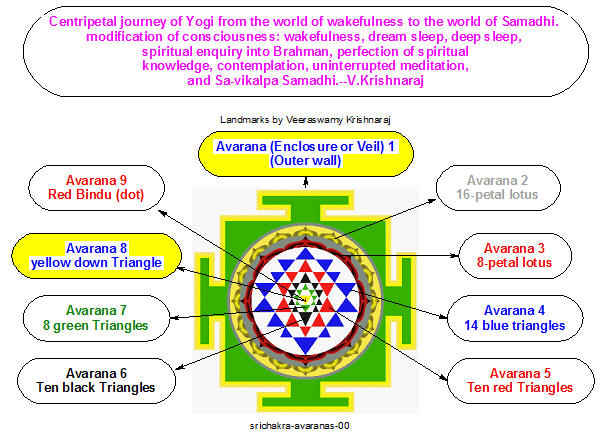
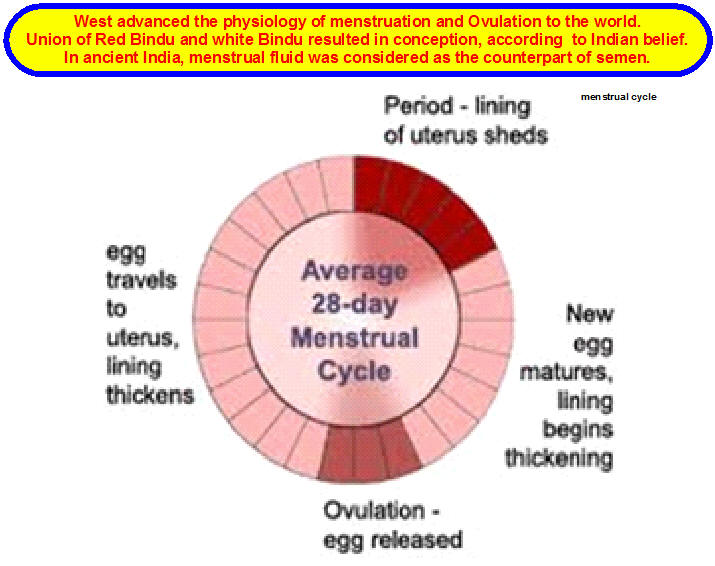

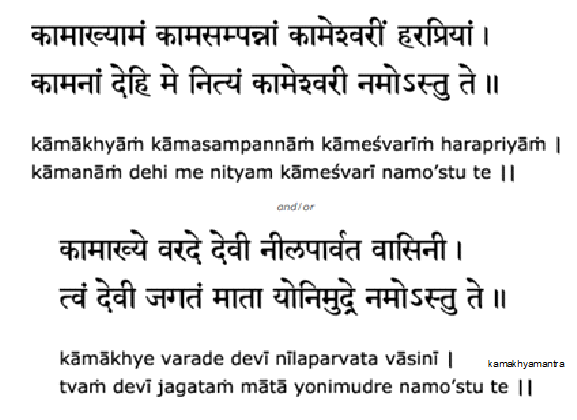
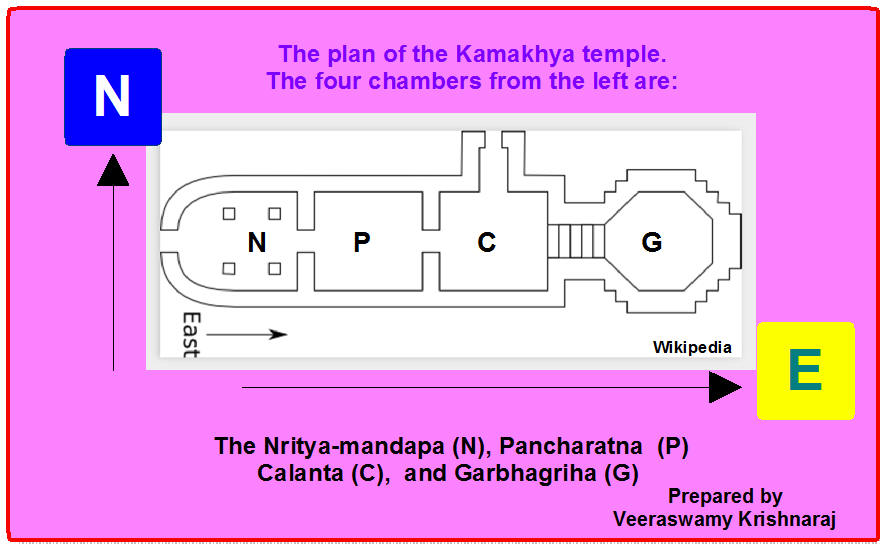
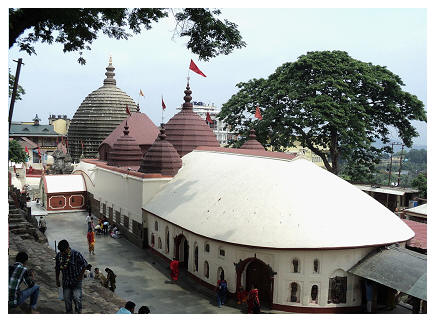



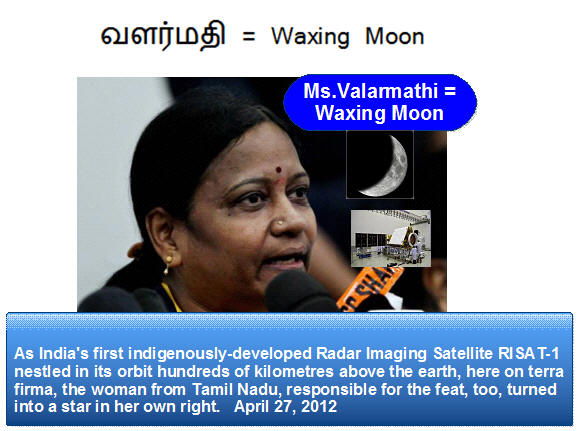
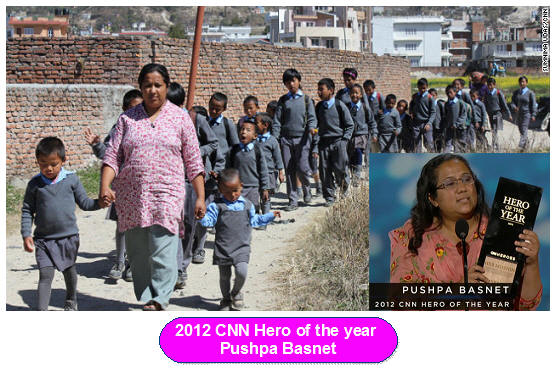
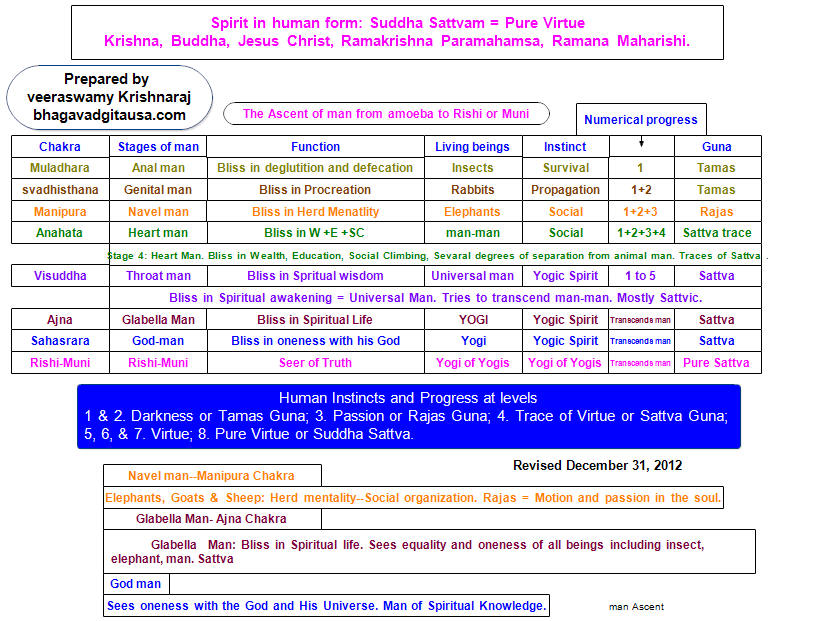



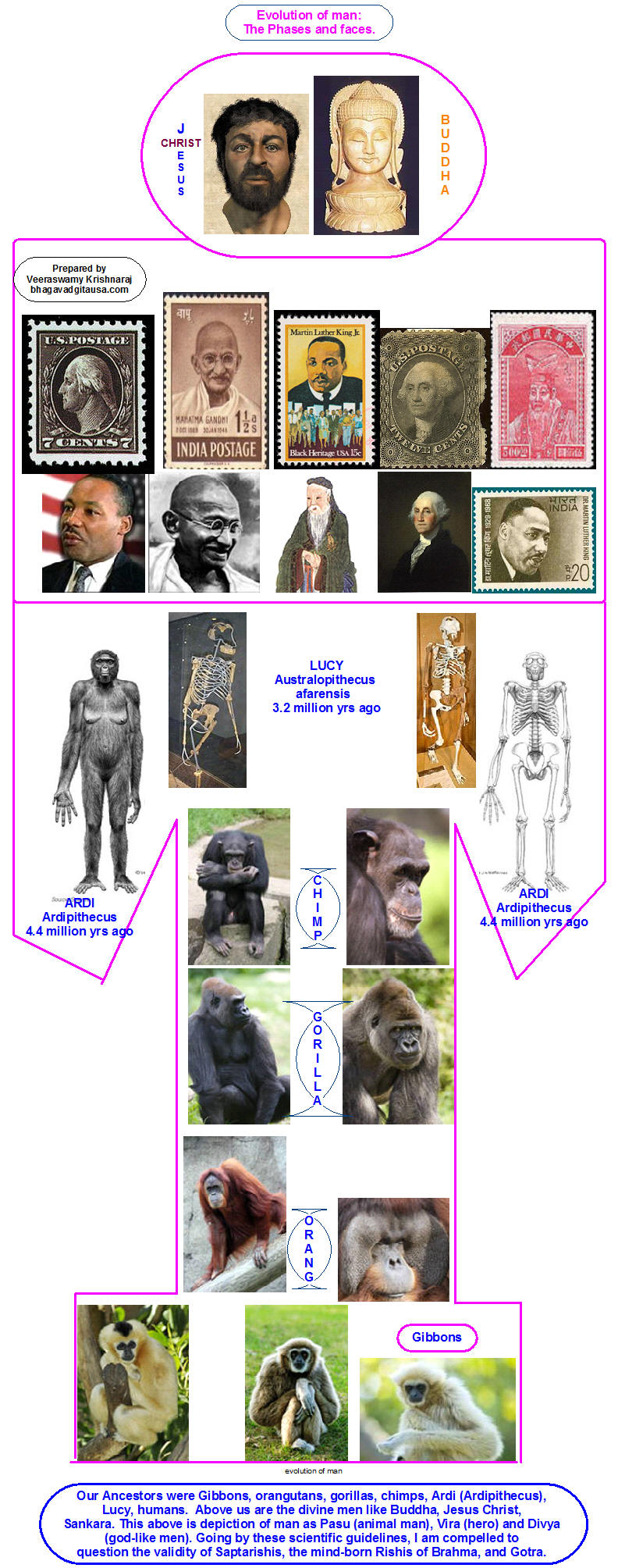

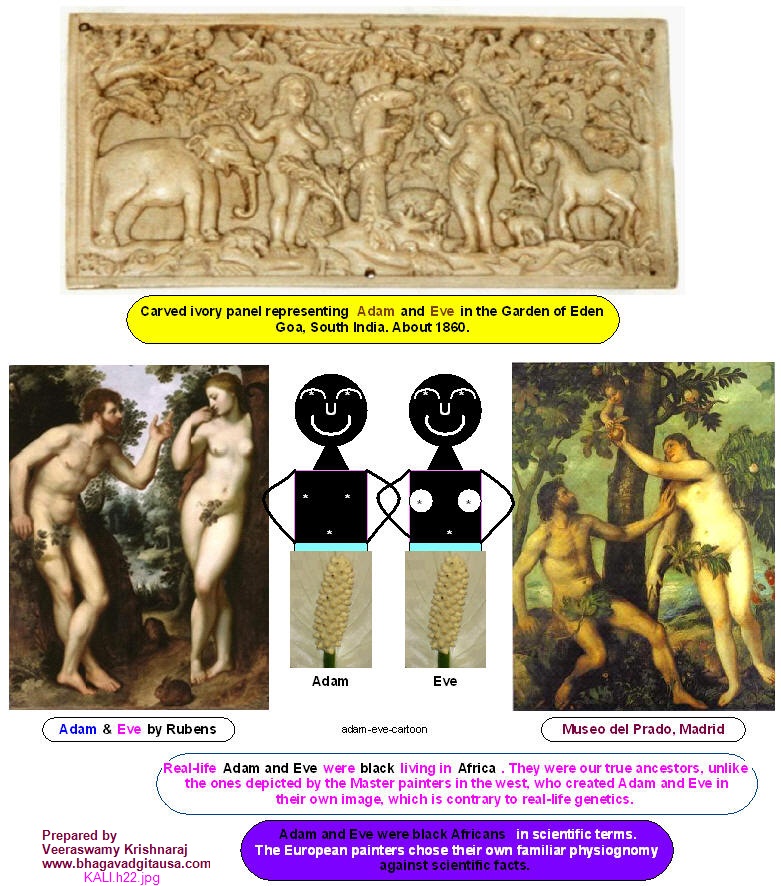
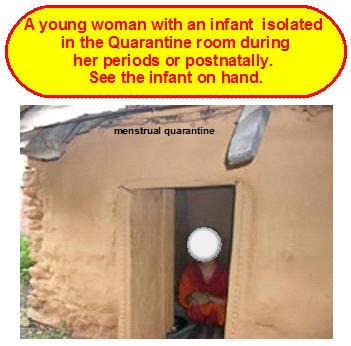 There is a custom in Dvija
households in India that the menstruating woman is ostracized, segregated,
shunted, secluded and secretes herself out of sight in a zenana (seclusion
room). This is a very discriminatory practice in my opinion and this
burden is placed on the woman and the family by inconsiderate men, who
wrote the injunctions many eons ago. Did they touch base with Sri, Uma,
Sarasvati, Durga, Kali, Valli, Devayanai and other women, before they
wrote the injunctions? No, they did not. Menstruation is ThIttu (தீட்டு in
Tamil = Pollution). The men imposed this restriction on goddesses and the
women. The woman is polluted for 5 days every month and after childbirth.
The Sastraic code writers branded themselves the Pollution Control Board
to stem the tide of pollution emanating from a menstruating woman in the
household. There are millions of households in India and therefore
millions of menstruating women. The whole of India is polluted, going by
the injunctions. What about the women who happen to have precipitous
periods while visiting the temple? Is the temple polluted? Should the
temple authorities ask for declaration of purity while the women visit the
temple? There is no end to this mindless injunction. Look around:
pollution of air, water, oceans, lakes; the mosquito larvae infested
puddles; dog-dos; all kinds of air-borne garbage daily. That is pollution
they are willing to live with. Many post menopausal old wives, who went
through the rigorous punishment themselves before, figuratively flog the
younger women and drive them into the impure isolation room, or to the
concealed well (space) between the platform (திண்ணை) and the wall. During
my school and college days, I saw many a woman sitting in the space
counting hours going into days until she becomes pure by taking a shower.
The widowed woman is a constant inhabitant in the perimeter of the house.
As we walked the streets, we could count the number of menstruating women
and the widows. Yes, I lived in Dvija neighborhood.
There is a custom in Dvija
households in India that the menstruating woman is ostracized, segregated,
shunted, secluded and secretes herself out of sight in a zenana (seclusion
room). This is a very discriminatory practice in my opinion and this
burden is placed on the woman and the family by inconsiderate men, who
wrote the injunctions many eons ago. Did they touch base with Sri, Uma,
Sarasvati, Durga, Kali, Valli, Devayanai and other women, before they
wrote the injunctions? No, they did not. Menstruation is ThIttu (தீட்டு in
Tamil = Pollution). The men imposed this restriction on goddesses and the
women. The woman is polluted for 5 days every month and after childbirth.
The Sastraic code writers branded themselves the Pollution Control Board
to stem the tide of pollution emanating from a menstruating woman in the
household. There are millions of households in India and therefore
millions of menstruating women. The whole of India is polluted, going by
the injunctions. What about the women who happen to have precipitous
periods while visiting the temple? Is the temple polluted? Should the
temple authorities ask for declaration of purity while the women visit the
temple? There is no end to this mindless injunction. Look around:
pollution of air, water, oceans, lakes; the mosquito larvae infested
puddles; dog-dos; all kinds of air-borne garbage daily. That is pollution
they are willing to live with. Many post menopausal old wives, who went
through the rigorous punishment themselves before, figuratively flog the
younger women and drive them into the impure isolation room, or to the
concealed well (space) between the platform (திண்ணை) and the wall. During
my school and college days, I saw many a woman sitting in the space
counting hours going into days until she becomes pure by taking a shower.
The widowed woman is a constant inhabitant in the perimeter of the house.
As we walked the streets, we could count the number of menstruating women
and the widows. Yes, I lived in Dvija neighborhood.