|
Tamil Verses Download from
Madurai Project |
English download
from Himalayan Academy-Dr. Natarajan |
|
1.
கடவுள் வாழ்த்து |
1 IN PRAISE OF GOD
|
|
1.
ஒன்றவன் தானே இரண்டவன் இன்னருள்
நின்றனன் மூன்றினுள் நான்குணர்ந்
தான்ஐந்து
வென்றனன் ஆறு விரிந்தனன் ஏழும்பர்ச்
சென்றனன் தானிருந் தான்உணர்ந் தெட்டே.
1
|
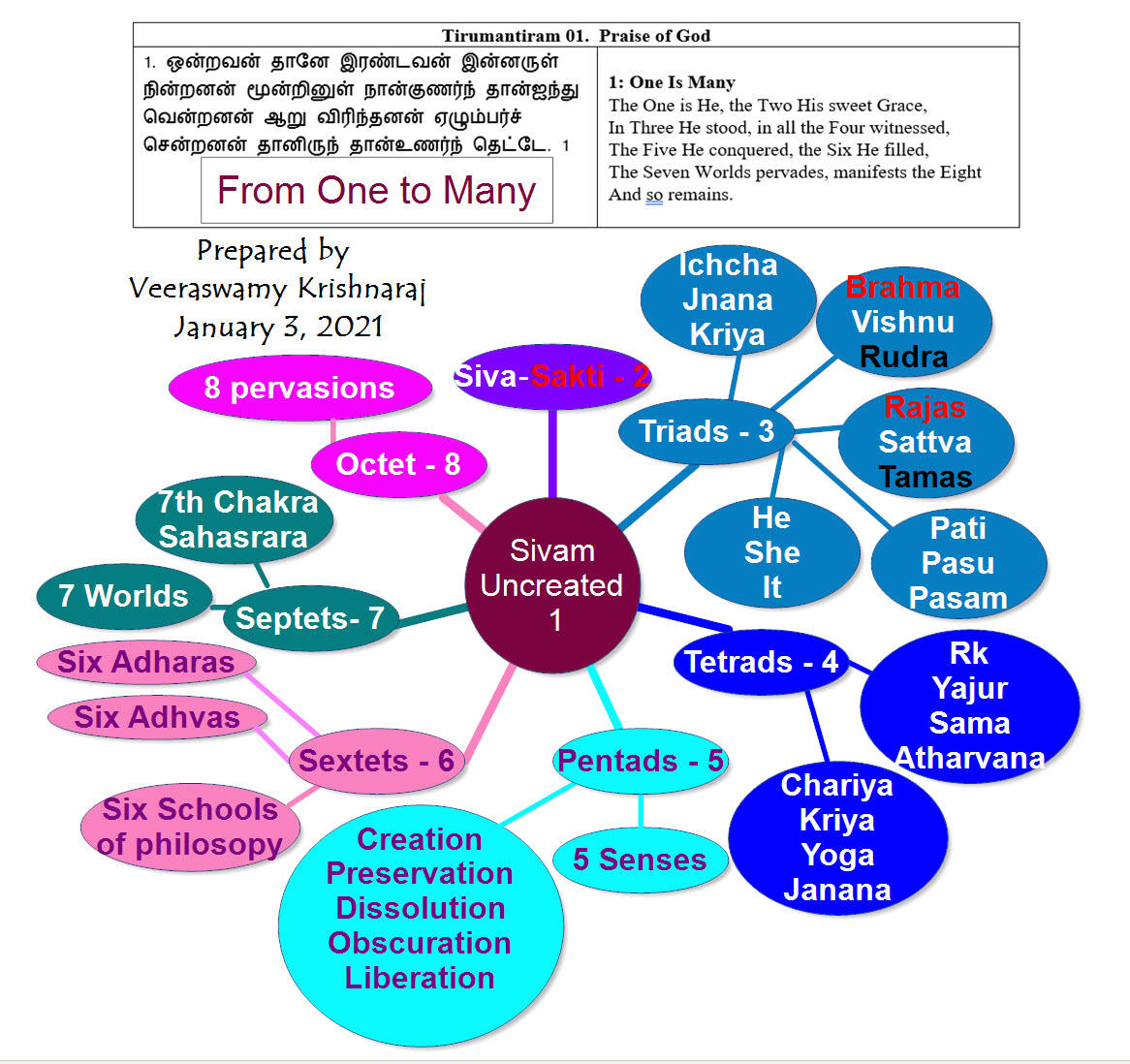
1: One Is Many
The One is He, the Two His sweet Grace,
In Three He stood, in all the Four witnessed,
The Five He conquered, the Six He filled,
The Seven Worlds pervades, manifests the Eight
And so remains.
|
|
2.
போற்றிசைத்து இன்னுயிர் மன்னும் புனிதனை
நாற்றிசைக் கும்நல்ல மாதுக்கும் நாதனை
மேற்றிசைக் குள்தென் திசைக்கொரு
வேந்தனாம்
கூற்றுதைத் தானையான் கூறுகின் றேனே.
2 |
2: Defies Death
The Holy One who all life sustains,
Lord of Her, beloved of all the world,
He who spurned Yama, the Southern Qrarter's King
Of Him I sing, His glory and praise.
|
|
3.
ஒக்கநின் றானை உலப்பிலி தேவர்கள்
நக்கனென்று ஏத்திடும் நாதனை நாள்தொறும்
பக்கநின் றார்அறி யாத பரமனைப்
புக்குநின்று உன்னியான் போற்றிசெய் வேனே.
3 |
3: Immortals Adore
He who stands the same to all,
The Pure One, whom immortal Gods adore,
Whom, even they, that daily stand beside, know not,
Him I seek, praise, and meditate.
|
|
4.
அகலிடத் தார்மெய்யை அண்டத்து வித்தைப்
புகலிடத்து என்றனைப் போதவிட் டானைப்
பகலிடத் தும்இர வும்பணிந் தேத்தி
இகலிடத் தேஇருள் நீங்கிநின் றேனே.
4 |
4: Dispells Gloom
The Truth of Spaces Vast, Seek of the Universe orb,
Our Haven of Refuge, He bade me seek and find,
Him I praised by night and day,
And praising thus, gloom{-}dispelled,
I held firm in this world of strifes.
|
|
5.
சிவனொடுஒக் கும்தெய்வம் தேடினும் இல்லை
அவனொடுஒப் பார் இங்கு யாவரும் இல்லை
புவனம் கடந்தன்று பொன்னொளி மின்னும்
தவனச் சடைமுடித் தாமரை யானே.
5 |
5: Siva Is Nonpareil
Search where ye will, there's no God like Siva,
None here below to equal Him in glory;
Lotus like, He, of gleaming matted locks,
Golden in splendour, beyond the worlds, apart.
|
|
6.
அவனை ஒழிய அமரரும் இல்லை
அவனன்றிச் செய்யும் அருந்தவம் இல்லை
அவனன்றி மூவரால் ஆவதொன் றில்லை
அவனன்றி ஊர்புகு மாறு அறியேனே.
6 |
6: Omni-Competent
Without Him, there be Celestials none,
Without Him, penance is not,
Without Him, naught the Three accomplish,
Without Him, I know not the City's Gate.
|
|
7.
முன்னைஒப் பாயுள்ள மூவர்க்கும் மூத்தவன்
தன்னைஒப் பாய்ஒன்றும் இல்லாத் தலைமகன்
தன்னைஅப் பாயெனில் அப்பனு மாயுளன்
பொன்னைஒப் பாகின்ற போதகத் தானே.
7 |
7: Divine Father
Primal First is He, older than the Co-eval Three
But the Lord is He peerless, unequalled;
Call Him "Father," and Father He to thee,
Inside you He flames in the Lotus of golden hue.
|
|
8.
தீயினும் வெய்யன் புனலினும் தண்ணியன்
ஆயினும் ஈசன் அருளறி வாரில்லை
சேயினும் நல்லன் அணியன்நல் அன்பர்க்குத்
தாயினும் நல்லன் தாழ்சடை யோனே.
8 |
8: Kinder Than Mother
Hotter is He than fire, cooler than water;
And yet none knows of His Grace abounding;
Purer than the child, kinder by far than the mother,
Nearest to Love is He, of the flowing matted locks.
|
|
9.
பொன்னால் புரிந்திட்ட பொற்சடை யென்னப்
பின்னாற் பிறங்க இருந்தவன் பேர்நந்தி
என்னால் தொழப்படும் எம்இறை மற்றவன்
தன்னால் தொழப்படு வாரில்லை தானே.
9 |
9: All Worship Him
Gold-bewrought, His matted locks fall back and gleam;
Nandi, His name,
My Lord is He, ever by me worshipt;
But none there be whom He worships.
|
|
10.
தானே இருநிலம் தாங்கிவிண் ணாய்நிற்கும்
தானே சுடும்அங்கி ஞாயிறும் திங்களும்
தானே மழைபொழி தையலு மாய்நிற்கும்
தானே தடவரை தண்கட லாமே.
10 |
10: Omnium Gatherum
Holding the worlds apart, as the Heavens high He spreads;
Himself the scorching Fire, Sun and Moon,
Himself the Mother that sends down the rains
Himself the mountains strong and oceans cold.
|
|
11.
அயலும் புடையும்எம் ஆதியை நோக்கில்
இயலும் பெருந்தெய்வம் யாதுமொன் றில்லை
முயலும் முயலில் முடிவும் மற் றாங்கே
பெயலும் மழைமுகிற் பேர்நந்தி தானே.
11 |
11: Effort And Fruit
Near and far I look; but around the Being First,
No other God, I see, mightier than He;
Himself the effort, and Himself, too, effort's end;
Himself the rains, Himself the clouds rain-laden,
The Nandi named.
|
|
12.
கண்ணுத லான்ஒரு காதலின் நிற்கவும்
எண்ணிலி தேவர் இறந்தார் எனப்பலர்
மண்ணுறு வார்களும் வானுறு வார்களும்
அண்ணல் இவன் என்றுஅறியகி லார்களே.
12 |
12: Beyond Comprehension
The One of the fore-head eye, in Love Supreme, unmoved,
Dead were the countless Devas,
Born were the myriads on earth;
Upward they climbed to lives beyond count,
Yet none did know the Lord was He.
|
|
13.
மண்ணளந் தான்மல ரோன்முதல் தேவர்கள்
எண்ணளந் தின்னும் நினைக்கிலார் ஈசனை
விண்ணளந் தாந்தன்னை மேலளந் தாரில்லை
கண்ணளந் தெங்குங் கடந்துநின் றானே.
13 |
13: Immeasurable
Mal who spanned the earth and Brahma the Lotus seated one,
And others of the Gods fathomed Him not;
There be none to measure Him that measured the Heav'ns
And thus He stood, all visions transcending.
|
|
14.
கடந்துநினின் றான்கம லம்மல ராதி
கடந்துநின் றான்கடல் வண்ணம்எம் மாயன்
கடந்துநின் றான்அவர்க்கு அப்புறம் ஈசன்
கடந்துநின் றான்எங்கும் கண்டுநின் றானே.
14
|
14: Transcends All
Transcended He Brahma on the lotus-seat,
Transcended Mayan, the ocean-hued,
Transcended He, Isan, who transcends all,
Transcended He space infinite, witnessing all.
|
|
15.
ஆதியு மாய்அர னாய்உட லுள்நின்ற
வேதியு மாய்விரிந்துஆர்ந்துஇருந்
தான்அருள்
சோதியு மாய்ச்சுருங் காததோர் தன்மையுள்
நீதியு மாய்நித்த மாகிநின் றானே.
15 |
15: Blossoms As All
Into Brahma did He expand, into Hara did He,
And into the soul of the body He pervades
As the Effulgence Divine, the Dharmic law limitless,
The Eternal and the Everlasting.
|
|
16.
கோது குலாவிய கொன்றைக் குழற்சடை
மாது குலாவிய வாள்நுதல் பாகனை
யாது குலாவி அமரரும் தேவரும்
கோது குலாவிக் குணம்பயில் வாரே.
16 |
16: Confers Wisdom On Gods
He, of the matted locks, the odorous Konrai clustering,
He, of the Divine Consort with forehead divinely gleaming,
He, whom the Immortals and Devas sought,
Wisdom to learn, Ignorance to dispel.
|
|
17.
காயம் இரண்டுங் கலந்து கொதிக்கினும்
மாயங் கத்தூரி யதுமிகும் அவ்வழி
தேசங் கலந்தொரு தேவனென் றெண்ணினும்
ஈசன் உறவுக் கெதிரில்லை தானே.
17
|
17: Love Profound
Howe'er well the two garlics and musk boil and mix,
Yet will musk's fragrance stand o'ertopping all,
So may all space mix and hold the God as One,
Yet, upwelling, pours forth Isan's love profound.
|
|
18.
அதிபதி செய்து அளகை வேந்தனை
நிதிபதி செய்த நிறைதவம் நோக்கி
அதுபதி ஆதரித்து ஆக்கமது ஆக்கின்
இதுபதி கொள்என்ற எம்பெரு மானே.
18 |
18: Munificent
The Supreme Lord saw Alagai King's penance devout,
Much pleased, He made the King Lord of all Riches;
Even so, approach the Lord, noble deeds performing;
For thus says the Lord, "Hold this lordship!"
|
|
19.
இதுபதி ஏலங் கமழ்பொழில் ஏழும்
முதுபதி செய்தவன் மூதறி வாளன்
விதுபதி செய்தவன் மெய்த்தவம் நோக்கி
அதுபதி யாக அமருகின் றானே.
19 |
19: Created Universe
He, the Wisdom Primeval, He made the City Ancient
Of the seven meadows, fragrant-spiced;
He fixed the Moon, and to penance inclining,
He abides there, making that His seat.
|
|
20.
முடிவும் பிறப்பையும் முன்னே படைத்த
அடிகள் உறையும் அறனெறி நாடில்
இடியும் முழக்கமும் ஈசர் உருவம்
கடிமலர்க் குன்ற மலையது தானே.
20
|
20: In Mount Kailas
Seek the Abode of the Holy,
Who, of yore, created Birth and Death
A high hill it is, where thunders roar and lightnings flash,
Where fragrant flowers bud and bloom,
His mighty likeness it bears.
|
|
21.
வானப் பெருங்கொண்டல் மாலயன் வானவர்
ஊனப் பிறவி ஒழிக்கும் ஒருவனைக்
கானக் களிறு கதறப் பிளந்தனம்
கோனைப் புகழுமின் கூடலு மாமே.
21 |
21: Comes Speeding
Sing His praise! Oh how quick He comes!
He, the Lord, who in one fell sweep the wild elephant slashed,
The Lord who ends this muddy vesture's mortal coil,
Of the Heavenly Hosts, of Brahma Divine,
Of Mal, hued like the clouds rain-borne.
|
|
22.
மனத்தில் எழுகின்ற மாயநன் நாடன்
நினைத்தது அறிவன் என்னில்தான்
நினைக்கிலர்
எனக்குஇறை அன்பிலன் என்பர் இறைவன்
பிழைக்கநின் றார்பக்கம் பேணிநின் றானே.
22
|
22: Seek Him, He Seeks You
This Lord of Maya-land that has its rise in the mind,
He, the Being without thought, knows yet all our thoughts;
Some be who groan,"God is not to me a friend;"
But, sure, God seeks those who seek their souls to save.
|
|
23.
வல்லவன் வன்னிககு இறையிடை வாரணம்
நில்லென நிற்பித்த நீதியுள் ஈசனை
இல்லென வேண்டா இறையவர் தம்முதல்
அல்லும் பகலும் அருளுகின் றானே.
23 |
23: Infinite Grace
The Mighty Lord, the God of Fire, set amidst the seas,
Whom the comprehending souls never deny;
He, the Lord of the Heavenly Beings all,
Who , day and night, pours forth His Divine Grace.
|
|
24.
போற்றிசைத் தும்புகழ்ந் தும்புனி தன்அடி
தேற்றுமின் என்றும் சிவனடிக் கேசெல்வம்
ஆற்றிய தென்று மயலுற்ற சிந்தையை
மாற்றிநின் றார்வழி மன்னிநின் றானே.
24 |
24: Firm In Minds Firm
Sing His praise, Sing of His Holy Feet!
Pour all your treasures at Siva'a Sacred Feet!
And they who shake off the clouded eye and disturbed mindWith them He
ever stood, benignantly firm.
|
|
25.
பிறப்பிலி பிஞ்ஞகன் பேரரு ளாளன்
இறப்பிலி யாவர்க்கும் இன்பம் அருளும்
துறப்பிலி தன்னைத் தொழுமின் தொழுதால்
மறப்பிலி மாயா விருத்தமும் ஆமே.
25 |
25: Illusions Vanish
The Birthless is He, the Divine Mad, of Compassion vast,
The Deathless is He, the Boundless One, Granter of Joys all,To Him
kneel, and, kneeling, shall find
Naught becomes Maya, the bond immemorial.
|
|
26.
தொடர்ந்துனின் றானைத் தொழுமின் தொழுதால்
படர்ந்துநின் றான்பரி பாரக முற்றும்
கடந்துநின் றாம்கம லம்மலர் மேலே
உடந்திருந் தான்அடிப் புண்ணிய மாமே.
26 |
26: Attain Grace
Adore the Lord, who in unbroken continuity stood,
The Lord who protecting over all earth expanded,
Transcending all He stood; over the lotus bloom aloft,
In smiling glory He sat; Holy be His feet!
|
|
27.
சந்தி எனத்தக்க தாமரை வாண்முகத்து
அந்தமில் ஈசன் அருள்நமக் கேயென்று
நந்தியை நாளும் வணங்கப் படும்அவர்
புந்தியி னுள்ளே புகுந்துநின் றானே.
27 |
27: He Enters Into You
The Infinite of Lotus-Face, rivalling twilight ineffable,
May ours be His Grace Divine!
And they who thus Nandi daily beseech,
Into their Heart, creeping, He comes! He comes!
|
|
28.
இணங்கிநின் றான் எங்கும் ஆகிநின் றானும்
பிணங்கிநின் றான்பின்முன் னாகிநின்
றானும்
உணங்கிநின் றான்அம ராபதி நாதன்
வணங்கிநின் றார்க்கே வழித்துணை யாமே.
28 |
28: Your Guide
Beckoning He stood, He, the All-pervading;
But they who, doubt-tossed, in self-contention lost,
They stood withered at the root;
To those who freely give themselves to the Lord on High,
To them is He the certain, immutable Guide.
|
|
29.
காணநில் லாய்அடி யேற்குஉறவுஆருளர்
நாணநில் லேன்உன்னை நான்தழு விக்கொளக்
கோணநில் லாத குணத்தடி யார்மனத்து
ஆணியன் ஆகி அமர்ந்துநின் றானே.
29 |
29: Axle-Pin
Oh! You, the Unseen, only kin to this forlorn slave,
Let me not falter to embrace Your feet!
For to the heart of Your servant, pure and true
You ever stood even as the axle-pin.
|
|
30.
வான்நின்று அழைக்கும் மழைபோல் இறைவனும்
தானினறு அழைக்கும்கொல் என்று தயங்குவார்
ஆன்நின்று அழைக்கு மதுபோல்என் நந்தியை
நான்நின்று அழைப்பது ஞானம் கருதியே.
30 |
30: Yearn For Him
As the Heavens draw the rains;
Even so will my Lord draw me to Him?
Thus, doubting, many ask.
But like to the mother-cow, for my Nandi I yearn
And all the world, all the world know it too!
|
|
31.
மண்ணகத் தான்ஒக்கும் வானகத் தான்ஒக்கும்
விண்ணகத் தான்ஒக்கும் வேதகத் தான்ஒக்கும்
பண்ணகத்து இன்னிசை பாடலுற் றானுக்கே
கண்ணகத் தேநின்று காதலித் தேனே.
31 |
31: Seek Him In Love
Of the Earth is He, of the sky is He! Well He be!
Of the Heaven is He, of truest Gold is He! Well He be!
Of sweetest song's inmost rapture is He!
Him my love besought, from heart's central core.
|
|
32.
தேவர் பிரான்நம் பிரான்திசை பத்தையும்
மேவு பிரான்விரி நீருலகேழையும்
தாவு பிரான்தன்மை தானறி வாரில்லை
பாவு பிரான்அருட் பாடலு மாமே.
32 |
32: Sing Of Him
The Lord of Gods, and of ours too,
The Lord who all space pervades,
And the seven Worlds, ocean-bound, transcends;
None do know His nature true,
How then may we sing His Grace Divine?
|
|
33.
பதிபல வாயது பண்டுஇவ் வுலகம்
விதிபல செய்தொன்றும் மெய்ம்மை உணரார்
துதிபல தோத்திரம் சொல்ல வல்லாரும்
மதியிலர் நெஞ்சினுள் வாடுகின் றாரே.
33 |
33: Adore Him
Many the Gods this hoary world adores,
Many the rituals; many the songs they sing;
But knowing not the One Truth, of Wisdom bereft
Unillumined, they can but droop at heart.
|
|
34.
ந்து கமழுங் கவாயின் கந்தம்போல்
வேந்தன்
அமரர்க்கு அருளிய மெய்ந்நெறி
ஆர்ந்த சுடரன்ன ஆயிர நாமமும்
போந்தும் இருந்தும் புகழுகின் றேனே.
34
|
34: Chant His Names Thousand
Like the fragrance of the musk the musk-deer constant emits,
Is the True Path which the Lord to Celestials imparts.
Sitting or moving, I chant the rich essence of His Name,
His thousand Names that are with spark divine.
|
|
35.
ஆற்றுகி லாவழி யாகும் இறைவனைப்
போற்றுமின் போற்றிப் புகழ்மின்
புகழ்ந்திடில்
மேற்றிசைக் கும்கிழக் குத்திசை எட்டொடு
மாற்றுவன் அப்படி ஆட்டவு மாமே.
35 |
35: Path Crossed
Even the Path impassable is foot-easy made,
If you the Lord praise and Him adore;
The East and West and directions all
He does transmute--and thus dances He the Lord.
|
|
36.
அப்பனை நந்தியை ஆரா அமுதினை
ஒப்பிலி வள்ளலை ஊழி முதல்வனை
எப்பரி சாயினும் ஏத்துமின் ஏத்தினால்
அப்பரி சீசன் அருள்பெற லாமே.
36 |
36: Praise And Be Blessed
Oh, Heavenly Father, Nandi, the unsurfeiting nectar sweet,
Oh, Bounteous One, Unequalled, First of Time!
Praise Him ever; and even as you praise,
So thine reward will also be.
|
|
37.
நானும்நின் றேத்துவன் நாள்தொறும் நந்தியைத்
தானும்நின் றான்தழல் தான்ஒக்கும் மேனியன்
வானில்நின் றார்மதி போல்உடல் உள்ளுவந்து
ஊனில்நின் றாங்கே உயிர்க்கின்ற வாறே.
37 |
37: Throbs Within
Daily I kneel and chant Nandi's holy Name;
Envisioned, He stands, the Fire-Hued One,
Flaming like the moon in sky; into me He comes,
And throbs and breathes through my mortal flesh.
|
|
38.
பிதற்றொழி யேன்பெரி யான்அரி யானைப்
பிதற்றொழி யேன்பிற வாஉரு வானைப்
பிதற்றொழி யேன்எங்கள் பேர்நந்தி தன்னைப்
பிதற்றொழி யேன்பெரு மைத்தவன் தானே.
38 |
38: Greatness Unceasing
I will not cease to speak of Him, the Great, the Rare,
I will not cease to prate of Him, the Form Unborn,
I will not cease to talk of Nandi, the Mighty,
I will never cease, for pure and great am I then!
|
|
39.
வாழ்த்தவல் லார்மனத் துள்ளுறு சோதியைத்
தீர்த்தனை அங்கே திளைக்கின்ற தேவனை
ஏத்தியும் எம்பெரு மான்என்றுஇறைஞ்சியும்
ஆத்தம் செய் தீசன் அருள்பெற லாமே.
39 |
39: Adore And Attain Grace
He, the Divine
Light, shining bright in devotee's heart,
He, of the Holy Waters, wherein He sports,
Him shall we praise, Him call, "Our Lord,"
And, thus adoring, His Grace attain. |
|
40.
குறைந்துஅடைந் தீசன் குரைகழல் நாடும்
நிறைந்துஅடை செம்பொனின் நேர்ஒளி ஒக்கும்
மறைஞ்சடம் செய்யாது வாழ்த்தவல்
லார்க்குப்
புறஞ்சடம் செய்வான் புகுந்துநின் றானே.
40 |
40: In The
Heart Of The Pure
Humbled and meek, seek thou the Lord's Feet,
Feet that equal the rays of purest gold serene;
Praise Him with songs of the humble heart
And unpenurious tongue;
To such He comes, the all-fashioning Lord. |
|
41.
சினஞ்செய்த நஞ்சுண்ட தேவர் பிரானைப்
புனஞ்செய்த நெஞ்சிடை போற்றவல் லார்க்குக்
கனஞ்செய்த வாள்நுதல் பாகனும் அங்கே
இனஞ்செய்த மான்போல் இணங்கிநின் றானே.
41 |
41: In Depths
Of Devotee's Heart
To them He comes, who, in heart's deep confines Treasure His
Name,
The Lord who consumed the deathly poison of hatred born,
Consorting with Her of the gleaming brow,
Conjoint, like the pairing deer in amity sweet. |
|
42.
போய்அரன் தன்னைப் புகழ்வார் பெறுவது
நாயக னான்முடி செய்தது வேநல்கும்
மாயகம் சூழ்ந்து வரவல்ல ராகிலும்
வேயன தோளிக்கு வேந்தொன்றும் தானே.
42 |
42: Grants All
They alone attain His Feet, who seek and praise;
To them He shall grant the world the Four-Headed one made;
Full well the elect come, the world of Maya girdling,
One is He with Her of the shoulders reed-shaped. |
|
43.
அரனடி சொல்லி அரற்றி அழுது
பரனடி நாடியே பாவிப்ப நாளும்
உரன்அடி செய்துஅங்கு ஓதுங்கவல் லார்க்கு
நிரன்அடி செய்து நிறைந்துநின் றானே.
43 |
43: Eternal
Grace
To them that speak of Hara's Holy Feet and weep,
To them that daily muse at the Great One's mighty feet,
To them that, in deep devotion fixed, wait to serve,
To them comes the Eternal's all-filling Grace. |
|
44.
போற்றிஎன் பார்அம ரர்புனி தன்அடி
போற்றிஎன் பார்அசு ரர்புனி தன்அடி
போற்றிஎன் பார்மனி தர்புனி தன்அடி
போற்றிஎன் அன்புள் பொலியவைத் தேனே.
44 |
44: Shines In Love
"Glory to the Holy Feet," the Devas chant,
"Glory to the Holy Feet," the Asuras hymn,
"Glory to the Holy Feet," the humans, too, echo,
Thus I gloried Him, and in my love He shone. |
|
45.
விதிவழி அல்லதுஇவ் வேலை உலகம்
விதிவழி இன்பம் விருத்தமும் இல்லை
துதிவழி நித்தலும் சோதிப் பிரானும்
பதிவழி காட்டும் பகலவ னாமே.
45 |
45: Divine
Path
Except by Fate He decrees this sea-girt world revolves not,
Except by Fate He decrees do joys and age arrive not,
Daily pray to the Light Effulgent;
The Divine Path He'll prove, the Sure Sun He'll be. |
|
46.
அந்திவண் ணாஅர னேசிவ னேஎன்று
சிந்தைசெய் வண்ணம் திருந்தடி யார்தொழ
முந்திவண் ணாமுதல் வாபர னேஎன்று
புந்தி வண்ணன்எம் மனம்புகுந் தானே.
46 |
46: In Heart's Center
"You of the Twilight Hue! O! Hara! O! Siva!"
Thus, His Holy Feet devotees praise and sing;
He of the Primary Hue, the First, the Infinite
Entered my being, my heart's center held. |
|
47.
மனையுள் இருந்தவர் மாதவர் ஒப்பர்
நினைவுள் இருந்தவர் நேசத்துள் நிற்பர்
பனையுள் இருந்த பருந்தது போல
நினையாத வர்க்கில்லை நின்இன்பந் தானே.
47 |
47: Bliss
Denied
In Home is He, like Holy Men is He,
In Thought is He;
Like the kite concealed in the palm's leafy depths,
Your Bliss is for them alone who muse upon You steadfast. |
|
48.
அடியார் பரவும் அமரர் பிரானை
முடியால் வணங்கி முதல்வனை முன்னிப்
படியால் அருளும் பரம்பரன் எந்தை
விடியா விளக்கென்று மேவிநின் றேனே.
48 |
48: Unflickering Lamp
The Lord of Gods, whom the pious adore,
To Him I bend my knees and His Grace invoke,
The Lord, Our Father, blessing us of earth,
The Lamp that flickers not, Him I seek. |
|
49.
நரைபசு பாசத்து நாதனை உள்ளி
உரைபசு பாசததுஒருங்கவல் லார்க்குத்
திரைபசு பாவச் செழுங்கடல் நீந்திக்
கரைபசு பாசம் கடநது எய்த லாமே.
49 |
49: Sea Of
Bondage
Who, on the Lord, Shakti-Consort, meditate,
And take the way of Pasu-Pasa,
They swim across the foaming sea of Sin,
And, swimming, reach the shore of Pasu-Pasa. |
|
50.
சூடுவன் நெஞ்சிடை வைப்பன் பிரான்என்று
பாடுவன் பன்மலர் தூவிப் பணிந்துநின்
றாடுவன் ஆடி அமரர்ப்பி ரான்என்று
நாடுவன் நான்இன் றறிவது தானே.
50 |
50: Seeking Is All
I'll wreathe Him in garland, I'll hug Him to heart;
I'll sing Him His Name and dance with gift of flowers;
Singing and dancing seek the Lord;
This alone I know, only too well I know. |
|
51.
வேதத்தை விட்ட அறமில்லை வேதத்தின்
ஓதத் தகும்அறம் எல்லாம் உளதர்க்க
வாதத்தை விட்டு மதிஞர் வளமுற்ற
வேதத்தை ஓதியே வீடுபெற் றார்க்களே.
51 |
51: Vedas
Proclaim Dharma
No Dharma is, barring what the Vedas say;
Its central core the Vedas proclaim;
And the Wise ones ceased contentious brawls,
Intoned the lofty strains and Freedom's battle won. |
|
52.
வேதம் உரைத்தானும் வேதியன் ஆகிலன்
வேதம் உரைத்தானும் வேதா விளங்கிட
வேதம் உரைத்தானும் வேதியர் வேள்விக்காய்
வேதம் உரைத்தானும் மெய்ப்பொருள் காட்டவே.
52 |
52: Truth Of Maker
Brahma spoke the Vedas, but Himself not the goal supreme;
He spoke the Vedas only the great Maker to reveal;
He spoke them for the Holy sacrifices to perform,
He spoke them, the True One to manifest. |
|
53.
இருக்குஉரு வாம்எழில் வேதத்தின் உள்ளே
உருக்குஉணர் வாயுணர் வேதத்துள் ஓங்கி
வெருக்குஉரு வாகிய வேதியர் சொல்லும்
கருக்குஉரு வாய்நின்ற கண்ணனும் ஆமே.
53 |
53: Moving
Mood
In the beauteous Veda, aptly named the Rig,
As the moving mood behind, He stood;
In the trembling chant of the Vedic priests He stood,
Himself the Eye of vision Central. |
|
54.
திருநெறி யாவது சித்தசித் தன்றிப்
பெருநெறி யாய பிரானை நினைந்து
குருநெறி யாம்சிவ மாம்நெறி கூடும்
ஒருநெறி ஒன்றாக வேதாந்தம் ஓதுமே.
54
|
54: Supreme Path
The Holy Path is naught but the Path Supreme,
Who muse on the Lord, Himself the Path Supreme,
As Material-Immaterial, as Guru Divine,
They reach Siva's Pure Path-so Vedantas all declare. |
|
55.
ஆறங்க மாய்வரும் மாமறை ஓதியைக்
கூறங்க மாகக் குணம்பயில் வாரில்லை
வேறங்க மாக விளைவுசெய்து அப்புறம்
பேறங்க மாகப் பெருக்குகின் றாரே.
55 |
55: One In
Several
Of the One, the Vedas chant in divisions six,
The One who yet in parts divisible does not be,
As divided parts they swam into their ken,
Then upgathered and swelled into the patterned whole. |
|
56.
பாட்டும் ஒலியும் பரக்கும் கணிகையர்
ஆட்டும் அறாத அவனியில் மாட்டாதார்
வேட்டு விருப்பார் விரதமில் லாதவர்
ஈட்டும் இடஞ்சென்று இகலல்உற் றாரே.
56
|
56: Vedic Sacrifices
Uncaught in the world's web of woman, song and dance,
Such alone seek the holy sacrifice to perform;
But the unpracticed in austerities do but reach
Desire's Abode, misery to find. |
|
3 THE GREATNESS OF THE AGAMAS.
ஆகமச் சிறப்பு |
|
57.
அஞ்சன மேனி அரிவையோர் பாகத்தன்
அஞ்சொ டிருபத்து மூன்றுள ஆகமம்
அஞ்சலி கூப்பி அறுபத்து அறுவரும்
அஞ்சா முகத்தில் அரும்பொருள் கேட்டதே.
1 |
57: Agamas
From The Fifth Face Of Siva
The Lord that consorts the blue-hued One
Has the Agamas twenty-five and three;
Bowing low, the six and sixty sought
The Fifth-Faced One the Agamas' deep import to expound. |
|
58.
அண்ணல் அருளால் அருளும் சிவாகமம்
எண்ணில் இருபத்தெண் கோடிநூ றாயிரம்
விண்ணவர் ஈசன் விழுப்பம் உரைத்தனர்
எண்ணிநின் றப்பொருள் ஏத்துவன் நானே.
2 |
58: Agamas Innumerable
The Sivagamas the Lord by
Grace revealed;
In number a
billion-million-twenty-eight
In them the Celestials
the Lord's greatness gloried;
Him, I too shall muse and
praise. |
|
59.
பண்டிதர் ஆவார் பதினெட்டும் பாடையும்
கண்டவர் கூறும் கருத்தறி வார்என்க
பண்டிதர் தங்கள் பதினெட்டுப் பாடையும்
அண்ட முதலான் அறஞ்சொன்ன வாறே.
3 |
59: Agamic Truths In 18
Languages
In eighteen various
tongues they speak
The thoughts which
Pandits alone know;
The Pandits' tongues
numbering ten and eight
Are but what the Primal
Lord declared. |
|
60.
அண்ணல் அருளால் அருளுந்திவ் யாகமம்
விண்ணில் அமரர் தமக்கும் விளங்கரி
தெண்ணில் எழுபது கோடிநூ றாயிரம்
எண்ணிலும் நீர்மேல் எழுத்தது ஆகுமே.
4 |
60: Agamas Deep In
Content
The Agamas, the Lord by
Grace revealed,
Deep and baffling even to
the Gods in Heaven;
Seventy billion-millions
though they be;
Like writing on the
waters, eluding grasp. |
|
61.
பரனாய் பராபரம் காட்டி உலகில்
தரனாய்ச் சிவதன்மந் தானேசொல் காலத்
தரனாய் அமரர்கள் அர்ச்சிக்கு நந்தி
உரனாகி ஆகமம் ஓங்கிநின் றானே.
5 |
61: Agamas Revealed
The Infinite revealing
the Infinite Vast
Came down to earth,
Siva's Dharma to proclaim,
The immortals, then, Him
as Nandi adored,
And He stood forth the
Agamas artic'lating. |
|
62.
சிவமாம் பரத்தினில் சத்தி சதாசிவம்
உவமா மகேசர் உருத்திர தேவர்
தவமால் பிரமீசர் தம்மில்தாம் பெற்ற
நவஆ கமமெங்கள் நந்திபெற் றானே.
6 |
62: Agamas Transmitted
From Siva the Infinite to
Shakti and Sadasiva,
To Maheswara the Joyous,
to Rudra Dev and Brahmisa,
So in succession unto
Himself from Himself,
The nine Agamas our Nandi
begot. |
|
63.
பெற்றநல் ஆகமங் காரணம் காமிகம்
உற்றநல் வீரம் உயர்சிந்தியம் வாதுளம்
மற்றவ் வியாமளம் ஆகும்கா லோத்தரந்
துற்றநற் சுப்பிரம் சொல்லு மகுடமே.
7 |
63: Nine Agamas
The Agamas so received
are Karanam, Kamigam,
The Veeram good, the
Sindam high and Vadulam,
Vyamalam the other, and
Kalottaram,
The Subram pure and
Makutam to crown. |
|
64.
அண்ணல் அருளால் அருளும் சிவாகமம்
எண்ணிலி கோடி தொகுத்திடும் ஆயினும்
அண்ணல் அறைந்த அறிவுஅறி யாவிடின்
எண்ணிலி கோடியும் நீர்மேல் எழுத்தே.
8 |
64: Import Of Agamas
Numberless the Sivagamas
composed,
The Lord by His Grace
revealed;
Yet they know not the
wisdom He taught;
Like writing on water,
the unnumbered fade. |
|
65.
மாரியும் கோடையும் வார்பனி தூங்கநின்று
ஏரியும் நின்றங்கு இளைக்கின்ற காலத்து
ஆரிய முந்தமி ழும்உட னேசொலிக்
காரிகை யார்க்குக் கருணைசெய் தானே.
9 |
65: Revealed Alike In
Sanskrit and Tamil
Devoid alike of rain and
summer's gift of dew
Even the flashing lake
had lost it's vernal bloom
Then did He in Sanskrit
and Tamil at once,
Reveal the rich treasure
of His Compassion to our Lady Great. |
|
66.
அவிழ்கின்ற வாறும் அதுகட்டு மாறும்
சிமிட்டலைப் பட்டுயிர் போகின்ற வாறும்
தமிழ்ச்சொல் வடசொல் எனும்இவ் விரண்டும்
உணர்த்தும் அவனை உணரலு மாமே.
10 |
66: Key To Mystery Of
Life
Life takes its birth,
stands preserved awhile,
And then its departure
takes; caught
In that momentary wave of
flux, Him we glimpse,
The Lord who in Tamil
sweet and northern tongue
Life's mystery revealed. |
|
4.
குரு
பாரம்பரியம்
=
THE GURU HIERARCHY |
|
67.
நந்தி அருள்பெற்ற நாதரை நாடிடின்
நந்திகள் நால்வர் சிவயோக மாமுனி
மன்று தொழுத பதஞ்சலி வியாக்ரமர்
என்றிவர் என்னோ டெண்மரு மாமே.
1 |
67: Eight
Masters
Seekest thou the Masters who Nandi's grace received
First the Nandis Four, Sivayoga the Holy next;
Patanjali, then, who in Sabha's holy precincts worshipt,
Vyaghra and I complete the number Eight. |
|
68.
நந்தி அருளாலே நாதனாம் பேர்பெற்றோம்
நந்தி அருளாலே மூலனை நாடினோம்
நந்தி அருளாவ தென்செயும் நாட்டினில்
நந்தி வழிகாட்ட நானிருந் தேனே.
2 |
68: Eight
Nathas
By Nandi's Grace I, His Masters elect,
By Nandi's Grace I Primal First sought;
By Nandi's Grace, what can I perform not?
Nandi guiding, I here below remained. |
|
69.
மந்திரம் பெற்ற வழிமுறை மாலாங்கன்
இந்திரன் சோமன் பிரமன் உருத்திரன்
கந்துருக் காலாங்கி கஞ்ச மலையனோடு
இந்த எழுவரும் என்வழி யாமே.
3 |
69: Seven Disciples
By merit of instruction imparting,
Malangan, Indiran, Soman and Brahman,
Rudran, Kalangi and Kancha-malayan,
These seven in my line successive come. |
|
70.
நால்வரும் நாலு திசைக்கொன்று நாதர்கள்
நால்வரும் நானா விதப்பொருள் கைக்கொண்டு
நால்வரும் யான்பெற்ற தெல்லாம் பெறுகென
நால்வரும் தேவராய் நாதர் ஆனார்களே.
4 |
70: Four
Nandis
The Four, each in his corner, as Master ruled,
The Four, each his diverse treasure held,
Each in his turn spoke, "Take all I've;"
And thus, Immortals and Masters became. |
|
71.
மொழிந்தது மூவர்க்கும் நால்வர்க்கும் ஈசன்
ஒழிந்த பெருமை இறப்பும் பிறப்பும்
செழுஞ்சுடர் மூன்றொளி யாகிய தேவன்
கழிந்த பெருமையைக் காட்டகி லானே.
5 |
71: Lord Transcends What He Revealed
The Lord it was who spoke to the Three and to the Four,
He spoke of Death futile and of Birth according;
At once of God and the three Radiant Lights;
Yet His surpassing greatness ne'er fully revealed. |
|
72.
எழுந்துநீர் பெய்யினும் எட்டுத் திசையுஞ்
செழுந்தண் நியமங்கள் செய்யுமின்
என்றண்ணல்
கொழுந்தண் பவளக் குளிர்சடை யோடே
அழுந்திய நால்வர்க்கு அருள்புரிந் தானே.
6 |
72: Nandis
Attain Celestial State
"The Heavens in eight directions may rain,
Yet shall you the Holy rites and pure perform;"
So spoke He of the matted locks and coral hue,
And His Grace conferred on the steadfast Four. |
|
5.
திருமூலர் வரலாறு |
|
73.
நந்தி திருவடி நான்தலை மேற்கொண்டு
புந்தியின் உள்ளே புகப்பெய்து போற்றிசெய்
தந்தி மதிபுனை அரனடி நாள்தொறும்
சிந்தைசெய் தாகமம் செப்பலுற் றேனே.
1 |
73: In
Meekness And Prayer
High on my bowed head Nandi's sacred Feet I bore,
Intoning loud His Name in my heart's deepest core,
Daily musing on Hara wearing high the crescent moon,
Thus I ventured the Agamas to compose. |
|
74.
செப்புஞ் சிவாகமம் என்னும்அப்
பேர்பெற்றும்
அப்படி நல்கும் அருள்நந்தி தாள்பெற்றுத்
தப்பிலா மன்றில் தனிக்கூத்துக் கண்டபின்
ஒப்பிலா எழுகோடி யுகமிருந் தேனே.
2 |
74: Witnessed
Divine Dance
Flashed in my mind the mystic name of Sivagama;
Straight I rose to Arul Nandi's Holy Feet;
These eyes witnessed, enthralled,
The surpassing Dance in Holy Sabh;
Thus I lived and joyed for seven crore Yuga. |
|
75.
இருந்தஅக் காரணம் கேள்இந் திரனே
பொருந்திய செல்வப் புவனா பதியாம்
அருந்தவச் செல்வியைச் சேவித்து அடியேன்
பரிந்துடன் வந்தனன் பத்தியி னாலே.
3 |
75: Lost In Sakti Devotion
Hear O! Indra, what urged me thus?
She the Holy One, Lady of the Universe, rich and vast
In devotion deep and true, Her I adored
And with ardour unceasing, here I pursued. |
|
76.
சதாசிவந் தத்துவம் முத்தமிழ் வேதம்
மிதாசனி யாதிருந் தேன்இன்ற காலம்
இதாசனி யாதிருந் தேன்மனம் நீங்கி
உதாசனி யாதுடனே உணர்ந் தோமால்.
4 |
76: Mystic
Truths Flashed
Sadasiva, Tattva, the Muthamil and Veda
Them I sought not while here I stood;
I held them not in the heart; but soon my mind turned,
And indifference abandoning, realised them all.
|
|
77.
மாலாங்க னேஇங்கு யான்வந்த காரணம்
நீலாங்க மேனியள் நோரிழை யாளொடு
மூலாங்க மாக மொழிந்த திருக்கூத்தின்
சீலாங்க வேதத்தைச் செப்பவந் தேனே.
5 |
77: Import Of Siva Dance
This it was, O Malanga, urged me here to come,
The Veda to expound and the Dance Divine's deep import;
These mysteries occult the Lord first unveiled
To Her of the azure hue and jewels bright.
|
|
78.
நோழை யாவாள் நிரதிச யானந்தப்
பேருடை யாளென் பிறப்பறுத்து ஆண்டவள்
சீருடை யாள்சிவன் ஆவடு தண்டுறை
சீருடை யாள்பதம் சேர்ந்திருந் தேனே.
6 |
78: Devotion To Sakti
Bright jewelled, the Eternal Bliss named,
She my Saviour, sundering all bonds of birth;
Siva's treasure, Mistress of Avaduthurai cool,
Her Feet I reached and in devotion fast remained.
|
|
79.
சேர்ந்திருந் தேன்சிவ மங்கைதன் பங்கனைச்
சேர்ந்திருந் தேன்சிவன் ஆவடு தண்டுறை
சேர்ந்திருந் தேன்சிவ போதியின் நீழலில்
சேர்ந்திருந் தேன்சிவன் நாமங்கள் ஓதியே.
7 |
79: Under The Sacred Bodhi Tree
Fixed in devotion fast I clung to Her Lord-elect,
Rooted firm to Siva who in Avaduthurai smiled;
In devotion fast sought repose under Siva Bodhi's shade,
In devotion fast I chanted
The lyric spell of His countless names.
|
|
80.
இருந்தேன் இக்காயத்தே எண்ணிலி கோடி
இருந்தேன் இராப்பகல் அற்ற இடத்தே
இருந்தேன் இமையவர் ஏத்தும் பதத்தே
இருந்தேன் என்நந்தி இணையடிக் கீழே.
8 |
80: Countless Years In Mortal Body
Remained thus prisoned in mortal coil for ages beyond count;
Remained in space where day nor darkness is;
Remained in places where Devas offered praise,
Remained immutably fix't at Nandi's holy Feet and true.
|
|
81.
பின்னைநின்று என்னே பிறவி பெறுவது
முன்னைநன் றாக முயல்தவம் செய்கிலர்
என்னைநன் றாக இறைவன் படைத்தனன்
தன்னைநன் றாகத் தமிழ்செய்யு மாறே.
9 |
81: Agamic Truths In Tamil
If in a former birth one does not do penance,
Who can say
what the next birth will be,
The Lord,
however, gave me a good birth,
So that I may
sing His glory in sweet Tamil.
|
|
82.
ஞானத் தலைவிதன் நந்தி நகர்புக்கு
ஊனமில் ஒன்பது கோடி யுகந்தனுள்
ஞானப்பா லாட்டி நாதனை அர்ச்சித்து
நானும் இருந்தேன்நற் போதியின் கீழே.
10 |
82: Through Ninety Milliion Yugas
Entering the city of nandi, the Lord of the Goddess of
Wisdom
I sat under th
bodhi tree for ninety million Yugas
Worshipping
the Lord with the milk of widsom
And I remained
under the sacred Bodhi tree.
|
|
83.
செல்கின்ற வாறறி சிவமுனி சித்தசன்
வெல்கின்ற ஞானத்து மிக்கேள் முனிவராய்ப்
பல்கின்ற தேவர் அசுரர்நரர் தம்பால்
ஒல்கின்ற வான்வழி யூடுவந் தானே.
11 |
83: From Kailas To Earth
I sought the way countless Devas, Asuras, humans take
To scale the heights; all wisdom conquered;
Thus a Shiv Muni I grew and Siddha true,
Came down here through the cerulean blue.
|
|
84.
சித்தத்தின் உள்ளே சிறக்கின்ற நூல்களில்
உத்தம மாகவே ஓதிய வேதத்தின்
ஒத்த உடலையும் உள்நின்ற உற்பத்தி
அத்தன் எனக்குஇங்கு அருளால் அளித்ததே.
12 |
84: Scriptures
and Body
Of Books that enthrall the heart and the mind (சித்தம்)
The Vedas
remain Supreme.
This
auspicious body thus produced by Inner creative Father
Was given to
me through His Grace. (Krishnaraj)
|
|
85.
யான்பெற்ற இன்பம் பெறுக இவ் வையகம்
வான்பற்றி நின்ற மறைப்பொருள் சொல்லிடின்
ஊன்பற்றி நின்ற உணர்வுறு மந்திரம்
தான்பற்றப் பற்றத் தலைப்படுந் தானே.
13 |
85: Bliss To Humanity
All the world may well attain the Bliss I have;
Who hold firm to the Heavenly secret the Books impart,
Who chant the hymns that thrill the flesh
And swell the heart,
They, sure, take their place in foremost rank. |
|
86.
பிறப்பிலி நாதனைப் பேர்நந்தி தன்னைச்
சிறப்பொடு வானவர் சென்றுகை கூப்பி
மறப்பிலர் நெஞ்சினுள் மந்திர மாலை
உறைப்பொடுங் கூடிநின்று ஓதலு மாமே.
14
|
86: Garland Of Mantras
The Heavenly Beings with folded hands approach
Nandi the Lord above and free of the bonds of Birth;
Deep in their hearts the Holy Hymns revolve
And, devoutly fixed, chant the immortal strains. |
|
87.
அங்கிமி காமைவைத் தானுடல் வைத்தான்
எங்குமி காமைவைத் தான்உலகு ஏழையும்
தங்குமி காமைவைத் தான் தமிழ்ச் சாத்திரம்
பொங்கிமி காமைவைத் தான்பொருள் தானுமே.
15 |
87: Splendour Of Tamil Agamas
In Himself He contained the glowing Fire,
In Himself the Seven Worlds, and yet all space not filling
He contained too the Tamil Sastra, in lone splendour set,
Pregnant of import, deep yet recondite. |
|
88.
அடிமுடி காண்பார் அயன்மால் இருவர்
படிகண் டிலர்மீண்டும் பார்மிசைக் கூடி
அடிகண் டிலேன் என்று அச்சுதன் சொல்ல
முடிகண்டேன் என்று அயன் பொய்மொழிந் தானே.
16 |
88: Baffling Quest Of Brahma And Vishnu
Ayan and Mal, His Head and Foot toiling sought,
Baffled in their quest, again on earth they met;
"I saw not the Foot," Achuth plained,
"The Head I saw," Ayan falsely claimed. |
|
89.
பெற்றமும் மானும் மழுவும் பிரிவற்ற
தற்பரன் கற்பனை யாகும் சராசரத்து
அற்றமும் நல்கி அடியேன் சிரத்தினில்
நற்பத முமளித் தானெங்கள் நந்தியே.
17 |
89: Lord Blessed Tirumular
Nandi, by bull, deer and axe ever attended,
Nandi, my Lord, the Cause without Cause,
Creation's limit in His Thought conceived to me revealed,
And on my lowly head He planted His Holy Feet. |
|
90.
நேயத்தை ஞானத்தை ஞாதுரு வத்தினை
மாயத்தை மாமாயை தன்னில் வரும்பரை
ஆயத்தை யச்சிவன் தன்னை யாகோசர
வீயத்தை முற்றும் விளக்கியிட் டேனே.
18 |
90: Basic Spiritual Categories
So impelled, streamed out of me in measures full
The Jneya, the Jnana, and the Jnathuru,
The Maya, and the Parayaya that in Mamaya arise,
The Siva and the Agochara Veeya. |
|
91.
விளக்கிப் பரமாகும் மெய்ஞ்ஞானச் சோதி
அளப்பில் பெருமையன் ஆனந்த நந்தி
துளக்கறும் ஆனந்தக் கூத்தன்சொற் போந்து
வளப்பில் கயிலை வழியில்வந் தேனே.
19 |
91: From Siva's Seat To Earth
Thus expounding I bore His Word
Down Kailas's unchanging path,
The Word of Him, the Eternal, the Truth Effulgence,
The Limitless Great, Nandi, the Joyous One,
He of the Blissful Dance that all impurity dispels.
|
|
92.
நந்தி அருளாலே மூலனை நாடிப்பின்
நந்தி அருளாலே சதாசிவன் ஆயினேன்
நந்தி அருளால்மெய்ஞானத்துள் நண்ணினேன்
நந்தி அருளாலே நானிருந் தேனே.
20 |
92: Form-Formless Sadasiva State
With Nandi's Grace I sought the Primal Cause,
With Nandi's Grace I Sadashiv became,
With Nandi's Grace Truth Divine attained,
With Nandi's Grace I so remained. |
|
93.
இருக்கில் இருக்கும் எண்ணிலி கோடி
அருக்கின்ற மூலத்துள் அங்கே இருக்கும்
அருக்கனும் சோமனும் ஆரழல் வீச
உருக்கிய ரோமம் ஒளிவிடுந் தானே.
21 |
93: God Within
Vedic Hymns
In the countless measures that are in Veda Rig, He indwells with His
radiant locks;
The Sun and Moon with their splendid argent rays,
In vain they melt the waxing lustre of His glowing locks. |
|
94.
பிதற்றுகின் றேனென்றும் பேர்நந்தி தன்னை
இயற்றுவன் நெஞ்சத்து இரவும் பகலும்
முயற்றுவன் ஓங்கொளி வண்ணன்எம் மானை
இயற்றிகழ் சோதி இறைவனு மாமே.
22 |
94: Night And Day Yearn For Him
Unceasing, I prattle daily Nandi's name,
By day praise Him in thought and ;by night as well,
Daily I yearn for my Master, the Light-Hued,
The Lord of the uncreated Radiant Flame. |
6.
அவையடக்கம்
=
IN HUMILITY
|
|
95.
ஆரறி வார் எங்கள் அண்ணல் பெருமையை
யாரறி வார்இந்த அகலமும் நீளமும்
பேரறி யாத பெருஞ்சுடர் ஒன்றதின்
வேரறி யாமை விளம்புகின் றேனே.
1 |
95: Infinite Greatness!
Who can know the
greatness of our Lord!
Who can measure His
length and breadth!
He is the mighty nameless
Flame;
Whose unknown beginnings
I venture to speak. |
|
96.
பாடவல் லார்நெறி பாட அறிகிலேன்
ஆடவல் லார்நெறி ஆட அறிகிலேன்
நாடவல் லார்நெறி நாட அறிகிலேன்
தேடவல் லார்நெறி தேடகில் லேனே.
2 |
96: Poor Qualifications
I know not the way
singers sing,
I know not the way
dancers dance,
I know not the way
seekers seek,
I know not the way
searchers search. |
|
97.
மன்னிய வாய்மொழி யாலும் மதித்தவர்
இன்னிசை உள்ளே எழுகின்ற ஈசனைப்
பின்னை உலகம் படைத்த பிரமனும்
உன்னும் அவனை உணரலு மாமே.
3 |
97: Power Of Prayer
By words spoken in
Truth's luminous accents,
Rising on sweetest
music's pious heights
Even Brahma who after Him
created this our world,
All, all, seek His
imperishable Light. |
|
98.
தத்துவ ஞானம் உரைத்தது தாழ்வரை
முத்திக்கு இருந்த முனிவரும் தேவரும்
இத்துடன் வேறா இருந்து துதிசெயும்
பத்திமை யால் இப் பயனறி யாரே.
4 |
98: God's Deep Mystery
At the foot of the Sacred
Hills, the Rishis and Devas sat,
Seeking Liberation's
endless Bliss,
Devoutly praising, yet
knowing not,
So this deep Mystery I
here expound. |
|
7.
திருமந்திரத் தொகைச் சிறப்பு
=
7
THE
HOLY
HYMNS
THREE
THOUSAND |
|
99.
மூலன் உரைசெய்த மூவா யிரந்தமிழ்
ஞாலம் அறியவே நந்தி அருளது
காலை எழுந்து கருத்தறிந் தோதிடின்
ஞாலத் தலைவனை நண்ணுவர் அன்றே.
1 |
99:
Path
To God
Three
Thousand
Holy
Hymns,
Mula
in
Tamil
composed,
Did
He,
Nandi,
reveal
for
all the
world
to
know,
Wake
early
at
dawn
and
pour
forth
the
strains
Surely
you'll
win
the
splendid
soft
repose
Of
the
Bosom
of
the
Lord. |
|
100.
வைத்த பரிசே வகைவகை நன்னூலின்
முத்தி முடிவிது மூவா யிரத்திலே
புத்திசெய் பூர்வத்து மூவா யிரம்பொது
வைத்த சிறப்புத் தருமிவை தானே.
2 |
100:
General
And
Specialised
Knowledge
In
the
Holy
Three
Thousand
is
the
Salvation
Finale
Of
the
diverse
works, true
and
good;
In
the
Divine
Three
Thousand,
original
and
wise,
All
knowledge
is,
special
and
general |
|
8.
குரு மட வரலாறு
=
8
THE
SPIRITUAL
HIERARCHY |
|
101.
வந்த மடம்ஏழும் மன்னும்சன் மார்க்கத்தின்
முந்தி உதிக்கின்ற மூலன் மடம்வரை
தந்திரம் ஒன்பது சார்வுமூ வாயிரம்
சுந்தர ஆகமச் சொல்மொழிந் தானே. 1 |
101:
Seven
Holy Orders
Seven
are
the
Holy
Order,
spiritual
and
true;
Mula,
of
the
first,
from
the
Himalayas
sprung,
In
the
Tantras
Nine
and
Hymns
Three
thousand
Propounds
the
Word
of
Agama
in
beauty
dight. |
|
102.
கலந்தருள் காலாங்கர் தம்பால்அ கோரர்
நலந்தரு மாளிகைத் தேவர்நா தாந்தர்
புலங்கொள் பரமானந் தர்போக தேவர்
நிலந்திகழ் மூவர் நிராமயத் தோரே.
2 |
102: Heads Of Seven Orders
Kalanga immanent-living, Agora his very next,
Maligai Deva the goodly and the holy Nadhanta,
Paramananta, who the senses conquered and Bhogadeva,
And Mula here breathing--of the Eternal are they all. |
|
The Three Gods =
மும்மூர்த்திகள் முறைமை |
|
103.
அளவில் இளமையும் அந்தமும் ஈறும்
அளவியல் காலமும் நாலும் உணரில்
தளர்விலன் சங்கரன் தன்னடி யார்சொல்
அளவில் பெருமை அரியயற் காமே.
1 |
103: Hara,
Hari And Aya
Limitless youth, the beginning, and end
And measuring out the Time, these four considered
Sankara stands supreme and of His devotees
To Hari and Aya infinite Grace goes. |
|
104.
ஆதிப் பிரானும் அணிமணி வண்ணனும்
ஆதிக் கமலத்து அலர்மிசை யானும்
சோதிக்கில் மூன்றும் தொடர்ச்சியில்
ஒன்றெனார்
பேதித் துலகம் பிணங்குகின் றார்களே.
2 |
104:
Trinity--One Continuity
He, the Being First, and He, the Emerald-hued,
And He of the glowing, original Lotus-seat--
Are these three separate or one continuous whole?
Thus the world in divisions many wrangle! |
|
105.
ஈசன் இருக்கும் இருவினைககு அப்புறம்
பீசம் உலகல் பெருந்தெய்வம் ஆனது
ஈசன் அதுஇது என்பார் நினைப்பிலார்
தூசு பிடித்தவர் தூரறிந் தார்களே.
3 |
105: God Is
One
Beyond the Two Karmas is Isa seated,
The seed of this world, the mighty God become;
"This" and "That" is Isa--so the thoughtless contend,
The dross but know the basest sediment low. |
|
106.
சிவன்முதல் மூவரோடு ஐவர் சிறந்த
அவைமுதல் ஆறிரண்டு ஒன்றோடு ஒன் றாகும்
அவைமுதல் விந்துவும் நாதமும் ஓங்கச்
சவைமுதற் சங்கரன் தன்பெயர் தானே.
4 |
106: Nine
Aspects Of One Being
Siva the First, then the Three, and the Five following,
With whom flourished Bindu and Nada,
Nine are they all, yet one and the same--
All these but names of Sankara First. |
|
107.
பயன் அறிந்து அவ்வழி எண்ணும் அளவில்
அயனொடு மால்நமககு அன்னியம் இல்லை
நயனங்கள் மூன்றுடை நந்தி தமராம்
வயனம் பெறுவீர் அவ் வானவ ராலே.
5 |
107: Trinity
Are Kin
But if we thus the soul of truth probe and bare,
Aya nor Mal to us no alien Beings are
But Indissolubly Kin to Nandi, the Three Eyed
Blessed be ye all by the Heavenly Three. |
|
108.
ஓலக்கம் சூழ்ந்த உலப்பிலி தேவர்கள்
பாலொத்த மேனி பணிந்தடி யேன் தொழ
மாலுக்கும் ஆதிப் பிரமற்கும் ஒப்புநீ
ஞாலத்து நம்மடி நல்கிடுஎன் றானே.
6 |
108: Trinity
Are Co-Equals
Lying prostrate I adored the Milk-hued One,
While countless Devas stood around in melting prayers lost;
Then spoke the Lord to me:
"To Vishnu and Brahma are I equal;
Be it Yours to give the world
The Grace of My Feet." |
|
109.வானவர்
என்றும் மனிதர் இவர் என்றும்
தேனமர் கொன்றைச் சிவனருள் அல்லது
தானமர்ந்து ஓரும் தனித்தெய்வம் மற்றில்லை
ஊனமர்ந் தோரை உணர்வது தானே.
7 |
109: All Gods
Are But The One Siva
Devas here be none, nor humans that breathe,
Save for Siva's grace, Siva in honeyed-Konrai decked;
No other God could dwell in the silence of your soul,
Other Gods you worship, know they but mortals be. |
|
110.சோதித்த
பேரொளி மூன்று ஐந்து எனநின்ற
ஆதிக்கண் ஆவது அறிகிலர் ஆதர்கள்
நீதிக்கண் ஈசன் நெடுமால் அயனென்று
பேதித் தவரைப் பிதற்றுகின் றாரே.
8 |
110: Assign
Not Ranks To Trinity
The ignorant know not, from the First did leap
The Light that flamed into Three and Five;
So blindly groping, lost in maze of words,
Isa, Mal and Aya, to graded ranks assign. |
|
111.பரத்திலே
ஒன்றாய் உள் ளாய்ப்புற மாகி
வரத்தினுள் மாயவ னாய்அய னாகித்
தரத்தினுள் தான்பல தன்மைய னாகிக்
கரத்தினுள் நின்று கழிவுசெய் தானே.
9 |
111: One And
Many
The Supreme is one, Absolute, without lapse,
In descent thereof, Mal and Aya becoming;
Thus He, the One into many ranked;
By conscious choice a Self-deduction made. |
|
112.தானொரு
கூறு சதாசிவன் எம்மிறை
வானொரு கூறு மருவியும் அங்குளான்
கோனொரு கூறுஉடல் உள்நின்று உயிர்க்கின்ற
தானொரு கூறு சலமய னாமே.
10 |
112: Siva Is
Jeeva
In one Part, He, Sadasiva my Lord;
One heavenly Part in Heaven resides;
One Kingly Part, the spirit that the body heaves;
One His Part to all motion transformed. |
|
பாயிரம் முற்றிற்று
திருமந்திரம் திருமூலர் அருளியது |
|
முதல் தந்திரம் |
1.
உபதேசம் = 1 DIVINE INSTRUCTION
|
|
113.
விண்ணின்று இழிந்து வினைக்கீடாய் மெய்க்கொண்டு
தண்ணின்ற தாளைத் தலைக்காவல் முன்வைத்து
உண்ணின்று உருக்கியோர் ஒப்பிலா ஆனந்தக்
கண்ணின்று காட்டிக் களிம்பறுத் தானே.
1 |
113: He Descended From Heaven and Filled Me With Grace
He come down from Heaven, clothed in body,
Karma to match, stretched forth His cool Feet of Grace, planting them
firm
On my head; and lo! inside me He stood, melting my yielding heart;
And filled my eyes with peerless bliss, past all compare,
All impurity dispelled. |
|
114.
களிம்பறுத் தான்எங்கள் கண்ணுதல் நந்தி
களிம்பறுத் தான்அருள் கண்விழிப் பித்துக்
களிம்பணு காத கதிரொளி காட்டிப்
பளிங்கிற் பவளம் பதித்தான் பதியே.
2 |
114: He Planted His Feet on My Heart
All impurity He shattered--our Nandi, Forehead-eyed,
Shattered to pieces before His opening Eye of Grace,
His Eye, at whose radiant light impurity quails;
So transfixed He His Coral Feet on heart of mine,
Crystal turned. |
|
115.
பதிபசு பாசம் எனப்பகர் மூன்றில்
பதியினைப் போற்பசு பாசம் அனாதி
பதியினைச் சென்றணு காப்பசு பாசம்
பதியணு கிற்பசு பாசம் நில் லாவே.
3 |
115: Pati (God), Pasu (Soul) and Pasa (World) are Eternal
They speak of the Three--Pati, Pasu and Pasa;
Beginningless as Pati, Pasu and Pasa are:
But the Pasu-Pasa nears not the Pati supreme:
Let but Pati touch! the Pasu-Pasa is as naught. |
|
116.
வேயின் எழுங்கனல் போலேஇம் மெய்யெனும்
கோயி லிருந்து குடிகொண்ட கோன்நந்தி
தாயினும் மும்மலம் மாற்றித் தயாஎன்னும்
தோயம தாய் எழுஞ் சூரிய னாமே.
4 |
116: He Shattered Impurities Three--Egoity, Illusion and Karma
Like the spark that within the bamboo indwells,
So, Nandi Lord, from this body-temple flamed;
With sweet compassion gentler than a mother's,
He shattered the Impurities Three
And like unto the sun on the ocean of mercy arose. |
|
117.
சூரிய காந்தமும் சூழ்பஞ்சும் போலவே
சூரிய காந்தம் சூழ்பஞ்சைச் சுட்டிடா
சூரியன் சந்நிதி யிற்சுடு மாறுபோல்
சூரியன் தோற்றமுன் அற்ற மலங்களே.
5 |
117: At His Glance, Impurities Vanish
The sunstone sleeps in cotton enclosed,
The sunstone burns not the fragile stuff;
Let but the sun's rays fall! How it shrivels and flames!
Even so the impure wilts before the Lord's cathartic glance. |
|
118.
மலங்கள்ஐந் தாமென மாற்றி அருளித்
தலங்கள்ஐந் தானற் சதாசிவ மான
புலங்களைந் தான்அப் பொதுவினுள் நந்தி
நலங்களைந் தான்உள் நயந்தான் அறிந்தே.
6 |
118: He Broke Into My Soul's Silent Depths
"All impurities we shall expell," said the Lord in Grace
And saying so, from Sadsiva of the Five Spheres came down,
In the sovereign Sabha through His Five Acts Divine,
He broke into my soul's silent depths, Knowing all. |
|
119.
அறிவுஐம் புலனுட னேநான் றதாகி
நெறியறி யாதுற்ற நீர்ஆழம் போல
அறிவுஅறி வுள்ளே அழிந்தது போலக்
குறியறி விப்பான் குருபர னாமே.
7 |
119: He Made Sensory Consciousness Merge in God Consciousness
Consciousness hanging on to the senses five,
Knowing not its course as on deep waters drifting,--
Consciousness sensory merging in the Consciousness deep,--
Thus He pointed the Way,--He, the Guru Supreme. |
|
120.
ஆமேவு பால்நீர் பிரிக்கின்ற அன்னம்போல்
தாமே தனிமன்றில் தன்னந் தனிநித்தம்
தீமேவு பல்கர ணங்களுள் உற்றன
தாமேழ் பிறப்பெரி சார்ந்தவித் தாமே.
8 |
120: He Roasted the Seeds of Recurring Births
Like unto the swan that from milk the water parts,
So the Lord, Himself, alone, in this Sabha unique,
Grasped the senses many that scorch like fire,
And thus the Seven Births unto roasted seeds rendered. |
|
121.
வித்தைக் கெடுத்து வியாக்கிரத் தேமிகச்
சுத்தத் துரியம் பிறந்து துடக்கற
ஒத்துப் புலனுயிர் ஒன்றாய் உடம்பொடு
செத்திட் டிருப்பார் சிவயோகி யார்களே.
9 |
121: Sivayogins Attain Turiya State in Mortal Body
Sivayogins are they that the seed destroy,
Who, in waking state, the pure awareness induce;
Who in harmony unbroken, achieve the tranced breath,
When life, senses, body--alike simulate death. |
|
122.
சிவயோக மாவது சித்தசித் தென்று
தவயோகத் துள்புக்குத் தன்னொளி தானாய்
அவயோகஞ் சாராது அவன்பதி போக
நவயோக நந்தி நமக்களித் தானே.
10 |
122: Sivayoga is to Attain Self-Lumination
Sivayoga it is to know the Cit-Acit,
And for the Yoga-Penance qualify;
Self-light becoming Self,
To enter undeviating, His lordly domain;
He granted me this--Nandi of the Nine Yogas. |
|
123.
அளித்தான் உலகெங்கும் தானான உண்மை
அளித்தான் அமரர் அறியா உலகம்
அளித்தான் திருமன்றுள் ஆடுந் திருத்தாள்
அளித்தான் போன்பத்து அருள்வெளி தானே.
11
|
123: He Granted Me Bliss Supreme
He made me see the truth that He pervades all,
Granted me the vision of the world that even Devas know not,
The vision of the Sacred Feet in Holy Sabha's cosmic dance,
Granted me His infinite Grace and the Bliss supreme. |
|
124.
வெளியில் வெளிபோய் விரவிய வாறும்
அளியில் அளிபோய் அடங்கிய வாறும்
ஒளியில் ஒளிபோய் ஒடுங்கிய வாறும்
தெளியும் அவரே சிவ சித்தர் தாமே.
12 |
124: Who Are the Siva-Siddhas
Space intermingling with space,
Nectar drowning in nectar,
Light dissolving in light--
The elect are they, the Siva-Siddhas,
Who these splendid visions perceive. |
|
125.
சித்தர் சிவலோகம் இங்கே தரிசித்தோர்
சத்தமும் சத்த முடிவுந்தம் முள்கொண்டோ ர்
நித்தர் நிமலர் நிராமயர் நீள்பர
முத்தர்தம் முத்தி முதல்முப்பத் தாறே.
13 |
125: Siddhas Ascend the Thirty-Six Tattvas
Siddhas they that Siva's world here visioned,
Nada and Nadanta deep in them realized,
The Eternal, the Pure, reposing in Bliss unalloyed,--
Thirty and Six the steps to Liberation leading. |
|
126.
முப்பதும் ஆறும் படிமுத்தி ஏணியாய்
ஒப்பிலா ஆனந்தத் துள்ளொளி புக்குச்
செப்ப அரிய சிவங்கண்டு தான்தெளிந்து
அப்பரி சாக அமர்ந்திருந் தாரே.
14 |
126: They Walk Into Light of Siva
Ascending thus the steps,
Thirty and six of Freedom's ladder high,
Into the peerless Light of Bliss they walked;
And Siva, the inexplicable, they saw--
Having seen, realized and so stayed. |
|
127.
இருந்தார் சிவமாகி எங்குந் தாமாகி
இருந்தார் சிவன்செயல் யாவையும் நோக்கி
இருந்தார் முக்காலத்து இயல்பைக் குறித்தங்கு
இருந்தார் இழவுவந்து எய்திய சோம்பே.
15
|
127: Siddhas Lose Themselves in Divine Impassivity
In Siva they remained, seeing themselves in all,
Remained thus mutely gazing at Siva's works manifold,
In silence witnessing Time's three tenses,
They remained, lost,
While Divine Impassivity spread its sable wings. |
|
128.
சோம்பர் இருப்பது சுத்த வெளியிலே
சோம்பர் கிடப்பதும் சுத்த வெளியிலே
சோம்பர் உணர்வு சுருதி முடிந்திடஞ்
சோம்பர் கண் டார்அச் சுருதிக்கண் தூக்கமே.
16 |
128: Nature of Divine Impassivity
In space pure is Impassivity seated,
In space pure It does repose,
Impassivity begins where Vedas end,
Who Impassivity saw, inside Vedas they slept. |
|
129.
தூங்கிக்கண் டார்சிவ லோகமும் தம்முள்ளே
தூங்கிக்கண் டார்சிவ யோகமும் தம்முள்ளே
தூங்கிக்கண் டார்சிவ போகமும் தம்முள்ளே
தூங்கிக்கண் டார்நிலை சொல்வதெவ் வாறே.
17 |
129: Sleeping Still They Perceive
Sleeping, in themselves they saw Siva's World,
Sleeping, in themselves they saw Siva's Yoga,
Sleeping, in themselves they saw Siva's Bhoga,
How then describe the minds
Of those who sleeping saw? |
|
130.
எவ்வாறு காண்பான் அறிவு தனக்கெல்லை
அவ்வாறு அருட்செய்வன் ஆதிஅரன் தானும்
ஒவ்வாத மன்றுள் உமைகாண ஆடிடும்
செவ்வானிற் செய்ய செழுஞ்சுடர் மாணிக்கமே.
18 |
130: As Much as You Strive, So Much is His Grace Bestowed
Even as you strive to reach Wisdom's bounds,
Even so on you, Hara, the Being First, His Grace bestows,
In Sabha unique He dances for Uma to behold.
Like a Flaming Ruby in the Flaming Sky. |
|
131.
மாணிக்கத் துள்ளே மரகதச் சோதியாய்
மாணிக்கத் துள்ளே மரகத மாடமாய்
ஆணிப்பொன் மன்றில் ஆடுந் திருக்கூத்தைப்
பேணித் தொழுதென்ன பேறுபெற் றாரே.
19 |
131: The Glorious Beauty of Divine Dance
Inside the ruby like the emerald flaming
Inside the ruby like the emerald inset,
He dances the Holy Dance in the Sabha of purest gold
What oh the reward, to those who Him adored! |
|
132.
பெற்றார் உலகிற் பிரியாப் பெருநெறி
பெற்றார் உலகிற் பிறவாப் பெரும்பயன்
பெற்றார் அம்மன்றில் பிரியாப் பெரும்பேறு
பெற்றார் உலகுடன் பேசாப் பெருமையே.
20 |
132: Attainment of Deathlessness and Birthlessness
In this world they received the Deathless Way great
In this world they attained the Birthless End great
The Gift unique of inseparateness from the Sabha pure
The ineffable rapture, the glory beyond reach of words. |
|
133.
பெருமை சிறுமை அறிந்தெம் பிரான்போல்
அருமை எளிமை அறிந்தறி வார்ஆர்
ஒருமையுள் ஆமைபோல் உள்ஐந்து அடக்கி
இருமையுங் கேட்டிருந் தார்புரை அற்றே.
21
|
133: Senses Controlled, They Saw This World and Next
Who there be who, like our Lord, distinct know
The great and the small, the difficult and the facile?
They, unto tortoise, drawing in senses five under the shell,
They heard and saw This and Next, all impurities dispelled. |
|
134.
புரைஅற்ற பாலினுள் நெய்கலந் தாற்போல்
திரைஅற்ற சிந்தைநல் ஆரியன் செப்பும்
உரையற்று உணர்வோர் உடம்பிங்கு ஒழிந்தால்
கரையற்ற சோதி கலந்தசத் தாமே.
22 |
134: Silentness of Waveless Thought
Like the ghee subtly latent in purest milk,
Into the waveless Thought the Lord in silentness speaks;
They who, in silentness realise, this mortal coil shuffled,
Purity they become, in Limitless Light mingling. |
|
135.
சத்த முதல் ஐந்துந் தன்வழித் தான்சாரில்
சித்துக்குச் சித்தன்றி சேர்விடம் வேறுண்டோ
சுத்த வெளியிற் சுடாற் சுடர்சேரும்
அத்தம் இதுகுறித் தாண்டுகொள் அப்பிலே.
23 |
135: When the Five Senses Take Cit's Way, They Reach Cit
When the senses Five, sound commencing, Cit's way take,
Where shall the Cit go but to the Cit?
In space light mingles but with Light,
Note this, as doth salt in the sea vast. |
|
136.
அப்பினில் கூர்மை ஆதித்தன் வெம்மையால்
உப்பெனப் பேர்ப்பெற்று உருச்செய்த அவ்வுரு
அப்பினிற் கூடிய தொன்றாகு மாறுபோல்
செப்பினிற் சீவன் சிவத்துள் அடங்குமே.
24 |
136: Jiva Lies Enclosed in Siva
The fierce rays of the sun beating upon the water,
The incontained salt does in crystal shapes emerge;
Even as that salt is in the water contained,
So does Jiva in Siva lie enclosed. |
|
137.
அடங்குபேர் அண்டத்து அணுஅண்டம் சென்றங்கு
இடங்கொண்டது இல்லை இதுவன்றி வேறுண்டோ
கடந்தொறும் நின்ற உயிர்க்கரை காணில்
திடம்பெற நின்றான் திருவடி தானே.
25 |
137: As Atom Merges in the Vast, Jiva Merges in Siva
The tiny atom, swimming the Universe vast,
Merges in the Vast--no separate existence knows;
So the Spirit's plastic stress sweeping through bodies all,
At sight of His Holy Feet, discovers its Ancient Home. |
|
138.
திருவடி யேசிவ மாவது தோல்
திருவடி யேசிவ லோகஞ்சிந் திக்கில்
திருவடி யேசெல் கதியது செப்பில்
திருவடி யேதஞ்சம் உள்தெளி வார்க்கே.
26 |
138: Lord's Feet is the Final Refuge of Souls Illumed
The Holy Feet is Siva, if you but know,
The Holy Feet is Siva's world, if you but think,
The Holy Feet is Freedom's bliss, truth to say,
There is the final refuge for souls illumed. |
|
139.
தெளிவு குருவின் திருமேனி காண்டல்
தெளிவு குருவின் திருநாமஞ் செப்பல்
தெளிவு குருவின் திருவார்த்தை கேட்டல்
தெளிவு குருவுரு சிந்தித்தல் தானே.
27 |
139: Guru's Role in Soul's Illumination
It is but to see the Guru's Holy Form,
It is but to chant the Guru's Holy Name,
It is but to hear the Guru's Holy Word,
It is but to muse the Guru's Holy Being
--Thus it is the soul its illume receives. |
|
140.
தானே புலன்ஐந்துந் தன்வசம் ஆயிடும்
தானே புலன்ஐந்துந் தன்வசம் போயிடும்
தானே புலன்ஐந்துந் தன்னில் மடைமாறும்
தானே தனித்துஎம் பிரான்தனைச் சந்தித்தே.
28 |
140: Seek His Grace, the Senses Get Controlled
Surely then the senses five under your control come,
Surely then the senses five back to their native homes retreat,
Surely then the senses five change their course,
If, alone, you seek the sole felicity of our Lord's perfect Grace. |
|
141.
சந்திப் பதுநந்தி தன்திருத் தாளிணை
சிந்திப் பதுநந்தி செய்ய திருமேனி
வந்திப் பதுநந்தி நாமம்இன் வாய்மையால்
புந்திக்குள் நிற்பது நந்திபொற் பாதமே.
29 |
141: Fill Thy Thoughts With Nandi
All they see is Nandi's Holy Feet twain,
All they think is Nandi's Holy Form divine,
All they chant is Nandi's Name, I trow,
In all their thoughts Nandi's golden Words and wise. |
|
142.
போதந் தரும்எங்கள் புண்ணிய நந்தியைப்
போதந் தனில்வைத்துப் புண்ணியர் ஆயினார்
நாதன் நடத்தால் நயனங் களிகூர
வேதுதித்திடப் போயடைந்தார் விண்ணே.
30 |
142: Thus They Reached Heaven
Who, in their minds, kept our Nandi's Holy Name,
Nandi, Wisdom's Lord,--they holy became;
As the Lord danced, they beheld Him with eyes enthralled,
While the Vedas sang in praise,
Reached Heaven's sacred shores. |
2 TRANSITORINESS OF BODY 2..
யாக்கை நிலையாமை
|
|
143.
மண்ணொன்று கண்டீர் இருவகைப் பாத்திரம்
திண்ணென்று இருந்தது தீவினைச் சேர்ந்தது
விண்ணின்று நீர்விழின் மீண்டுமண்
ணானார்ப்போல்
எண்ணின்றி மாந்தர் இறக்கின்ற வாறே.
1 |
143: Dust Into
Dust-That is Body's Way
The Vessel's clay was one,
but of two Karmas made,
Firm-set, until Fate its grim summons gave;
Then the rains poured and back to clay the vessel turned;
Thus countless hordes perish and pass to the grave. |
|
144.
பண்டம்பெய் கூரை பழகி விழுந்தக்கால்
உண்ட அப் பெண்டிரும் மக்களும் பின்செலார்
கொண்ட விரதமும் ஞானமும் அல்லது
மண்டி அவருடன் வழிநட வாதே.
2 |
144: Your Vigil
and Wisdom Alone Accompany Departing Soul
This roof of delights, when
by use, to pieces falls,
Wife nor children who all enjoyed follow the parting Soul
Only the holy vigils kept and wisdom gained
Remain to save--others dwindle and desert us all. |
|
145.
ஊரெலாம் கூடி ஒலிக்க அழுதிட்டுப்
போனை நீக்கிப் பிணமென்று போட்டுச்
சூரையங் காட்டிடைக் கொண்டுபோய்ச் சுட்டிட்டு
நீரினில் மூழ்கி நினைப்பொழிந் தார்களே.
3 |
145: How Soon
the Dead are Forgotten
The neighbours gathered
wailing loud and long,
Denied him now a name, called him corpse,
And bore him to the burning ghat and the body burnt,
Then a ceremonial dip--and memory dies as the hours lapse. |
|
146.
காலும் இரண்டு முகட்டலகு ஒன்றுள
பாலுள் பருங்கழி முப்பத் திரண்டுள
மேலுள கூரை பிரியும் பிரிந்தால்முன்
போலுயிர் மீளப் புக அறி யாதே.
4 |
146: When Body
Roof Falls, It Falls Forever
Two pillars support this
roof and one single beam,
Thirty and two the rafters extend side ways,
But as the roof above decays and breaks,
Back to its mansion the breath of life fails its way to trace. |
|
147.
சீக்கை விளைந்தது செய்வினை மூட்டிற்ற
ஆக்கை பிரிந்தது அலகு பழுத்தது
மூக்கினிற் கைவைத்து மூடிட்டுக் கொண்டுபோய்க்
காக்கைக் குப்பலி காட்டிய வாறே.
5 |
147: Body Dead
is but a Feed for Ravens
Gangrened the sore, the body
that Karma shaped
Grew loose of joints, the roof's beam rotted and fell;
And with finger on nose, they bore the body dead,
A plenteous feast for the ravens to feed. |
|
148.
அடப்பண்ணி வைத்தார் அடிசிலை உண்டார்
மடக்கொடி யாரொடு மந்தணங் கொண்டார்
இடப்பக்க மேஇறை நொந்தது என்றார்
கிடக்கப் படுத்தார் கிடந்தொழிந் தாரே.
6 |
148: Death
Comes Sudden
The rich repast was laid and
he dined and joyed,
With damsels sweet in amorous dalliance toyed;
"A little little pain--on the left" he moaned
And laid himself to rest to be gathered to dust. |
|
149.
மன்றத்தே நம்பி மாடம் எடுத்தது
மன்றத்தே நம்பி சிவிகைபெற் றேறினான்
மன்றத்தே நம்பி முக்கோடி வழங்கினான்
சென்றத்தா என்னத் திரிந்திலன் தானே.
7 |
149: Pomp and
Glory Lead But to the Grave
In pride of pomp a stately
mansion he built,
In rage of wealth into the palanquin he stept,
In vain excess gave away largesse in crores,
But ne'er his soul sought the Lord's green retreat. |
|
150.
வாசந்தி பேசி மணம்புணர்ந்து அப்பதி
நேசந் தெவிட்டி நினைப்பொழி வார்பின்னை
ஆசந்தி மேல்வைத்து அமைய அழுதிட்டுப்
பாசந்தீச் சுட்டுப் பலியட்டி னார்களே.
8 |
150: Alive They
Embraced the Body, Dead They Consigned it to Flames
Lips met lips, bodies licked
in close embrace,
And love in surfeit cloyed--then died memories long cherished,
Soon the body on bier was set while mourners mourned;
All passions spent, the body in the leaping flames perished. |
|
151.
கைவிட்டு நாடிக் கருத்தழிந் தச்சற
நெய்யட்டிச் சோறுண்ணும் ஐவரும் போயினார்
மையிட்ட கண்ணாளும் மாடும் இருக்கவே
மெய்விட்டுப் போக விடைகொள்ளு மாறே.
9 |
151: Nothing
Remains, When Life Departs
The pulse failed, the mind
lost its axle-hold,
The senses five, that buttered sweets enjoyed, left their home;
The fair-eyed beloved and dear treasures remained to stay,
But the spark of life for ever quitted
The warm precincts of clay. |
|
152.
பந்தல் பிரிந்தது பண்டாரங் கட்டற்ற
ஒன்பது வாசலும் ஒக்க அடைத்தன
துன்புறு காலந் துரிசுவர மேன்மேல்
அன்புடை யார்கள் அழுதகன் றார்களே.
10 |
152: Kith and
Kin Wept and Left
The roof to pieces went, the
bonds of life broke loose,
The mansion's nine gates closed fast for ever and aye,
Time's painful march fast gaining apace,
One by one weeping they left him as the hours passed by. |
|
153.
நாட்டுக்கு நாயகன் நம்மூர்த் தலைமகன்
காட்டுச் சிவிகையொன்று ஏறிக் கடைமுறை
நாட்டார்கள் பின்செல்ல முன்னே பறைகொட்ட
நாட்டுக்கு நம்பி நடக்கின்ற வாறே.
11 |
153: Final
Procession to Grave
Lord was he of our land,
sole leader of our place,
Mounted now on palanquin for the ultimate journey's end;
Mourners walked behind, clashing drums beat afore;
Thus did the solemn show, in ample length, extend. |
|
154.
முப்பதும் முப்பதும் முப்பத் தறுவரும்
செப்ப மதிளுடைக் கோயிலுள் வாழ்பவர்
செப்ப மதிலுடைக் கோயில் சிதைந்தபின்
ஒப்ப அனைவரும் ஓட்டெடுத் தார்களே.
12 |
154: The Body
Temple Crumbled; the Ninty-Six Tattvas Fled
The thirty and thirty and
thirty-six they say,
They that behind temple walls safely dwelt,
They saw the temple walls crash and crumble,
And all alike, without a trace, thence did melt. |
|
155.
மதுவூர் குழலியும் மாடும் மனையும்
இதுவூர் ஒழிய இதணம் தேறிப்
பொதுவூர் புறஞ்சுடு காடது நோக்கி
மதுவூர வாங்கியே வைத்தகன் றார்களே.
13 |
155: They
Hurried the Body to Flames
Death strikes from life's
enchanted cup
Honeyed delights of wife, cherished treasures of heart;
Kinsmen bore him on bier to the common burning ghat,
And the burden discharged hurried home,
Having done their part. |
|
156.
வைச்சகல் வுற்றது கண்டு மனிதர்கள்
அச்சக லாதென நாடும் அரும்பொருள்
பிச்சது வாய்ப்பின் தொடர்வுறு மற்றவர்
எச்சக லாநின் றிளைக்கின்ற வாறே.
14 |
156: Coveting
Riches of the Dead Some Remain Back
The body to its final fate
consigned,
Friends and kinsmen all dispersed;
But some remained; long had they lusted for the dead man's wealth,
Intent on riches, men deem they could for ever hold,
Panting and pining for what they might carry by stealth. |
|
157.
ஆர்த்தெழு சுற்றமும் பெண்டிரும் மக்களும்
ஊர்த்துறைக் காலே ஒழிவர் ஒழிந்தபின்
வேர்த்தலை போக்கி விறகிட்கு எரிமூட்டி
நீர்த்தலை மூழ்குவர் நீதியி லோரே.
15 |
157: They Too
Finally Depart Cleansing Themselves by a Bath
Mourning friends, weeping
spouse, dear children all,
They but followed him to the river's edge--not a step beyond;
Then sorrow dropped its mark, quick the pyre was lit,
Then the plunge in water, heart-whole they, graceless band. |
|
158.
வளத்திடை முற்றத்தோர் மாநிலம் முற்றுங்
குளத்தின் மண்கொண்டு குயவன் வனைந்தான்
குடமுடைந் தால் அவை ஓடென்று வைப்பர்
உடலுடைந் தால்இறைப் போதும் வையாரே.
16
|
158: When
Body-Pot Breaks None Cares To Retain It
This universe entire of
treasures vast compact,
The Great Potter from watery clay wrought to shape;
If the moulded pot breaks, men keep the pieces still,
But if the vital body cracks, who even a while cares it to keep? |
|
159.
ஐந்து தலைப்பறி ஆறு சடையுள
சந்தவை முப்பது சார்வு பதினெட்டுப்
பந்தலும் ஒன்பது பந்தி பதினைந்து
வெந்து கிடந்தது மேலறி யோமே.
17 |
159: Body is
Burnt to Ashes; Beyond That We Know Not
Five the segments of the
head, six the plaits of hair,
Thirty the joints, eighteen the sides,
Nine the roofs, fifteen the rows--
All to ashes burnt--no more we know besides. |
|
160.
அத்திப் பழமும் அறைக்கீரை நல்வித்தும்
கொத்தி உலைபெய்து கூழட்டு வைத்தனர்
அத்திப் பழத்தை அறைக்கீரை வித்துண்ணக்
கத்தி எடுத்தவர் காடுபுக் காரே.
18 |
160: Body is
Karmic Fruit
Fruit of fig and seeds of
green to pieces chopped,
In a pot they placed, mixed and ground to paste;
Seeds of green the fruit of fig consumed,
Loud they wailed, and bore the body in haste. |
|
161.
மேலும் முகடில்லை கீழும் வடிம்பில்லை
காலும் இரண்டு முகட்டலக் கொன்றுண்டு
ஓலையான் மேய்ந்தவர் ஊடு வாயாமை
வேலையான் மேய்ந்ததோர் வெள்ளித் தளிகையே.
19 |
161: Body is
Fragile Frame
No roofing above nor
standing ground below,
Two legs to support and a central beam athwart,
Rudely thatched on top but unlined within,
An empty vessel, in Karmic garb enwrapt. |
|
162.
கூடம் கிடந்தது கோலங்கள் இங்கில்லை
ஆடும் இலையமும் அற்றது அறுதலும்
பாடுகின் றார்சிலர் பண்ணில் அழுதிட்டுத்
தேடிய தீயினில் தீயவைத் தார்க்களே.
20 |
162: The Lute
Lay in Dust; the Music Ceased
Deserted the banquet-hall,
unlit, unadorned,
Gone the dancer's swaying shape and flashing feet;
Another song now they sang to a wailing tune,
And, seeking fire, flung the body to its consuming heat. |
|
163.
முட்டை பிறந்தது முந்_று நாளினில்
இட்டது தானிலை ஏதேனும் ஏழைகாள்
பட்டது பார்மணம் பன்னிரண்டி ஆண்டினில்
கெட்டது எழுபதில் கேடறி யீரே.
21 |
163: What Did
the Body Leave Behind?
Three hundred days agone,
the foetus emerged,
Naught remains of it now, dear friends, you know;
In twelve years' time it learned to smell the rich odours of life
At seventy it turned to dust--thus briefly ends the show. |
|
164.
இடிஞ்சில் இருக்க விளக்கொ கொண்டான்
முடிஞ்ச தறியார் முழங்குவர் மூடர்
விடிஞ்சுஇரு ளாவது அறியா உலகம்
படிஞ்சு கிடந்து பதைக்கின்ற வாறே.
22 |
164: Lamp
Remained; Flame Died
The lamp remains but the
flame is out,
Loud the fools lament but the truth ignore;
Night follows day--this they fail to grasp,
And thus immersed fall and moan,
Ever sobbing more and more. |
|
165.
மடல்விரி கொன்றையன் மாயன் படைத்த
உடலும் உயிரும் உருவந் தொழாமல்
இடர்ப்படந்து ஏழா நரகிற் கிடப்பர்
குடர்ப்பட வெந்தமர் கூப்பிடு மாறே.
23 |
165: Those Who
Do Not Adore Lord, Lie Writhing in the Seventh Hell
While the body the Lord of
blooming Konrai wrought
And Life worshipping not the Divine,
In the Seventh hell, neglected lie,
Writhing in pain and wordless agony keen,
The kith and kin, widely crying, did shout and howl and sigh. |
|
166.
குடையும் குதிரையும் கொற்றவா ளுங்கொண்டு
இடையும்அக் காலம் இருந்தது நடுவே
புடையு மனிதனார் போக்கும்அப் போதே
அடையும் இடம்வலம் ஆருயி ராமே.
24 |
166: Life's
Procession Leads But to Grave
With horse and sword and
canopy outspread,
Man fills his fugitive years with pride of life;
But even as the grand cavalcade sweeps past,
Circling from left to right, expires the breath of life. |
|
167.
காக்கை கவாலென் கண்டார் பழிக்கிலென்
பாற்றுளி பெய்யிலென் பல்லோர் பழிச்சிலென்
தோற்பையுள் நின்று தொழிலறச் செய்தூட்டுங்
கூத்தன் புறப்பட்டுப் போன இக்கூட்டையே.
25 |
167: Nothing
Can Lure Back the Life that Left
What though the ravens on
him feed and way-farers scorn?
What though you feed with parting drops of milk; or many scoff?
For, know that this bag of leather, inflated awhile,
The Great Show-man blows and batters with a smile. |
3..
செல்வம் நிலையாமை
=
3 TRANSITORINESS OF WEALTH
|
|
168.
அருளும் அரசனும் ஆனையம் தேரும்
பொருளும் பிறர்கொள்ளப் போவதன் முன்னம்
தெருளும் உயிரொடும் செல்வனைச் சோன்
மருளும் பினையவன் மாதவ மன்றே.
1 |
168: Kingly Regalia, Domains and Riches are Impermanent
Before others seize and away your riches take,
Your elephant and car, your kingship and grace,
Even while life pulses, if you the Lord's asylum seek,
To you thus in fear dazed, the penance true its reward pays. |
|
169.
இயக்குறு திங்கள் இரும்பிழப்பு ஒக்கும்
துயக்குறு செல்வத்தைச் சொல்லவும் வேண்டா
மயக்கற நாடுமின் வானவர் கோனைப்
பெயற்கொண்டல் போலப் பெருஞ்செல்வ மாமே.
2 |
169: Wealth Waxes and Wanes Like Moon
The radiant moon that life animates into massive darkness turns;
Why then speak of riches which no better fate can meet?
If the Heaven's King, you unwaveringly seek,
Like pouring clouds choicest treasures fall at your feet. |
|
170.
தன்னது சாயை தனக்குத வாதுகண்டு
என்னது மாடென்று இருப்பர்கள் ஏழைகள்
உன்னுயிர் போம்உடல் ஒக்கப் பிறந்தது
கண்ணது காணொளி கண்டுகொ ளீரே.
3 |
170: Your Shadow is With You, Does it help You? How About Wealth Then?
Foolish they who claim their wealth their own,
Seeing their own shadows to them useless though nearby;
The life that with the body comes as surely departs;
They see not ;the light that lends lustre to the seeing eye. |
|
171.
ஈட்டிய தேன்பூ மணங்கண் டிரதமும்
கூட்டிக் கொணர்ந்தொரு கொம்பிடை
வைத்திடும்
ஓட்டித் துரந்திட்டு அதுவலி யார்கொளக்
காட்டிக் கொடுத்தது கைவிட்ட வாறே.
4 |
171: The Bee Stores Honey Only to be Appropriated by Others; So is Your
Hoarded Wealth
The industrious bee from flower to flower hops,
Seeking, scenting, gathering its store of honey sweet;
But soon the subtle thief digs and steals the hoarded wealth;
Likewise, our earthly treasures the same story repeat. |
|
172.
தேற்றத் தெளிமின் தெளிந்தீர் கலங்கன்மின்
ஆற்றுப் பெருக்கிற் கலக்கி மலக்காதே
மாற்றிக் களைவீர் மறுத்துங்கள்
செல்வத்தைக்
கூற்றன் வருங்கால் குதிக்கலு மாமே.
5
|
172: Wealth is a Flood that Ebbs and Flows
Weigh well the pros and cons, and having weighed, waver not,
Lose not your bearings, caught in wealth's eddy;
Fling aside the transient trappings of earthly treasures
And thus when the Pale Sargeant comes, for the great leap be ready. |
|
173.
மகிழ்கின்ற செல்வமும் மாடும் உடனே
கவிழ்கின்ற நீர்மிசைச் செல்லும் கலம்போல்
அவிழ்கின்ற ஆக்கைக்கோர் வீடுபே றாகச்
சிமிழொன்று வைத்தமை தேர்ந்தறி யாரே.
6 |
173: Wealth is a Boat in Dangerous Waters
How fast we cling to stock of cattle and riches gay
Less stable even than the boat which midstream upturns!
They but see the dissolving body and know not
The Binding Knot to salvation eternal. |
|
174.
வாழ்வும் மனைவியும் மக்கள் உடன்பிறந்
தாரும் அளவு ஏது எமக்கென்பர் ஒண்பொருள்
மேவும் அதனை விரிவுசெய் வார்கட்குக்
கூவும் துணையொன்று கூடலு மாமே.
7 |
174: Earthly Treasures are Fleeting
"Joys of life and wife, children and brothers--all ours," they claim
Little knowing how fragile and fleeting these delights be;
But the yearning souls that seek and build on treasure true,
Find support firm and ne'er failing company. |
|
175.
வேட்கை மிகுத்தது மெய்கொள்வார் இங்கிலை
பூட்டுந் தறியொன்று போம்வழி ஒன்பது
நாட்டிய தாய்தமர் வந்து வணங்கிப்பின்
காட்டிக் கொடுத்தவர் கைவிட்ட வாறே.
8 |
175: Worldly Desires are Never-Ending
Our desires grow, but none the truth to find;
There's one stake to hold but nine exits to leave;
The old familiar faces come smiling to greet and bow;
Deceivers ever, they abandon us without a reprieve. |
|
176.
உடம்போடு உயிரிடை விட்டோ டும் போது
அடும்பரிசு ஒன்றில்லை அண்ணலை எண்ணும்
விடும்பரி சாய்நின்ற மெய்ந்நமன் தூதர்
சுடும்பரி சத்தையுஞ் சூழகி லாரே.
9 |
176: All Your Wealth Cannot Bribe Death Away
When the vital spark leaves this mortal mould,
Bribe be none to lure it back; think, think of the Lord;
Death's loyal servants on restless mission bent,
Do nothing consider that with hot breath you pulse. |
|
4..
இளமை நிலையாமை |
44 TRANSITORINESS OF YOUTH
|
|
177.
கிழக்கெழுந்த் தோடிய ஞாயிறு மேற்கே
விழக்கண்டும் தேறார் விழியிலா மாந்தர்
குழக்கன்று மூத்தெரு தாய்ச்சில நாளில்
விழக்கண்டும் தேறார் வியனுல கோரே.
1 |
177: Rising Sun Sets; Glowing Youth Fades
They see the sun rises in the east and sets in the west,
Yet blind of eye, the truth they ne'er apprehend,
The tender calf grows, fattens for a while and dies;
But this wonder-pageant of the world they do not comprehend. |
|
178.
ஆண்டு பலவுங் கழிந்தன அப்பனைப்
பூண்டுகொண் டாரும் புகுந்தறி வாரில்லை
நீண்டன காலங்கள் நீண்டு கொடுக்கினும்
தூண்டு விளக்கின் சுடரறி யாரே.
2 |
178: Even a Life-time is not Enough to Know Him
The years roll; but none the Lord in his bosom holds;
None to probe and perceive Him profound;
Even if Time's thread be to the utmost stretched,
Still they know not the spark that kindles all the lamps around. |
|
179.
தேய்ந்தற் றொழிந்த இளமை கடைமுறை
ஆய்ந்தற்ற பின்னை அரிய கருமங்கள்
பாய்ந்தற்ற கங்கைப் படர்சடை நந்தியை
ஓர்ந்துற்று கொள்ளும் உயிருள்ள போதே.
3 |
179: While Life Still Throbs, Fix Your Mind on Lord
When youth had danced its way to palsied age,
Scarce the chance to fill the years with good deeds more and more;
So while life still throbs, fix your mind on Nandi,
Into whose spreading locks
The holy waters of Ganga eternally pour. |
|
180.விரும்புவர்
முன்என்னை மெல்லியன் மாதர்
கரும்பு தகர்த்துக் கடைக்கொண்ட நீர்போல்
அரும்பொத்த மென்முலை ஆயிழை யார்க்கும்
கரும்பொத்துக் காஞ்சிரங் காயுமொத் தேனே.
4 |
180: Youth is Sugar-cane; Age is Nux Vomica
Time was when fond damsels on him their love bestowed;
Like cane's sugary juice, slow sucked, was he to them,
The idol of wenches with budding breasts and jewelled shapes;
But now the sweetest cane has bitter nux vomica become. |
|
181.
பாலன் இளையன் விருத்தன் எனநின்ற
காலங் கழிவன கண்டும் அறிகிலார்
ஞாலம்கடந்து அண்டம் ஊடறுத் தான்அடி
மேலுங் கிடந்து விரும்புவன் நானே.
5 |
181: Time Fleets, So Center on Lord
The boy grows to youth, and youth as surely to old age decays,
But time's changes teach them not that nothing abides;
And so, in ceaseless pursuit, His Sacred Feet, I seek
Him who, transcending this world, beyond the universe presides. |
|
182.
காலை ஏழுந்தவர் நித்தலும் நித்தலும்
மாலை படுவதும் வாணாள் கழிவதும்
சாலும்அவ் ஈசன் சலவிய னாகிலும்
ஏல நினைப்பவர்ககு இன்பம்செய் தானே.
6 |
182: Think of Lord Through Time's Cycles
Day after day we wake to greet the morn,
Day after day we seek the nightly couch;
Even though God, good and great, may frown in wrath,
True devotees ne'er miss His great Love's avouch. |
|
183.
பருவூசி ஐந்துமோர் பையினுள் வாழும்
பருவூசி ஐந்தும் பறக்கும் விருகம்
பருவூசி ஐந்தும் பனித்தலைப் பட்டால்
பருவூசிப் பையும் பறக்கின்ற வாறே.
7 |
183: Subdue the Senses, Birth Cycle Ends
The five needles thick, this bag of senses holds
The five needles thick in this bestial body roam free;
If the five needles thick you tame and subdue,
No more this bag that life's cycle involves. |
|
184.
கண்ணதும் காய்கதி ரோனும் உலகினை
உண்ணின்று அளக்கின்றது ஒன்றும் அறிகிலார்
விண்ணுறு வாரையும் வினையுறு வாரையும்
எண்ணுறும் முப்பதில் ஈர்ந்தொழிந் தாரே.
8 |
184: Deeds in Youth Seal Fate's End
They know not that the radiant Sun we daily see
Measures the arch of life and its span doth appraise;
Heaven we reach or fall into Karma's grip;
Thus our fate is sealed by what we do in spring of youth. |
|
185.
ஒன்றிய ஈரெண் கலையும் உடனுற
நின்றது கண்டு நினைக்கிலர் நீசர்கள்
கன்றிய காலன் கருக்குழி வைத்தபின்
சென்றதில் வீழ்வர் திகைப்பொழி யாரே.
9 |
185: The Sixteen Kalas are Within; Why Then the Grave?
The ignorant ponder not even awhile,
The Kalas twice-eight within them stand;
When Death sets his snare-pit for them to fall,
Headlong they drop to utter stupefaction abandoned. |
|
186.
எய்திய நாளில் இளமை கழியாமை
எய்திய நாளில் இசையினால் ஏத்துமின்
எய்திய நாளில் எறிவ து அறியாமல்
எய்திய நாளில் இருந்துகண் டேனே.
10 |
186: Before Youth Passes, Praise Him in Songs
In the days assigned to you, before youth passes,
In songs of praise to the Lord, pour out your heart;
In the days to me assigned, wasting not the minutes away,
In the days to me assigned, I, seeing all, remained apart. |
|
5.
உயிர் நிலையாமை |
5. TRANSITORINESS OF LIFE
|
|
187.
தழைக்கின்ற செந்தளிர்த் தண்மலர்க் கொம்பில்
இழைக்கின்றது எல்லாம் இறக்கின்ற கண்டும்
பிழைப்பின்றி எம்பெரு மானடி ஏத்தார்
அழைக்கின்ற போதுஅறி யாரவர் தாமே.
1 |
187: The Bud Blossoms and Fades; So is Human Life
They see the sprouting wanton buds on tender twigs
They see how soon they flash their beauty and die;
Yet they seek not the Holy Feet;
Alas they know not when the sure call comes from High. |
|
188.
ஐவர்க்கு ஒருசெய் விளைந்து கிடந்தது
ஐவரும் அச்செய்யைக் காத்து வருவர்கள்
ஐவர்க்கு நாயகன் ஓலை வருதலால்
ஐவரும் அச்செய்யைக் காவல் விட்டாரே.
2 |
188: When Death's Summons Come, the Five Senses Desert the Body
One field lay ready and ripe for the Five senses to work,
The Five, that one field watched and tilled;
But when the grim summons came from the Lord of the Five,
All the Five for ever fled and quitted the field. |
|
189.
மத்தளி ஒன்றுள தாளம் இரண்டுள
அத்துள்ளே வாழும் அரசனும் அங்குளன்
அத்துள்ளெ வாழும் அரசன் புறப்பட்டால்
மத்தளி மண்ணாய் மயங்கிய வாறே.
3 |
189: Life's Drum Shatters to Pieces
One this body-drum, two the rhythms keeping time,
Five the masters who, inside, make display;
But when the great king, indwelling, departed,
The drum lay shattered, a heap of inert clay. |
|
190.
வேங்கட நாதனை வேதாந்தக் கூத்தனை
வேங்கடத் துள்ளே விளையாடு நந்தியை
வேங்கடம் என்றே விரகுஅறி யாதவர்
தாங்கவல் லாருயிர் தாமறி யாரே.
4 |
190: Body is an Empty Vessel
The Lord of this body frail that to ashes turns, the Lord of Vedanta
dance
Nandi He is, who in this crumbling frame disports
They, who know not what an empty vessel this body is,
They know not what the life sustains and supports. |
|
191.
சென்றுணர் வாந்திசை பத்துந் திவாகரன்
அன்றுணர் வால் அளக் கின்ற தறிகிலர்
நின்றுண ரார்இந் நிலத்தின் மனிதர்கள்
பொன்றுணர் வாரிற் புணர்க்கின்ற மாயமே.
5 |
191: Our Days are Numbered
The sun's rays visit all the quarters ten,
But men measuring with their little sense know this not;
They ponder not nor on the deep mystery muse,
These men on earth--their minds in low passions caught. |
|
192.
மாறு திருத்தி வரம்பிட்ட பட்டிகை
பீறும் அதனைப் பெரிதுணர்ந் தாரிலை
கூறும் கருமயிர் வெண்மயி ராவது
ஈறும் பிறப்புமொ ராண்டெனும் நீரே.
6 |
192: Birth and Death are Two Faces of the Coin
The deed is drawn, the terms clear specified,
Yet torn to shreds it is--of this men think not much;
The shining dark tresses to full grey turn,
Even so birth and death are one--not two. |
|
193.
துடுப்பிடு பானைக்கும் ஒன்றே அரிசி
அடுப்பிடு மூன்றிற்கும் அஞ்சொ கொள்ளி
அடுத்தொ யாமற் கொடுமின் அரிசி
விடுத்தன நாள்களும் மேற்சென் றனவே.
7 |
193: Give in Charity Now and Here
Same the rice of life that in all body-pots boil;
The Five are the fuel that feeds and kindles the burning Three,
Gifts of rice in charity give, lest birth flame anew,
The days missed of such deeds are for ever lost to Thee. |
|
194.
இன்புறு வண்டிங்கு இனமலர் மேற்போய்
உண்பது வாச மதுபோல் உயிர்நிலை
இன்புற நாடி நினைக்கிலும் மூன்றொளி
கண்புற நின்ற கருத்துள்நில் லானே.
8 |
194: Lord is the Light Beyond Visible Reach
The bee, that nectar seeks, flies high for its flower on top
And there, alone, it sucks the fragrant juice;
Even so, they who seek the blessed grace divine,
Aspire for the Light beyond visible reach of eyes. |
|
195.
ஆம்விதி நாடி அறஞ்செய்மின் அந்நிலம்
போம்விதி நாடிப் புனிதனைப் போற்றுமின்
நாம்விதி வேண்டும் அதென்சொலின் மானிடர்
ஆம்விதி பெற்ற அருமைவல் லார்க்கே.
9 |
195: Pray and Perform Noble Deeds-This is the Law of Life Eternal
Perform thou noble deeds, good Karma to shape,
Praise thou the Holy One, the Holy Land to reach;
This is the law we need, this the law for men
Who, blessed with earthly life, seek the Life eternal. |
|
196.
அவ்வியம் பேசி அறங்கெட நில்லன்மின்
வெவ்விய னாகிப் பிறர்ப்பொருள் வவ்வன்மின்
செவ்விய னாகிச் சிறந்துண்ணும் போதொரு
தவ்விகொ டுண்மின் தலைப்பட்ட போதே.
10
|
196. Share With Others Before You Eat
Speak not in envy, stray not from the Dharmic way,
Covet not other's riches with lustful greedy glances;
With heart to pity attuned, as you sit down to eat,
Share with others before the feast commences. |
|
6..
கொல்லாமை |
6 NOT KILLING
|
|
197.
பற்றாய நற்குரு பூசைக்கும் பன்மலர்
மற்றோர் அணுக்களைக் கொல்லாமை ஒண்மலர்
நற்றார் நடுக்கற்ற தீபமும் சித்தமும்
உற்றாம் ஆவி அமர்ந்திடம் உச்சியே.
1 |
197: Don't Kill Even an Atom of Life
Flowers many to dear, loved Master's worship;
Even one atom of life, kill not:
The lovely garland, the steady flame, the firm will,
The passionate heart--such the worship's crowning part. |
|
198.
கொல்லிடு குத்தென்று கூறிய மாக்களை
வல்லக் காரர் வலிக்கயிற் றாற்கட்டிச்
ல்லிடு நில்லென்று தீவாய் நரகிடை
நில்லிடும் என்று நிறுத்துவர் தாமே, 2 |
198: They Who Kill Reach Hell
The men who shouted,"Kill and stab,"
Them with strong ropes Death's ruffians bind;
And stationing them at the fire-gates of Hell,
The agents yell, "Stand, go; and in the fire pit roast." |
|
7.
புலால் மறுத்தல் |
7 MEAT EATING--FORBIDDEN
|
|
199.
பொல்லாப் புலாலை நுகரும் புலையரை
எல்லாரும் காண இயமன்றன் தூதுவர்
செலாகப் பற்றித் தீவாய் நரகத்தில்
மல்லாக்கத் தள்ளி முறித்துவைப் பாரே.
1 |
199: Meat Eaters Will Have to Face Hell's Torments
The ignoble ones who base flesh do eat,
Death's agents bind them fast for all to see;
And push them quick into tthe fiery jaws of hell,
And fling them down there for ever to be. |
|
200.
கொலையே களவுகள் காமம் பொய்கூறல்
மலைவான பாதகமாம் அவை நீக்கித்
தலையாம் சிவனடி சார்ந்தின்பம்
சார்ந்தோர்க்கு
இலையாம் இவைஞானா னந்தத் திருத்தலே.
2 |
200: Shun Sinful Living
Killing, theiving, drinking, lusting, lying--
These horrid sins detest and shun; to those
Who Siva's Holy Feet attain and the Bliss eternal,
They come not; such men in Wisdom's bliss ever repose. |
|
8..
பிறன்மனை நயவாமை |
8
NOT COMMITTING ADULTERY
|
|
201.
ஆத்த மனையாள் அகத்தில் இருக்கவே
காத்த மனையாளைக் காமுறுங் காளையர்
காய்ச்ச பலாவின் கனியுண்ண மாட்டாமல்
ஈச்சம் பழத்துக்கு இடருற்ற வாறே.
1 |
201: Seek not the Thorney Date; Ripened Jack-Fruit is at Hand
The dear, wedded wife pines within the home,
But the lusting youth covets the guarded neighbour's mate;
Even as one, declining the luscious ripeness of the jack,
Yearns for the tamer taste of the thorny date. |
|
202.
திருத்தி வளர்த்ததோர் தேமாங் கனியை
அருத்தமென் றெண்ணி அறையில் புதைத்துப்
பொருத்தம் இலாத புளிமாங் கொம்பேறிக்
கருத்தறி யாதவர் காலற்ற வாறே.
2 |
202: Seek Not the Sour Tamarind: Sweet Mango is at Hand
The sweet, ripe mango, tended with loving care,
They bury deep, deeming it unripe still;
And up the gnarled tamarind they climb for the sour fruit,
Only to break their limbs--they whom the senses beguile. |
|
203.
பொருள்கொண்ட கண்டனும் போதத்தை யாளும்
இருள்கொண்ட மின்வெளி கொண்டுநின் றோரும்
மருள்கொணட மாதர் மயலுறு வார்கள்
மருள்கொண்ட சிந்தையை மாற்றகில் லாரே.
3 |
203: Adulterers Rush to Doom
The king of treasures vast, and the lordly souls
Whose light of wisdom dispels the encircling gloom--
Even such yield to woman's sensuous charms;
Their judgment thus enslaved, they rush to their doom. |
|
9..
மகளிர் இழிவு |
49
EVIL WOMEN'S IGNOMINY
|
|
204.
இலைநல வாயினும் எட்டி பழுத்தால்
குலைநல வாங்கனி கொண்டுண லாகா
முலைநலங் கொண்டு முறுவல்செய் வார்மேல்
விலகுறு நெஞ்சினை வெய்துகொள் ளீரே.
1 |
204: Pledge not Your Heart to Lust
Fine though the leaves be of the nux vomica tree,
Its wealth of fruit is bitter on tongue, unfit to eat;
To them with rounded breasts and luring smile,
Pledge not your wavering heart in passion's heat. |
|
205.
மனைபுகு வார்கள் மனைவியை நாடில்
சுனைபுகு நீர்போல் சுழித்துடன் வாங்கும்
கனவது போலக் கசிந்தெழும் இன்பம்
நனவது போலவும் நாடவொண் ணாதே.
2 |
205: Incontinent Passion Spells Ruin
The worldly folk who seek connubial delights
Are, like eddying water, sucked into whirling pool;
Such is passion, incontinent, fleeting as a dream;
Real it is not; let not its siren spell you befool. |
|
206.
இயலுறும் வாழ்க்கை இளம்பிடி மாதர்
புயலுறும் புல்லின் புணர்ந்தவ ரேயினும்
மயலுறும் வானவர் சாரஇரும் என்பார்
அயலுறப் பேசி அகன்றொழிந் தாரே.
3 |
206: Lust Destroys
Decoyed into passion's snare by tender woman's grace,
They fell into her arms and swooned in the warm embrace;
"This is life's crowning glory, fit for the gods to share--"
Thus speaking, they parted leaving not a trace. |
|
207.
வையகத் தேமட வாரொடும் கூடியென்
மெய்யகத் தோடும் வைத்த விதியது
கையகத் தேகரும் பாலையின் சாறுகொள்
மெய்யகத் தேபெரு வேம்பது வாமே.
4 |
207: Sweet Beginning, Bitter End
"What are the joys that in woman's charms we seek or find?"
The truly wise of heart pronounce thus their course:
"In the hand like the sugary juice from crushing mills,
But in the body bitterer than bitterest neem." |
|
208.
கோழை ஒழுக்கம் குளமூடு பாசியில்
ஆழ நடுவர் அளப்புறு வார்களைத்
தாழத் துடக்கித் தடுக்ககில் லாவிடில்
பூழை நுழைந்தவர் போகின்ற வாறே.
5 |
208: Irretrievable Loss in Lust
Those unfirm of mind who, in folly vain,
Struggle to plant seeds deep in moss-covered tank--
If such betimes we bind not and restrain,
Irretrievably lost are they in lust of sex, sordid and rank. |
|
10..நல்குரவு |
10
IN VAIN PURSUIT OF ACCUMULATION
|
|
209.
புடைவை கிழிந்தது போயிற்று வாழ்க்கை
அடையப்பட் டார்களும் அன்பில ராயினார்
கொடையில்லை கோளில்லை கொண்டாட்ட மில்லை
நடையில்லை நாட்டில் இயங்குகின்
றார்கட்கே.
1 |
209: Misery of Making a Living
Garments to tatters torn, life a joyless desert becomes;
Loved ones and dear friends forsake, with no more love to spare;
Nothing more to give or ask, void of glory and pomp,
Neglected, like automatons they walk, sad and bare. |
|
210.
பொய்க்குழி தூர்ப்பான் புலா புலருதென்று
அக்குழி தூர்க்கும் அரும்பண்டம் தேடுவீர்
எக்குழி தூர்த்தும் இறைவனை ஏத்துமின்
அக்குழி தூரும் அழுக்கற்ற போதே.
2 |
210: Pre-Occupation With Filling Stomach-Pit
Even as the day dawns, men strive the stomach-pit to fill;
With needed tools, they seek hard the hungry void to stop;
But our only way is to praise Him whatever the way of life we pursue;
Sure then that pit is filled when, what in us is impure, is swept off. |
|
211.
கற்குழி தூரக் கனகமும் தேடுவர்
அக்குழி தூர்க்கை யாவர்க்கும் அரியது
அக்குழி தூர்க்கும் அறிவை அறிந்தபின்
அக்குழி தூரும் அழுக்கற்ற வாறே.
3 |
211: Seek not to Fill Stomach's Pit; Fill the Birth's Pit
To fill the stomach's stony pit, they seek the precious gold;
But little do they know how hard it is to fill births' pit;
Only when true wisdom you attain that pit to rule,
Then that pit is filled, when life is washed clean and rendered fit. |
|
212.
தொடர்ந்தெழு சுற்றம் வினையினுந் தீய
கடந்தோர் ஆவி கழிவதன் முன்னே
உடந்தொரு காலத்து உணர்விளக்கு ஏற்றித்
தொடர்ந்துநின்று அவ்வழி தூர்க்கலு ம்
ஆமே.
4 |
212: Light of Wisdom's Lamp in Good Time
Our kith and kin, unrelenting, like Karma stern,
Unrelaxing us pursue; so, ere life from body goes,
In good time, light thou Wisdom's lamp,
And intent thus, to that new-lit track, keep close. |
|
213.
அறுத்தன ஆறினும் ஆனினம் மேவி
அறுத்தனர் ஐவரும் எண்ணிலி துன்பம்
ஒறுத்தன வல்வினை ஒன்றல்ல வாழ்வை
வெறுத்தனன் ஈசனை வேண்டிநின் றானே.
5 |
213: Lord Alone is Refuge from Harrying Births
Him the Six harried, Passion's form assuming,
Him the Five maligned, countless miseries giving,
Him Karma tortured through birth after birth pursuing--
Thus he learned to despise life--in the Lord alone refuge finding. |
|
11..
அக்கினி காரியம் |
11
RELATING TO SACRIFICIAL FIRE
|
|
214.
வசையில் விழுப்பொருள் வானும் நிலனும்
திசையும் திசைபெறு தேவர் குழாமும்
விசையும் பெருகிய வேத முதலாம்
அசைவிலா அந்தணர் ஆகுதி வேட்கிலே.
1 |
214: Prosperity Springs From Sacrifice
Riches from obloquy free, the spreading sky and earth,
The directions all, and the godly hosts who there hold sway,
All flourish in Victory's wake when Brahmins true,
With Vedas commencing, pursue the sacrificial way. |
|
215.
ஆகுதி வேட்கும் அருமறை அந்தணர்
போகதி நாடிப் புறங்கொடுத்து உண்ணுவர்
தாம்விதி வேண்டித் தலைப்படு மெய்ந்நெறி
தாமறி வாலே தலைப்பட்ட வாறே.
2 |
215: They Give Before They Eat
The Vedic Brahmins who holy sacrifices perform,
On Salvation intent, give before they eat;
Even as in knowledge true, supreme they stand,
So in conduct they lead--to the One Goal headed straight. |
|
216.
அணைதுணை அந்தணர் அங்கியுள் அங்கி
அணைதுணை வைத்ததின் உட்பொரு ளான
இணைதுணை யாமத்து இயங்கும் பொழுது
துணையணை யாயதோர் தூய்நெறி யாமே.
3 |
216: Sacrifices Lead to Heaven
They who invoke our Lord--the Fire within the Fire,
The Brahmins true are they and our goodly support;
Who, night and day, raise the Sacrificial flame
Guiding us along the pure Path to our heavenly port. |
|
217.
போதிரண் டோ திப் புரிந்தருள் செய்திட்டு
மாதிரண் டாகி மகிழ்ந்துட னேநிற்குந்
தாதிரண் டாகிய தண்ணம் பறவைகள்
வேதிரண் டாகி வெறிக்கின்ற வாறே.
4 |
217: Karma's Depart When Mantras are Chanted
Morn and eve, when in devotion rapt they chant,
The two damsels (Gayatri and Savitri) with them in smiling grace
stand;
Then do the two birds of one seed sprung
Karmas, good and bad, fluttering, in haste depart. |
|
218.
நெய்நின்று எரியும் நெடுஞ்சுட ரேசென்று
மைநின்று எரியும் வகையறி வார்க்கட்கு
மைநின்று அவிழ்தரும் அத்தின மாம் என்றும்
செய்நின்ற செல்வம் தீயது வாமே.
5 |
218: Sacrificial Fires Consume Sins
They who know in the sacrificial ghee's steady flame,
All dark things are for ever consumed;
They also know when from Karma's hold we're freed,
That day is our day of abiding wealth,
The holy Fire's truest meed. |
|
219.
பாழி அகலும் எரியும் திரிபோலிட்டு
ஊழி அகலும் உறுவினை நோய்பல
வாழிசெய்து அங்கி உதிக்க அவைவிழும்
வீழிசெய்து அங்கி வினைசுடு மாமே.
6 |
219: It Scorches Karmic Evils
All sins fly like wick fast consumed in flame,
All diseases fade that Karma brings in its wake;
They fade and fall in the rising sacrificial fire.
And all evils are scorched that our Karmas make. |
|
220.
பெருஞ்செல்வம் கேடென்று முன்னே படைத்த
வருஞ்செல்வம் தந்த தலைவனை நாடும்
வருஞ்செல்வதது இன்பம் வரஇருந் தெண்ணி
அருஞ்செல்வத்து ஆகுதி வேட்கநின் றாரே.
7 |
220: Sacrifices Give Wealth Imperishable
Firmly holding that vast riches are a grievous curse,
They hungered for the Lord who to us richest treasure gave;
Hoping and dreaming they waited for the immortal prize,
All sacrifices performed, the undying wealth to achieve. |
|
221.
ஒண்சுட ரானை உலப்பிலி நாதனை
ஒண்சுட ராகிஎன் உள்ளத்து இருக்கின்ற
கண்சுட ரோன் உலகு ஏழும் கடந்த அத்
தண்சுடர் ஓமத் தலைவனு மாமே.
8 |
221: Lord is the Sacrificial Flame of the Heart
The Pure Flame is He, the immortal Lord is He,
The Radiant Flame who in my heart's core resides;
The Lord whose eyes are the Three Fires,
Who the Seven Worlds transcends,
The Lord of Homa's Cool Flame, and my heart's King besides. |
|
222.
ஓமத்துள் அங்கியின் உள்ளுளன் எம்மிறை
ஈமத்துள் அங்கி இரதங்கொள் வானுளன்
வேமத்துள் அங்கி விளைவு வினைக்கடல்
கோமத்துள் அங்கி குரைகடல் தானே.
9 |
222: He is the Fire Within All Fires
Inside the Fire of the Homa is my Lord,
Inside too is He seated in the flame of the funeral pyre;
The Fire of Homa which scorches Karma's surging sea,
The Fire, that the mighty Churner in the sea begot, still abides. |
|
223.
அங்கி நிறுத்தும் அருந்தவர் ஆரணத்து
தங்கி இருக்கும் வகையருள்செய்தவர்
எங்கும் நிறுத்தி இளைப்பப் பெரும்பதி
பொங்கி நிறுத்தும் புகழது வாமே.
10 |
223: Sacrificial Flame is Undying
In true penance striving, to Vedic rites conforming
They, who everywhere raise the sacrificial flame,
Tireless, unsparing in kindling the Holy Fire--
Theirs the true flame eternal, theirs the undying name. |
|
12..
அந்தண ரொழுக்கம் |
12
DHARMA OF BRAHMINS
|
|
224.
அந்தணர் ஆவோர் அறுதொழில் பூண்டுளோர்
செந்தழல் ஓம்பிமுப் போதும் நியமஞ்செய்
தந்தவ நற்கரு மத்துநின்று ஆங்கிட்டுச்
சந்தியும் ஓதிச் சடங்கறுப் போர்களே.
1 |
224: Brahmins Stand in Holy Path
Brahmins are they who the six duties perform,
Tend the glowing fire and thrice daily pray,
Stand fixt in the Holy Path and chant the Vedic hymns,
Morn and eve--and thus all life's knots untie. |
|
225.
வேதாந்தங் கேட்க விருப்பொடு முப்பதப்
போதாந்த மான பிரணவத் துள்புக்கு
நாதந்த வேதாந்த போதாந்த நாதனை
ஈதாந்தம் எனாதுகண்டு இன்புறு வோர்க்களே.
2
|
225: Through Vedanta They Seek the Endless Bliss
Intensely eager, Vedanta's noble doctrine to imbibe,
They merge into Pranava, of the three sounds composed,
And transcending the states of Nadanta, Vedanta and Bodanta
Vision the Lord that is the Finite End,
And there into unending bliss they grow. |
|
226.காயத்
திரியே கருதுசா வித்திரி
ஆய்தற்கு உவப்பர் மந்திரம் ஆங்கு உன்னி
நேயத் தேரேறி நினைவுற்று நேயத்தாய்
மாயத்துள் தோயா மறையோர்கள் தாமே.
3 |
226: They Incessant Chant Gayatri and Savitri Mantras
Minds centered in Gayatri holy and Savitri mysterious,
They chant the noble hymns, the heart of Truth to seek;
Mounted on Love's Chariot, lost in Love's sweet ecstasy,
They drown not in Maya--the holy Brahmins meek. |
|
227.பெருநெறி
யான பிரணவம் ஓர்ந்து
குருநெறி யாலுரை கூடிநால் வேதத்
திருநெறி யான கிரியை யிருந்து
சொரூபமது ஆனோர் துகளில்பார்ப் பாரே.
4 |
227: They Attain the Manifestness State of God
Deep they pondered on Pranava's great holy way,
By Guru's grace inspired recited the mystic lay,
The rituals performed by the four Vedas prescribed,
And thus attained pure, pristine Manifestness--the spotless Brahmins
they. |
|
228.
சத்திய மும்தவம் தானவன் ஆதலும்
எய்த்தரும் இந்தியம் ஈட்டியே வாட்டலும்
ஒத்த உயிர்கள் உண்டா யுணர்வுற்று
பெத்தம் அறுத்தலும் ஆகும் பிரமமே.
5 |
228: To Sunder Birth's Bonds is to Realize Brahmam
The Truth, Penance and the self Him becoming,
The torturing senses, spear-like, piercing,
The unity of life and its kinship realising,
Brahmam that is,dbirth's bonds sundering. |
|
229.வேதாந்தங்
கேட்க விரும்பிய வேதியர்
வேதாந்தங் கேட்டுந்தம் வேட்கை ஒழிந்திலர்
வேதாந்த மாவது வேட்கை ஒழிந்திடம்
வேதாந்தங் கேட்டவர் வேட்கை விட்டாரே.
6 |
229: Vedanta is to be Rid of Desires
The Brahmins who yearned for Vedanta's mystic truths,
Heard and listened but yielded still to desire's sway;
True Vedanta it is when earth-born desires all are crushed;
Those who Vedanta truly grasped, all desires burnt away. |
|
230.நூலும்
சிகையும் நுவலிற் பிரமமோ
நூலது கார்ப்பாசம் நுண்சிகை கேசமாம்
நூலது வேதாந்தம் நுண்சிகை ஞானமாம்
நூலுடை அந்தணர் காணும் நுவலிலே.
7 |
230: Tuft and Thread Alone do not Make a Brahmin
Do thread and tuft alone prove the Brahmin state?
The thread, then, only a dark bond, the fine tuft, only tresses long;
The true thread Vedantam is, the sacred tuft wisdom proves
These the Brahmnins truly see, these virtues to them belong. |
|
231.சத்தியம்
இன்றித் தனிஞானம் தானின்றி
ஒத்த விடயம்விட் டோ டும் உணர்வின்றிப்
பத்தியும் இன்றிப் பரன் உண்மை யின்றிப்
பித்தேறும் மூடர் பிராமணர் தாமன்றே.
8 |
231: Attributes of True Brahmins
Of Truth devoid, of pure Wisdom Bereft,
Lacking sense-control, spiritually inert,
Empty of devotion or grasp of Truth divine;
Mad fools are they--not Brahmins, I assert. |
|
232.திருநெறி
யாகிய சித்தசித் தின்றிக்
குருநெறி யாலே குருபதம் சேர்ந்து
கரும நியமாதி கைவிட்டுக் காணும்
துரிய சமாதியாந் தூய்மறை யோர்க்கே.
9 |
232: They Seek Samadhi State
The Holy Path neither Chit nor Achit is;
Along the Guru-led way, they reach the blessed Holy State;
And all action and rituals abandoned,
The Vedic Brahmins glide into Turiya Samadhi State. |
|
233.மறையோர்
அவரே மறையவர் ஆனால்
மறையோர்தம் வேதாந்த வாய்மையினால் தூய்மை
குறையோர்தன் மற்றுள்ள கோலா கலமென்று
அறிவோர் மறைதொந்து அந்தண ராமே.
10 |
233: They Stand Firm in Vedanta Truth
If the Veda-knowing alone true Brahmins be,
Such beings falter not in Vedanta's sublime lore,
All the rest they know as vain trappings base--
Those be the Brahmins who Vedas' depths explore. |
|
234.அந்தண்மை
பூண்ட அருமறை அந்தத்துச்
சிந்தைசெய் அந்தணர் சேரும் செழும்புவி
நந்துதல் இல்லை நரபதி நன்றாகும்
அந்தியும் சந்தியும் ஆகுதி பண்ணுமே.
11 |
234: True Brahmins Bring Prosperity to Earth
The holy Brahmins who the pure life embrace,
And ponder well on truths that mark the Vedas' end,
Their glory wanes not, their king's earthly empire ever grows,
If morn and eve the sacrificial fire they tend. |
|
235.வேதாந்த
ஞானம் விளங்க விதியிலோர்
நாதாந்த போதம் நணுகிய போக்கதுபோதாந்த
மாம்பரன் பாற்புகப் புக்கதால்
நாதாந்த முத்தியும் சித்தியும் நண்ணுமே.
12 |
235: Through Vedanta They Scale the Heights of Siddhanta
When the Light of Vedanta dawns, from Karma are they freed;
Then, up the path to the Light of Nadanta they scale;
When thus they reach the Lord of Bodanta Light,
Salvation they attain--the Nadanta-Siddhanta Grand Finale. |
|
236.
ஒன்றும் இரண்டும் ஒருங்கிய காலத்து
நன்றும் இருந்தும் நலம்பல பேசினும்
வென்று விளங்கும் விகிர்தனை நாடுவர்
சென் வணங்குந் திருவுடை யோரே.
13 |
236: They Seek Merger in Lord
When 'You' and 'I' merge in one and the truth they see,
Then seek they the Lord triumphant, seated firm, serene,
Past all babbling words of sweet-sounding praise;
Such alone the true, worshipful grace attain. |
|
237.
தானே விடும்பற்று இரண்டும் தரித்திட
நானேவிடப்படும் ஏதொன்றை நாடாது
பூமேவு நான்முகன் புண்ணிய போகனாய்
ஓமேம் ஓர்ஆ குதிஅவி உண்ணவே.
14 |
237: They Vision Brahma in Aum
The two attachments, Maya and karma, of their own accord departing,
The self that Liberation seeks naught else will take;
And the lotus-seated Brahma most divinely pleased,
Merges in the Om, the sacrificial aviss to partake. |
|
13..
அசாட்சி முறை .(.இராச தோடம்.). |
13
DEATH FAIRER THAN THE TYRANT
|
|
238.
கல்லாஅரசனும் காலனும் நேரொப்பர்
கல்லா அரசனிற் காலன் மிகநல்லன்
கல்லா அரசன் அறம் ஓரான் கொல்லென்பான்
நல்லாரைக் காலன் நணுகநில் லானே.
1 |
238: Death Fairer Than the Tyrant
The ignornant king and Death are cast in equal mould;
Nay, truth to tell, more justly than foolish King, Death claims his
due;
The Witless tyrant no law obeys but in murderous fury kills
But Death, cast in finer mould, nears not the good men true. |
|
239.
நாள்தோறும் மன்னவன் நாட்டில் தவநெறி
நாள்தோறும் நாடி அவன்நெறி நாடானேல்
நாள்தோறும் நாடு கெடுமூட நண்ணுமால்
நாள்தோறும் செல்வம் நரபதி குன்றுமே.
2 |
239: Let the Ruler Observe Holy Law
The ignornant king and Death are cast in equal mould;
Nay, truth to tell, more The Holy Law daily in strictness observed,
If he who rules the state fails to seek the Divine Way
Day by day that land decays in folly envelopt,
Day by day that ruler's wealth declines and dwindles away. |
|
240.
வேட நெறிநில்லார் வேடம்பூண் டென்பயன்
வேட நெறிநிற்பார் வேடம்மெய் வேடமே
வேட நெறிநில்லார் தம்மை விறல்வேந்தன்
வேட நெறிசெய்தால் வீடது வாமே.
3 |
240: Ruler's Duty Towards Men of False Garb
What avails the holy garb if the holy life you refuse?
Theirs the truest garb when outer guise and mind accord;
If the king justly rule the state against those who go off the holy
way
Then he makes them keep the holy way
And to sure salvation their feet directs. |
|
241.
மூடங் கெடாதோர் சிகைநூல் முதற்கொள்ளில்
வாடும் புவியும் பெருவாழ்வு மன்னனும்
பீடுஒன் றிலனாகும் ஆதலாற்
பேர்த்துணர்ந்து
ஆடம் பரநூல் சிகையறுத் தால்நன்றே.
4 |
241: Ruler's Duty to Impious Brahmins
If Brahmins, from folly unredeemed, flaunt the tuft and thread,
That land droops and fades, its ruler's glory runs to waste;
So, scanning deep in Wisdom's light, the King shall clip
The thread and tuft for empty show kept and possessed. |
|
242.
ஞானமி லாதார் சடைசிகை நூல்நண்ணி
ஞானிகள் போல நடிக்கின் றவர் தம்மை
ஞானிக ளாலே நரபதி சோதித்து
ஞானமுண் டாக்குதல் நலமாகும் நாட்டிற்கே.
5 |
242: Ruler's Duty to Impart Wisdom to Erring Brahmins
The senseless fools donning sacred thread and matted locks,
And with chanting phrases pretend to wisdom unpossessed,
Them, the ruler of state shall, with wise men's help, take and test,
And, for the country's good, impart words in wisdom drest. |
|
243.
ஆவையும் பாவையும் மற்றுஅற வோரையும்
தேவர்கள் போற்றும் திருவேடத் தாரையும்
காவலன் காப்பவன் காவாது ஒழிவனேல்
மேவும் மறுமைக்கு மீளா நரகமே.
6 |
243: Ruler's Duty to Protect Cow, Women and Brahmins
The cow, the woman, the sacred Brahmins true,
And men in holy garb whom the Devas acclaim,
These the King shall protect; if that duty he ignores,
Irredeemable his hell shall be, cursed ever his name. |
|
244.
திறந்தரு முத்தியும் செல்வமும் வேண்டின்
மறந்தும் அறநெறி யேஆற்றல் வேண்டும்
சிறந்தநீர் ஞாலம் செய்தொழில் யாவையும்
அறைந்திடில் வேந்தனுககு ஆறில் ஒன் றாமே.
7 |
244: Ruler's Share--One-Sixth of the Subject's Produce
If salvation high and treasures true you seek,
Then, awake or asleep, unceasing, the holy way pursue;
Know that of labour done in this sea-girt world,
To the King, in truth, one share in six is due. |
|
245.
வேந்தன் உலகை மிகநன்று காப்பது
வாய்ந்த மனிதர்கள் அவ்வழி யாநிற்பர்
போந்திவ் வுலகைப் பிறர்க்கொள்ளத்
தாங்கொள்ளப்
பாய்ந்த புலியன்ன பாவகத் தானே.
8 |
245: Ruler's Duty to Defend the Territory
If the ruler exceeding well his state protects,
The subjects, in duty bound, to that same end incline;
When the enemy, in lust of pride, the state invades,
Then, like a leopard, leaps the King to defend his domain. |
|
246.
கால்கொண்டு கட்டிக் கனல்கொண்டு மேலேற்றிப்
பால்கொண்டு சோமன் முகம்பற்றி உண்ணாதோர்
மால்கொண்டு தேறலை உண்ணும் மருளரை
மேல்கொண்டு தண்டஞ்செய் வேந்தன் கடனே.
9 |
246: Ruler to Punish Drunkards
Breath in control held, letting inward fire upward rise,
Mind turned to Samadhi moon-sprung nectar--if they drink not,
But, like inebriates, heady liquors madly consume,
Then, such shall by ruler to just punishment be brought. |
|
247.
தத்தம்சமயத் தகுதிநில் லாதாரை
அத்தன் சிவன் சொன்ன ஆகம நூல்நெறி
எத்தண் டமுஞ்செயும் அம்மையில் இம்மைக்கே
மெய்த்தண்டம் செய்வதுஅவ் வேந்தன் கடனே.
10 |
247: Ruler to Punish Those Who Deviate From Their Professed Faiths
Who, by their professed faiths, do not abide,
Beside the judgment they receive in the life beyond,
In terms of Agamic law by Siva revealed,
Punished they shall be on earth by the just ruler of the land. |
|
14..
வானச் சிறப்பு |
14
THE GLORY OF RAINS
|
|
248.
அமுதூறு மாமழை நீரத னாலே
அமுதூறும் பன்மரம் பார்மிசை தோற்றும்
கமுகூறு தெங்கு கரும்பொடு வாழை
அமுதூறுங் காஞ்சிரை ஆங்கது வாமே.
1 |
248: Vegetation Blooms
The fertilising flood of rains outpouring
Makes trees and plants bloom enriched with sap;
The areca palm, coconut, cane and plantain green,
And vomica to Samadhi's nectar leading--Stand laden rich with crop. |
|
249.
வரையிடை நின்றிழி வான்நீர் அருவி
உரையில்லை உள்ளத் தகத்துநின் றூறும்
நுரையில்லை மாசில்லை நுண்ணிய தெண்ணீர்
கரையில்லை எந்தை கழுமணி யாறே.
2 |
249: Descent of Divine Stream in Yoga
The heaven-sent torrent leaps rushing down rocky eights;
So does the silent divine stream from heart's inner core,
Foamless, pure, clear, crystalline,
Boundless, free--from my Holy Master, e'er pour. |
|
15..
தானச் சிறப்பு |
15 THE GLORY OF GIVING
|
|
250.
ஆர்க்கும் இடுமின் அவாவர் என்னன்மின்
பார்த்திருந்து உண்மின் பழம்பொருள்
போற்றன்மின்
வேட்கை உடையீர் விரைந்தொல்லை உண்ணன்மின்
காக்கை கரைந்துண்ணும் காலம் அறிமினே.
1 |
250: Share Your Food With Others
Give
freely to all; discriminate not o'er much;
See food served to others ere sitting down to eat;
Heap not perishing gold, eat not in greedy haste;
The crow calls its brood to share its food, howe'er sweet. |
|
16..
அறஞ்செய்வான் திறம் |
16
IN PRAISE OF THE CHARITABLE
|
|
251.
தாமறி வார்அண்ணல் தாள்பணி வார்அவர்
தாமறி வார்அறம் தாங்கிநின் றார்அவர்
தாமறி வார்சில தத்துவர் ஆவர்கள்
தாமறி வார்க்குத் தமர்பர னாமே.
1 |
251: The Charitable Realize the Self
Who the self realise, seek and adore the Feet of the Lord;
Who the self realise, most freely give in charity;
Who the self realise, Lord of Tattvas become;
Who the self realise, Kin to the Lord in dear amity. |
|
252.
யாவர்க்கு மாம்இறை வற்குஒரு பச்சிலை
யாவர்க்கு மாம்பசு வுக்கொரு வாயுறை
யாவர்க்கு மாம் உண்ணும் போதொரு கைப்பிடி
யாவர்க்கு மாம்பிறர்க்கு இன்னுரை தானே.
2 |
252: Charity is Within Reach of All
Easy to all to offer in worship a green leaf to the Lord,
Easy to all to give a mouthful to the cow,
Easy to all to give a handful, sitting down to eat,
Easy to all, good, kind words on others to bestow. |
|
253.
அற்றுநின் றார்உண்ணும் ஊணே அறன்என்னும்
கற்றன போதம் கமழ்பவர் மானிடர்
உற்றுநின்று ஆங்கொரு கூவல் குளத்தினில்
பற்றிவந் துண்ணும் பயனறி யாரே.
3 |
253: Evils of Hoarding
The food that feeds the needy--that alone true charity is;
True men they who that simple truth do find;
But they who hoard, like water in pool past access,
To eat and gorge--to Charity's ways are they blind. |
|
254.
அழுக்கினை ஓட்டி அறிவை நிறையீர்
தழுக்கிய நாளில் தருமமும்செய்யீர்
விழித்திருந்து என்செய்வீர் வெம்மை
பரந்து
விழிக்கஅன்று என்செய்வீர் ஏழைநெஞ்சீரே.
4 |
254: Give Charity When You Have
Dirt driven away, with Wisdom you fill not your mind;
In days of plenty, empty is your charity's exchequer;
What avails it, though wide awake, if hell-fire spreads around,
What avails it, then, if impoverished of heart you are? |
|
255.
தன்னை அறியாது தான்நலன் என்னாதுஇங்கு
இன்மை அறியாது இளையர்என்று ஓராது
வன்மையில் வந்திடும்கூற்றம் வருமுன்னம்
தன்மையில் நல்ல தவஞ்செய்யும் நீரே.
5 |
255: Give Charity Here and Now
Of yourself knowing little, caring naught for your good,
Unmindful e'en of poverty of tender youth taking no care,
Before Death's stern, relentless summons arrives,
Let noble charities your redeeming goodness declare. |
|
256.
துறந்தான் வழிமுதல் சுற்றமும் இல்லை
இறந்தான் வழிமுதல் இன்பமும் இல்லை
மறந்தான் வழிமுதல் வந்திலன் ஈசன்
அறந்தான் அறியும் அளவறி வாரே.
6 |
256: By Your Charities Lord Knows You
To him who renounces, no kith or kin has he;
To him condemned to beg, no true delights has he;
To him who charityless is, the Lord denies His Presence;
By the measure of thy charity done, the Lord is known to thee. |
|
257.
தான்தவம் செய்வதாம் செய்தவத்து அவ்வழி
மான்தெய்வ மாக மதிக்கும் மனிதர்கள்
ஊன் தெய்வ மாக உயிர்க்கின்ற பல்லுயிர்
நான்தெய்வம் என்று நமன்வரு வானே.
7 |
257: Charity Leads to Life Eternal
Some in charity overflow; by such noble deeds done,
Noble gods they become in human beings' high esteem;
And the many who hold this fleshly body their dear God,
To them comes Death, saying; "I, your God supreme." |
|
258.
திளைக்கும் வினைக்கடல் தீர்வுறு தோணி
இளைப்பினை நீக்கும் இருவழி உண்டு
கிளைக்கும் தனக்கும் அக் கேடில் புகழோன்
விளைக்கும் தவமறம் மேற்றுணை யாமே.
8 |
258: Charity and Devotion Twin Escorts to Heaven
Our life's boat across the foaming sea of Karma flies;
Twin the pathways to dispel the labour and the strain;
Glory giving tapas and charity the heavenly escorts,
To us and our dear kin from life's battle vain. |
|
259.
பற்றது வாய்நின்ற பற்றினைப் பார்மிசை
அற்றம் உரையான் அறநெறிக் கல்லது
உற்று உங்களால் ஒன்றும் ஈந்தது வேதுணை
மற்றண்ணல் வைத்த வழிகொள்ளு மாறே.
9 |
259: Charity is Your Life's Prop
Earthly desires to worldly objects attached,
No end know; but in charity's noble way,
E'en the little things you give, sure props provide;
All the rest meekly take as the Lord's gift for the day. |
|
17..
அறஞ்செயான் திறம்
|
17 WAY OF THE UNCHARITABLE
|
|
260.
எட்டி பழுத்த இருங்கனி வீழ்ந்தன
ஒட்டிய நல்லறம் செய்யா தவர்செல்வம்
வட்டிகொணடு ஈட்டியே மண்ணில் முகந்திடும்
பட்டிப் பதகர் பயன்அறி யாரே.
1 |
260: The Hoarders are Sinners
The ripened nux vomica falls profitless on ground;
Such the barren wealth of those who charities deny;
With usurious greed they bury deep their treasures,
The hardened sinners, true fruit unknowing, thus live and die. |
|
261.
ஒழிந்தன காலங்கள் ஊழியும் போயின
கழிந்தன கற்பனை நாளுங் குறுகிப்
பிழிந்தன போலத்தம் போடர் ஆக்கை
அழிந்தன கண்டும் அறம்அறி யாரே.
2 |
261: Life is Fleeting; Give While You Live
The aeons pass, the unreturning ages go;
The allotted span of life daily dwindles away;
This irksome body, as if squeezed by some power unknown,
Perishes: seeing this yet, they learn not charity's way. |
|
262.
அறம்அறி யார்அண்ணல் பாதம் நினையுந்
திறம்அறி யார்சிவ லோக நகர்க்குப்
புறம்அறி யார்பலர் பொய்மொழி கேட்டு
மறம்அறி வார்பகை மன்னிநின் றாரே.
3 |
262: Give and Escape Hell
Charity denying, they know not the Lord's Feet to praise,
Nor enter they the precincts of the City of Siva's Grace;
Their ears inclined to those who falsehoods preach,
They stand to sin enslaved, condemned to hell's hot embrace. |
|
263.
இருமலும் சோகையும் ஈளையும் வெப்பும்
தருமஞ்செய் யாதவர் தம்பால தாகும்
உருமிடி நாகம் உரோணி கழலை
தருமம்செய் வார்பக்கல் தாழகி லாவே.
4 |
263: All Ailments Assail, If in Charity You Fail
Consumption and anaemia, asthma and colic pain--
Such the lot of those who nothing in charity give;
Snake and thunder, sore throat and fleshly ills,
Approach not them that others' needs relieve. |
|
264.
பரவப் படுவான் பரமனை ஏத்தார்
இரவலர்க்கு ஈதலை யாயினும் ஈயார்
கரகத்தால் நீராட்டிக் காவை வளர்க்கார்
நரகத்தில் நிற்றிரோ நல்நெஞ்சி னீரே.
5 |
264: End is Nigh; Do not Deny
The Lord adored by all the world, yet they praise not,
To the needy poor, even the smallest bit ye deny,
Nor'll ye tend the garden e'en with one potful of water;
Will ye for ever stand in Hell? Ye whose end is nigh. |
|
265.
வழிநடப் பாரின்றி வானோர் உலகம்
கழிநடப் பார்நடந் தார்கருப் பாரும்
மழிநடக் கும்வினை மாசற ஓட்டிட்டு
வழிநடப் பார்வினை ஓங்கிநின் றாரே.
6 |
265: Loneliness Comes of Denial
Unescorted, alone, the charity-less their last journey make,
And miss their track; journeying thus, in birth-cycle caught
They know not how the binding Karmas to dispel,
And so slip and fall to be irretrievably lost. |
|
266.
கனிந்தவர் ஈசன் கழலடி காண்பர்
துணிந்தவர் ஈசன் துறக்கமது ஆள்வர்
மலிந்தவர் மாளும் துணையும்ஒன் றின்றி
மெலிந்த சினத்தினுள் வீழ்ந்தொழிந் தாரே.
7 |
266: Compassion Leads to God
They, whose hearts melt in charity, see the Feet of the Lord,
The steadfast of faith attain Swarga's might,
But those sinful ones of charity befeft, helpless, forsaken,
Engulfed in passions low, pass into eternal night. |
|
267.
இன்பம் இடரென்று இரண்டுற வைத்தது
முன்பவர் செய்கையி னாலே முடிந்தது
இன்பம் அதுகண்டும் ஈகிலாப் பேதைகள்
அன்பிலார் சிந்தை அறமறி யாரே.
8 |
267: Denial Leads to Misery
Bliss and pain--these two woven into the web of life,
Result from deeds of our own devising;
The bliss of giving they knew, and yet the fools gave not,
The shrivelled of heart, to charity unwise, its glory unknowing. |
|
268.
கெடுவதும் ஆவதும் கேடில் புகழோன்
நடுவல்ல செய்து இன்பம் நாடவும் ஒட்டான்
இடுவதும் ஈவதும் எண்ணுமின் இன்பம்
படுவது செய்யின் பசுவது வாமே.
9 |
268: Denial Leads to Sinful State
The Lord of blemishless glory, from death and birth immune,
Permits none to enjoy bliss, unearned by worthy deed;
Giving and gifting--of these always think;
Deny and cause pain;
You stand condemned to the Pasu state indeed. |
|
269.
செல்வம் கருதிச் சிலர்பலர் வாழ்வெனும்
புல்லறி வாளரைப் போற்றிப் புலராமல்
இல்லங் கருதி இறைவனை ஏத்துமின்
வில்லி இலக்கெய்த விற்குறி யாமே.
10 |
269: Giving is Aiming True
Seek not wealth that many reckon as life indeed,
Nor waste your days on fools, of wisdom dark,
But turn your feet to the eternal Home and praise the Lord,
Then true bowman you prove, hitting straight the mark. |
|
18..
அன்புடைமை |
18
TO BE LOVE-POSSESSED
|
|
270.
அன்பு சிவம் இரண்டு என்பர் அறிவிலார்
அன்பே சிவமாவது ஆரும் அறிகிலார்
அன்பே சிவமாவது ஆரும் அறிந்தபின்
அன்பே சிவமாய் அமர்ந்திருந் தாரே.
1 |
270: Love and Siva are One
The ignorant prate that Love and Siva are two,
But none do know that Love alone is Siva
When men but know that Love and Siva are the same,
Love as Siva, they e'er remained. |
|
271.
பொன்னைக் கடந்திலங் கும்புலித் தோலினன்
மின்னிக் கிடந்து மிளிரும் இளம்பிறை
துன்னிக் கிடந்த சுடுபொடி யாடிக்குப்
பின்னிக் கிடந்ததென் பேரன்பு தானே.
2 |
271: Lay Love's Garland at Lord's Feet
He of the leopard's skin, gleaming brighter than gold,
His tender crescent flashing rich with argent ray,
The Great Dancer, with burning ashes smeared thick;
At His Feet, my garland, plaited with Love's incense, I lay. |
|
272.
என்பே விறகா இறைச்சி அறுத்திட்டுப்
பொன்போற் கனலிற் பெரிய வறுப்பினும்
அன்போடு உருகி அகங்குழை வார்க்கன்றி
என்போல் மணியினை எய்தஒண் ணாதே.
3 |
272: Melt in Love and Possess Him
You may turn your bone to fuel, your flesh to meat,
And let them roast and sizzle to the gold-red blaze;
But unless your heart melts in the sweet ecstasy of Love,
My Lord, my Treasure-trove, you ne'er can possess. |
|
273.
ஆர்வம் உடையவர் காண்பார் அரன்தன்னை
ஈரம் உடையவர் காண்பார் இணையடி
பாரம் உடையவர் காண்பார் பவந்தன்னைக்
கோர நெறிகொடு கொங்குபுக் காரே.
4 |
273: Love Hara and See Him
They, of intense love, Hara surely see,
They, of the compassionate heart, see the Holy Feet to praise;
The world-burdened see only life's revolving wheel,
And, in Horror's mazes lost, enter Hell's trackless ways. |
|
274.
என்அன் புருக்கி இறைவனை ஏத்துமின்
முன்அன் புருக்கி முதல்வனை நாடுமின்
பின்அன் புருக்கிப் பெருந்தகை நந்தியும்
தன்அன் பெனக்கே தலைநின்ற வாறே.
5 |
274: Love Him, He Loves You
My God, the melter of my heart of love, let all adore;
My God, the Lord of primal Love, First of Beings ever,
My God, who again and again melts my heart, Nandi Lord,
May He render me His Love in foremost measure! |
|
275.
தானொரு காலம் சயம்பு என் றேத்தினும்
வானொரு காலம் வழித்துணை யாய்நிற்கும்
தேனொரு பால்திகழ் கொன்றை அணிசிவன்
தானொரு வண்ணம்என் அன்பில்நின் றானே.
6 |
275: He is Enthroned in Love
Praise Him but once, the Pure and Holy One;
For e'er your heavenly escort He'll be,
He, the Lord Siva, deckt in honeyed konrai blooms--
He sat enthroned in my love, steadfast and free. |
|
276.
முன்படைத்து இன்பம் படைத்த முதலிடை
அன்புஅடைத்து எம்பெரு மானை அறிகிலார்
வன்படைத்து இந்த அகலிடம் வாழ்வினில்
அன்புஅடைத் தான்தன் அகலிடத் தானே.
7 |
276: His Love is Unending
Many know not Him who first wrought this world,
And wrapt in infinite Love, born of His lordly Grace;
In this world, evil-ridden, He filled our life
With His love unending, He, the Lord of limitless space. |
|
277.
கருத்துறு செம்பொன்செய் காய்கதிர்ச் சோதி
இருத்தியும் வைத்தும் இறைவன் என்று
ஏத்தியும்
அருத்தியுள் ஈசனை யாரருள் வேண்டில்
விருத்தி கொடுத்திடும் விண்ணவர் கோனே.
8 |
277: His Love is Blessings All
The Light Refulgent emits beams of purest gold;
Plant that deep and firm in heart; raising worship thus,
If you, in yearning song, seek Isan's Grace,
Then, sure, no end be to His blessings copious. |
|
278.
நித்தலும் துஞ்சும் பிறப்பையும் செய்தவன்
வைத்த பரிசு அறிந் தேயும் மனிதர்கள்
இச்சையு ளேவைப்பர் எந்தை பிரானென்று
நச்சியே அண்ணலை நாடுகி லாரே.
9 |
278: Seek in Love the Heavenly Father
Birth He caused, and Death, too, in its wake;
This mystery we daily see; and yet mankind
Cling in deep desire to life, but call not on Him,
Nor seek Him, saying, "Our Father, great and kind." |
|
279.
அன்பின் உள் ளான்புறத்தான் உட லாயுளான்
முன்பின்உள் ளான்முனி வர்க்கும் பிரானவன்
அன்பின்உள் ளாகி அமரும் அரும்பொருள்
அன்பினுள் ளார்க்கே அணைதுணை யாமே.
10 |
279: He is Our Refuge
Inside Love is He; in outer Nature is He; as body also is He;
The past and future is He; the Lord of Rishis is He;
The Precious One who inside Love resides,
Only those, who in Love reside, find in Him the Refuge free. |
|
19.
அன்பு செய்வாரை அறியும் சிவன்.
|
19
SIVA KNOWS THOSE WHO LOVE HIM
|
|
280. இகழ்ந்ததும்
பெற்றதும் ஈசன் அறியும்
உகந்தருள் செய்திடும் உத்தம நாதன்
கொழுந்தன்பு செய்தருள் கூரவல் லார்க்கு
மகிழ்ந்தன்பு செய்யும் அருளது வாமே.
1 |
280: Lord Rewards as Merit Befits
What we scorned and what we gained, He knows;
The righteous Lord in Love rewards as merit befits;
Whose, with burning zeal, seek Him with heart of love
To such, well-pleased, He His Grace remits. |
|
281.
இன்பப் பிறவிக்கு இயல்வது செய்தவன்
துன்பப் பிறவித் தொழில்பல என்னினும்
அன்பிற் கலவிசெய்து ஆதிப் பிரான்வைத்த
முன்பிப் பிறவி முடிவது தானே.
2 |
281: Lord Blends Life With Love
The Lord fashioned all things for a life of bliss;
Many though the trials that beset this vale of sorrow
Yet this life, the Lord God with His divine Love blends,
In His Divine Love's sweet presence, the life-cycle ends. |
|
282.
அன்புறு சிந்தையின் மேலெழும் அவ்வொளி
இன்புறு கண்ணியொடு ஏற்க இசைந்தன
துன்புறு கண்ணி ஐந் தாடும் துடக்கற்று
நண்புறு சிந்தையை நாடுமின் நீரே.
3 |
282: Divine Light in God-Love
From mind fixt in God's Love, the Divine Light is born;
The tangled skein of the tormenting senses five,
Drag us headlong to sweet ardours of woman's passionate eyes,
That bond sunder; may your thoughts e'er at God's Feet arrive! |
|
283.
புணர்ச்சியுள் ஆயிழை மேல்அன்பு போல
உணர்ச்சியுள் ஆங்கே ஒடுங்கவல் லாருக்கு
உணர்ச்சியில் லாது குலாவி உலாவி
அணைத்தலும் இன்பம் அதுவிது வாமே.
4 |
283: Surrender in Love
Like the sweet love in sex-act experienced,
So, in the Great Love, let yourself to Him succumb;
Thus in Love sublimed, all your senses stilled,
Bounding in Bliss Supreme, That this becomes. |
|
284.
உற்றுநின் றாரொடும் அத்தகு சோதியைச்
சித்தர்கள் என்றும் தொந்தறி வாரில்லை
பத்திமை யாலே பணிந்தடி யார்தொழ
முத்தி கொடுத்தவர் முன்புநின் றானே.
5 |
284: Faith Leads to Liberation
Even the Siddhas, standing close in banded group,
Knew not the Light Supreme in splendorous glow;
But He gave Salvation's bliss and the Vision splendid,
To them whose hearts did in intense faith overflow. |
|
285.
கண்டேன் கமழ்தரு கொன்றையி னான்அடி
கண்டேன் கரியுரி யான்தன் கழலிணை
கண்டேன் கமல மலர்உறை வானடி
கண்டேன் கழலதென் அன்பினுள் யானே.
6 |
285: His Feet Visioned in Love
I saw the Feet of the Lord, deckt in odorous Konrai blooms,
I saw the Feet of the Lord, dark-dressed in elephant-skin,
I saw the Feet of the Lord, on lotus-blossom enthroned,
I saw the Feet of the Lord, my heart-core's love within. |
|
286.
நம்பனை நானா விதப்பொரு ளாகுமென்று
உம்பரில் வானவர் ஓதுந் தலைவனை
இன்பனை இன்பத் திடைநின்று இரதிக்கும்
அன்பனை யாரும் அறியகி லாரே.
7 |
286: His Love is Inscrutable
My Lord God whom the heavenly beings praise
As one into myriad forms and things outspread,
The Great Lover who inside love savours love's tributes;
Sad indeed that few seek Him, or to Him are led. |
|
287.
முன்பு
பிறப்பும் இறப்பும் அறியாதார்
அன்பில் இறைவனை யாம்அறி வோம்என்பர்
இன்பப் பிறப்பும் இறப்பும் இலான்நந்தி
அன்பில் அவனை அறியகி லாரே.
8 |
287: Seek Him in Love
They who claim that thro' Love they'll find the Lord,
From Birth and Death are they sure free;
Yet in Love they neither seek him nor find,
Nandi, who from Birth and Death is free. |
|
288.
ஈசன் அறியும் இராப்பக லுந்தன்னைப்
பாசத்துள் வைத்துப் பரிவுசெய் வார்களைத்
தேசுற்று இருந்து செயலற் றிருந்திடில்
ஈசன்வந்து எம்மிடை ஈட்டிநின் றானே.
9 |
288: Seek Him, He Seeks You
The Lord God knows them who, by night and day,
Seat Him in heart's core, and in love exalted adore;
To them wise with inner light, actionless in trance,
He comes, and, in close proximity, stands before. |
|
289.
விட்டுப் பிடிப்பதென் மேதகு சோதியைத்
தொட்டுத் தொடர்வன் தொலையாப் பெருமையை
எட்டும் என் ஆருயி ராய்நின்ற ஈசனை
மட்டுக் கலப்பது மஞ்சனம் ஆமே.
10 |
289: Be Steadfast in Devotion
It little profits if, intermittent, you pursue the Divine Light;
Unceasing, I will seek the Greatness that has no end,
My Lord, my heart's precious Life and treasured Delight;
In Him to merge is life's supreme baptismal bath. |
|
20..
கல்வி. |
20
LEARNING
|
|
290.
குறிப்பறிந் தேன்உடல் உயிரது கூடிச்
செறிப்பறிந் தேன்மிகு தேவர் பிரானை
மறிப்பறி யாதுவந்துஉள்ளம் புகுந்தான்
கறிப்பறி யாமிகுங் கல்விகற் றேனே.
1 |
290: True Learning Leads to Liberation
The meaning I knew of life and body in union knit;
In the depth of my being I knew of the Lord of Devas untold;
Denying naught, He stept straight into my yearning heart;
Thus I gained the Learning Great, freeing us from fleshly fold. |
|
291.
கற்றறி வாளர் கருதிய காலத்துக்
கற்றறி வாளர் கருத்திலோர் கண்ணுண்டு
கற்றறி வாளர் கருதி உரைசெய்யுங்
கற்றறி காட்டக் கயல்உள வாக்குமே.
2 |
291: Illumined Souls Get the Inner Eye
When the Learned-wise in deep meditation sat,
In their deep, illumined souls was as Inner Eye;
What in contemplation they saw and spoke,
In turn opened others' eyes leading to Wisdom high. |
|
292.
நிற்கின்ற போதே நிலையுடை யான்கழல்
கற்கின்ற செய்மின் கழிந்தறும் பாவங்கள்
சொற்குன்றல் இன்றித் தொழுமின் தொழுதபின்
மற்றொன்று இலாத மணிவிளக் காமே.
3 |
292: Learning Purifies
While yet life subsists, the Lord of existence adore;
In action prove what you learn, all sins to clear;
In accents unfaltering worship the Lord, and thus wise,
A jewelled lamp It'll be, beyond compare. |
|
293.
கல்வி யுடையார் கழிந்தோடிப் போகின்றார்
பல்லி யுடையார் பாம்பரிந்து உண்கின்றார்
எல்லியுன் காலையும் ஏத்தும் இறைவனை
வல்லியுள் வாதித்த காயமும் ஆமே.
4 |
293: Learning Leads to Renunciation
Men of Learning abandon the fettering, worldly ways;
The firm of mind flourish high on coiling snake-like Kundalini
Night and day, unremitting, praise the Lord,
And so your body, as on herbs alchemised, with glow of youth will be. |
|
294.
துணையது வாய்வரும் தூயநற் சோதி
துணையது வாய்வரும் தூயநற் சொல்லாம்
துணையது வாய்வரும் தூயநற் கந்தம்
துணையது வாய்வரும் தூயநற் கல்வியே.
5 |
294: Pure Knowledge is Guardian Angel
As our Guardian Angel comes the pure Light from high,
As our Guardian Angel, the Pure word in beauty drest,
As our Guardian Angel comes the Pure Fragrance rich,
As our Guardian Angel comes the Pure Knowledge best. |
|
295.
நூலொன்று பற்றி நுனியேற மாட்டாதார்
பாலொன்று பற்றினால் பண்பின் பயங்கெடும்
கோலொன்று பற்றினால் கூடாப் பறவைகள்
மாலொன்று பற்றி மயங்குகின் றார்க்களே.
6 |
295: Holy Books Help Scale Spiritual Heights
Those who fail to scale the heights with holy books to guide,
If to outer things of life they yield, fruitless is all their lore;
On rod of Vairagya lean, and away fly the Birds of Desire;
And yet, men to Ignorance clinging, in stupor ever lie. |
|
296.
ஆய்ந்துகொள் வார்க்குஅரன் அங்கே வெளிப்படும்
தோய்ந்த நெருப்பது தூய்மணி சிந்திடும்
ஏய்ந்த இளமதி எட்டவல் லார்கட்கு
வாய்ந்த மனமல்கு நூலேணி யாமே.
7 |
296: Hara Stands Revealed to Truly Learned
To them that search the Holy Books, Hara stands revealed;
Out of the sublimed Fire, sparks of pure knowledge fly;
Those who, thus, the Samadhi's Moon can reach,
To them it'll be a ladder leading to Wisdom high. |
|
297.
வழித்துணை யாய்மருந் தாயிருந் தார்முன்
கழித்துணை யாம்கற் றிலாதவர் சிந்தை
ஒழித்துணை யாம்உம் பராய்உல கேழும்
வழித்துணை யாம்பெருந் தன்மைவல் லானே.
8 |
297: Lord is No Support to the Ignorant
In life's journey a Support and Elixir rare was He,
An unfailing Guide--but to the ignorant of mind,
No support He--in all the seven Heavenly globes,
Sure prop was He, the Mighty being, Great and Kind. |
|
298.
பற்றது பற்றில் பரமனைப் பற்றுமின்
முற்றது எல்லா முதல்வன் அருள்பெறில்
கிற்ற விரகிற் கிளரொளி வானவர்
கற்றவர் போன்பம் உற்றுநின் றாரே.
9 |
298: The Truly Learned Attain Bliss
If desire you must, the Lord in desire seize,
If the lord's Grace you get, all things are obtained;
Like the deep-skilled Devas of flaming Light;
The truly learned Heavenly Bliss attained. |
|
299.
கடலுடை யான்மலை யான்ஐந்து பூதத்து
உடலுடை யான்பல ஊழிதொ றூழி
அடல்விடை யேறும் அமரர்கள் நாதன்
இடமுடை யார்நெஞ்சத் தில்லிருந் தானே.
10 |
299: He Resides in Learned Devotees Hearts
The seas He owns and the mountains high;
His Body shaped of the elements five;
The Lord of Immortals who, through endless ages,
Mounts the fierce Bull, at devotees' heart to arrive. |
|
21..
கேள்வி கேட்டமைதல். |
21
LISTENING AND THUS CONTAINING
|
|
300.
அறங்கேட்டும் அந்தணர் வாய்மொழி கேட்டும்
மறங்கேட்டும் வானவர் மந்திரங் கேட்டும்
புறங்கேட்டும் பொன்னுரை மேனிஎம் ஈசன்
திறங்கேட்டும் பெற்ற சிவகதி தானே.
1 |
300: Listen to Words of Siva's Glory
Listening to Dharma and to the words of the Holy,
Listening to God's valorous acts and the Devas' mantras many,
Listening to loud reports and the deeds peerless of the Lord,
The Lord, gleaming bright as gold--thus attain the Siva State. |
|
301.
தேவர் பிரானைத் திவ்விய மூர்த்தியை
யாவர் ஒருவர் அறிவார் அறிந்தபின்
ஓதுமின் கேள்மின் உணர்மின் உணர்ந்தபின்
ஓதி உணர்ந்தவர் ஓங்கி நின்றாரே.
2 |
301: Listening to Holy Words Leads to Realization
The Lord of Devas, the Supreme Being Divine,
Who is there who knows Him? If any such be,
Chant His praise; listen to the holy words and Him realise!
Who chant His praise and Him realise, stand aloft and free. |
|
302.
மயன்பணி கேட்பது மாநந்தி வேண்டின்
அயன்பணி கேட்பது அரன்பணி யாலே
சிவன்பணி கேட்பவர் தேவரும் ஆவர்
பயன்பணி கேட்பது பற்றது வாமே.
3 |
302: Obey Siva and Become Deva
At Nandi's bidding, Maya obeys and builds;
At Hara's bidding, Aya obeys and creates;
Who Siva's bidding obey, Devas they become;
If fruits of action you crave, then to attachments you're chained. |
|
303.
பெருமான் இவனென்று பேசி இருக்கும்
திருமானிடர் பின்னைத் தேவரும் ஆவர்
வருமா தவர்க்கு மகிழ்ந்தருள் செய்யும்
அருமா தவத்தெங்கள் ஆதிப் பிரானே.
4 |
303: Adore Siva and Be Immortal
The pious mortals who praise the Supreme Lord,
In time to come, to the Immortals' status rise;
Who fail not in penance, His smiling Grace receive;
Thus the Lord of penances rare awards the Supreme prize. |
|
304.
ஈசன் அருளும் இறப்பும் பிறப்பையும்
பேசி யிருந்து பிதற்றி மகிழ்வெய்தி
நேசமு மாகும் நிகழொளி யாய்நின்று
வாச மலர்க்கந்தம் மன்னிநின் றானே.
5 |
304: Prayer Brings Grace
The Lord who gave us Birth and Death,
Of Him e'er talk, His name adore, prattle in praise;
Then the abiding Light of His dear presence,
Like fragrance in flower, comes to you in Grace. |
|
305.
விழுப்பமும் கேள்வியும் மெய்நின்ற ஞானத்து
ஒழுக்கமும் சிந்தை உணர்கின்ற போது
வழுக்கி விடாவிடில் வானவர் கோனும்
இழுக்கின்றி எண்ணிலி காலம தாமே.
6 |
305: He Forsakes not His Devotees
To seek Excellence and to Excellent things listen,
And follow Wisdom's true mandate--if to these the mind awake,
And if, then, you slip not nor stray, the Heavenly Lord,
Unhesitant, will be thine for ever--and never forsake. |
|
306.
சிறியார் மணற்சோற்றில் தேக்கிடு மாபோல்
செறிவால் அனுபோகம் சித்திக்கும் என்னில்
குறியாதது ஒன்றைக் குறியாதார் தம்மை
அறியாது இருந்தார் அவராவார் அன்றே.
7 |
306: Faith Intense Gives Bliss Eternal
They of intense faith Heavenly Bliss secure,
But the aimless and drifting with mind unfixed on clear goal,
Neither their own self know nor the Bliss attain,
Like children at play content wwith the mimic rice of sand. |
|
307.
உறுதுணை யாவது உயிரும் உடம்பும்
உறுதுணை யாவது உலகுறு கேள்வி
செறிதுணை யாவது சிவனடிச் சிந்தை
பெறுதுணை கேட்கிற் பிறப்பில்லை தானே.
8 |
307: Listening to Holy Things is a Sure Prop
Life and body sure support for the soul provide,
Listening to holy things a sure prop and resting place,
Thoughts of Siva's Holy Feet, the one Refuge to seek,
And with that support Supreme to aid, rebirth you wholly efface. |
|
308.
புகழநின் றார்க்கும் புராணன்எம் ஈசன்
இகழநின் றார்க்கும் இடும்பைக்கு இடமாம்
மகிழநின் றாதியை ஓதி உணராக்
கழியநின் றார்க்கொரு கற்பசு வாமே.
9 |
308: A Stone-Cow to Scorners
To them that exalt His name, the first of Beings He;
To them that scorn His Grace, unending sufferings sear;
In rapture lost, if you chant not His Glory great,
He stands, a veritable stone-cow, in silence complete. |
|
309.
வைத்துணர்ந் தான்மனத் தொடும்வாய் பேசி
ஒத்துணர்ந் தான்உரு ஒன்றொடொன்று ஒவ்வாது
அச்சுஉழன்று ஆணி கலங்கினும் ஆதியை
நச்சு உணர்ந் தார்க்கே நணுகலு மாமே.
10 |
309: Unite in Heart and Thought Towards Lord
Heart and tongue in unison met, the Lord cognise,
Though in diverse shapes He be, Him in unity find;
Then, e'en though shaken in life like axle from pin,
Seek the Primal Lord in love and Him to yourself bind. |
|
22..
கல்லாமை |
22
NON-LEARNING
கல்லாமை |
|
310.
கல்லா தவரும் கருத்தறி காட்சியை
வல்லார் எனில்அருட் கண்ணான் மதித்துளோர்
கல்லாதார் உண்மைபற் றாநிற்பர் கற்றோரும்
கல்லாதார் இன்பம் காணுகி லாரே.
1 |
310. The Unlearned are they Who hold not to Truth
Even the unlearned, if blessed with the vision of Truth
Supreme,
Them the Lord approves with His benign Eye of Grace;
But if the learned seeming fail to hold the truth,
Unlearned are they indeed, blind to True Love's divine rays.
|
|
311.
வல்லார்கள் என்றும் வழியொன்றி வாழ்கின்றார்
அல்லா தவர்கள் அறிவு பலஎன்பார்
எல்லா இடத்தும் உளன்எங்கள் தம் இறை
கல்லா தவர்கள் கலப்பறி யாரே.
2 |
311. Unlearned Realize not God's Pervasiveness
The truly learned live pursuing the one and only path,
But others say, "Many the paths of knowledge are,"
The God Supreme is in all places present;
They the unlearned are, of God's pervasiveness unaware.
|
|
312.
நில்லா நிலையை நிலையாக நெஞ்சத்து
நில்லாக் குரம்பை நிலையென்று
உணர்வீர்காள்
எல்லா உயிர்க்கும் இறைவனே ஆயினும்
கல்லாதார் நெஞ்சத்துக் காணஒண் ணாதே.
3 |
312. God Abides not in the Hearts of Unlearned
Things transitory you fix in heart as abiding joys,
This mnortal body frail you deem as enduring stuff;
Though the Lord God all life pervades,
Absent is He and His Light from the hearts of the unlearned.
|
|
313.
கில்லேன் வினைத்துய ராக்கும் மயலானேன்
கல்லேன் அரநெறி அறியாத் தகைமையின்
வல்லேன் வழங்கும் பொருளே மனத்தினுள்
கல்லேன் கழியநின்று ஆடவல் லேனே.
4 |
313.Unlearned of Hara' s Ways Descend to Hell
Of all power bereft, I fell into Karma's griefs,
Learning not Hara's ways, into dark abysmal depths I fell;
I learnt not to stamp the Great Benefactor in my heart,
I learnt only to dance down the primrose path to hell.
|
|
314.
நில்லாது சீவன் நிலையன்று எனஎண்ணி
வல்லார் அறத்தும் தவத்துளும் ஆயினார்
கல்லா மனித்தர் கயவர் உலகினில்
பொல்லா வினைத்துயர் போகஞ்செய் வாரே.
5 |
314. Unlearned Sport in Carnal Pleasures
Knowing full well that life is a fleeting vaporous mist,
The truly learned seek the path of Dharma and penance strict,
But the not-learned, in truth, this world's sordid knaves,
Sport in carnal joys, with Karmic misery mixt.
|
|
315.
விண்ணினின் உள்ளே விளைந்த விளங்கனி
கண்ணினின் உள்ளே கலந்துஅங் கிருந்தது
மண்ணினின் உள்ளே மதித்து மதித்துநின்
றெண்ணி எழுதி இளைத்துவிட் டாரே.
6 |
315Lord is within as Above
Just as there is the fruit of knowledge above,
So too within us is the same fruit,
Not knowing this men search for and analyze,
Earthly fruits and thus exhaust themselves in useless writing.
|
|
316.
கணக்கறிந் தார்க்கு அன்றிக் காணஒண் ணாதது
கணக்கறிந் தார்க்கு அன்றிக் கைகூடாக்
காட்சி
கணக்கறிந்து உண்மையைக் கண்டுஅண்ட
நிற்கும்
கணக்கறிந் தார்கல்வி கற்றறிந் தாரே.
7 |
316Unlearned do not See Him
Without knowing the 36 tattvas and their scope
It is not possible to have a vision of the Supreme,
Only by knowing the tattvas wisdom can dawn,
Only those are educated who go to the limits of
the tattvas and have a vision of Reality.
|
|
317.
கல்லாத மூடரைக் காணவும் ஆகாது
கல்லாத மூடர்சொல் கேட்கக் கடன்அன்று
கல்லாத மூடர்க்குக் கல்லாதார் நல்லராம்
கல்லாத மூடர் கருத்தறி யாரே.
8 |
317Avoid the Unlearned
The fools, of learning devoid, unfit for us even to see
The fools, of learning devoid, their words unfit to hear.
The fools, of learning devoid, in fools find their friends,
The fools, of learning devoid, to Wisdom come no near.
|
|
318.
கற்றும் சிவஞானம் இல்லாக் கலதிகள்
சுற்றமும் வீடார் துரிசுஅறார் மூடர்கள்
மற்றும் பலதிசை காணார் மதியிலோர்
கற்றன்பில் நிற்போர் கணக்கறிந் தார்களே.
9 |
318The Truly Learned have Vision of Sivajnana
Though learned, fools are they if with Sivajnana
they're not acquainted,
If kith and kin they give not up nor strike at root of ignorance
As their eyes turn not to quarters
They alone truly reckon who, wise in love, win the Truth .
|
|
319.
ஆதிப் பிரான்அம ரர்க்கும் பரஞ்சுடர்
சோதி அடியார் தொடரும் பெருந்தெய்வம்
ஓதி உணரவல் லோம்என்பர் உள்நின்ற
சோதி நடத்தும் தொடர்வறி யாரே.
10 |
319True Learning Brings Light Divine
The Being first, even to the immortals the Light Divine,
The Light that devotees seek, the great God Supreme -
Some proudly claim that learning well, they know Him truly well.
Yet they catch not of His Light the faintest gleam .
|
|
23.. THE MIDDLE PATH
நடுவு நிலைமை |
THE MIDDLE PATH
நடுவு
நிலைமை |
|
320.
நடுவுநின் றார்க்கு அன்றி ஞானமும் இல்லை
நடுவுநின் றார்க்கு நரகமும் இல்லை
நடுவுநின் றார்நல்ல தேவரும் ஆவர்
நடுவுநின் றார்வழி நானும்நின் றேனே.
1 |
320 Middle Path is Wisdom
Unless you in Middle path stand, Wisdom You have not,
To those who in Middle path stand, Hell opens not its gate;
Those that in Middle path stand, Heavenly beings are they;
In the noble fellowship of the Just, I too walked in their way.
|
|
321.
நடுவுநின் றான்நல்ல கார்முகில் வண்ணன்
நடுவுநின் றான்நல்ல நான்மறை யோதி
நடுவுநின் றார்ச்சிலர் ஞானிகள் ஆவோர்
நடுவுநின் றார்நல்ல நம்பனு மாமே.
2 |
321 Gods and Saints Stand in Middle path
The blue-dark cloud-hued Being Vishnu in Middle path stood,
The Brahma who chants the Vedas FOUT" in Middle path stood,
The wise saintly souls also in Middle path stood,
He" Our Lord supreme -'- He, in Middle path stood.
|
|
322.
நடுவுநின் றார்சிலர் ஞானிக ளாவார்
நடுவுநின் றார்சிலர் தேவரு மாவார்
நடுவுநின் றார்சிலர் நம்பனு மாவார்
நடுவுநின் றாரொடு நானும்நின் றேனே.
3 |
322 Walk With the Just
Some saintly became, because they in Middle path stood,
-Some to heavenly beings turned, because they in justice stood,
Some to Siva-state attained, because they in Justice stood,
And so in the good company of the Just, I, too, unfaltering, stood.
|
|
323.
தோன்றிய எல்லாம் துடைப்பன் அவனன்றி
ஏன்றுநின் றாரென்றும் ஈசன் இணையடி
மூன்றுநின் றார்முதல் வன்திரு நாமத்தை
நான்றுநின் றார்நடு வாகிநின் றாரே.
4 |
323 The Just Adore His Feet
What He creates, none but He destroys;
On their devout heads, the Just bore aloft His Holy feet;
Who chant the pure name with ardour
And cling thereof, in the Society of the Just they meet. |
|
24..
கள்ளுண்ணாமை |
ABSTAINING FROM DRINK
கள்ளுண்ணாமை |
|
324.
கழுநீர்ப் பசுப்பெறிற் கயந்தொறும் தேரா
கழுநீர் விடாய்த்துத்தம் காயம்சுருக்கும்
முழுநீர்க் கள்ளுண்போர் முறைமை அகன்றோர்
செழுநீர்ச் சிவன்தன் சிவானந்தத் தேறலே.
1 |
324 Drunkards Lose Sense of Right and Wrong
The cow fed on broth of rice wanders not from tank to tank
The cow denied its drink of broth grows weak and lank
Who swill the toddy neat. from Righteousness go astray
Truest drink is Sivananda, the Bliss Supreme, far and away.
|
|
325.
சித்தம் உருக்கிச் சிவமாம் சமாதியில்
ஒத்த சிவானந்தம் ஓவாத தேறலைச்
சுத்த மதுவுண்ணச் சிவானந்தம் விட்டிடா
நித்தல் இருத்தல் கிடத்தல் கீழ்க் காலே.
2 |
325 Sivananda Wine Brings Eternal Self - Forgetfulness
In sweet rapture lost, soul-hydroptic for the Siva-Samadhi state,
The ever-sweet nectar of Sivananda - in the Bliss, overflow;
On such nectar fed, you lose not the self-bliss pure;
For ever thus you sit and lie the Holy Feet below.
|
|
326.
காமமும் கள்ளும் கலதிகட் கேயாகும்
மாமல மும்சம யத்துள் மயலுறும்
போமதி யாகும் புனிதன் இணையடி
ஓமய ஆனந்தத் தேறல் உணர்வுண்டே.
3 |
326 The Wicked Drink in Vama Tantra
Lust and drink, fit for the wicked are they;
In ritual unholy they drink and lose the senses
But the wise drink the nectar streaming from His feet,
Which destroys egoism and bigotry.
|
|
327.
வாமத்தோர் தாமும் மதுவுண்டு மாள்பவர்
காமத்தோர் காமக்கள் ளுண்டே கலங்குவர்
ஓமத்தோர் உள்ளொளிக் குள்ளே உணர்வர்கள்
நாமத்தோர் அன்றே நணுகுவர் தாமே.
4 |
327 Drinking in Vama Tantra Worship Leads to Perdition
They drink and perish, who to the Vama sect belong.
The lustful ones in sensual delights are wholly lost;
But the pure souls find the Light of sacrifices in their inner flame;
They, who His true Name chant, approach Him fast.
|
|
328.
உள்ளுண்மை ஓரார் உணரார் பசுபாசம்
வள்ளன்மை நாதன் அருளினன் வாழ்வுறார்
தெள்ளுண்மை ஞானச் சிவயோகம் சேர்வுறார்
கள்ளுண்ணும் மாந்தர் கருத்தறி யாரே.
5 |
328 Truth Eludes Drunkards
They see not the Inner Truth, know not the Pasu-pasa,
They dwell not in the bounteous Lord's Divine Grace;
In the clear' light of Wisdom, Sivayoga they seek not,
They, who soak in liquors, Truth never can appraise.
|
|
329.
மயக்கும் சமய மலமன்னு மூடர்
மயக்கு மதுவுண்ணும் மாமூடர் தேரார்
மயக்குறு மாமாயை மாயையின் வீடு
மயக்கில் தெளியின் மயக்குறும் அன்றே.
6 |
329 Followers of False Religion Neither Seek nor See Him
The fools who swear by the faith that our senses numbs,
Who yield to the heady joys of drink-they neither seek nor see
Mamaya's Home, for the Maya's fetters are they bound;
But recovered from Maya's hold, they merge in the Lord and are free.
|
|
330.
மயங்குந் தியங்கும் கள்வாய்மை அழிக்கும்
இயங்கும் மடவார்தம் இன்பமே எய்தி
முயங்கும் நயங்கொண்ட ஞானத்து முந்தார்
இயங்கும் இடையறா ஆனந்தம் எய்துமே.
7 |
330 Wine Stupefies Senses and Destroys Truth
The fumes of wine stupor bring and destroy the Truth,
And make us seek the false, delusive joys of lust;
Such advance not to Wisdom true, of sweet reason compact.
Will such ever attain the eternal Bliss truest?
|
|
331.
இராப்பகல் அற்ற இடத்தே இருந்து
பராக்கற ஆனந்தத் தேறல் பருகார்
இராப்பகல் அற்ற இணையடி இன்பத்து
இராப்பகல் மாயை இரண்டிடத் தேனே.
8 |
331 Joys of Sivananda Nectar
In meditation lost, 'rid of the cycle of Night and Day,
Dead to outward things, they drink not the bliss-nectar-
The Bliss of the Lord's Feet that neither night nor day knoweth,
I, caught in Māyā-causing Night and Day, struggle to reach.
|
|
332.
சத்தியை வேண்டிச் சமயத்தோர் கள்ளுண்பர்
சத்தி அழிந்தது தம்மை மறத்தலால்
சத்தி சிவஞானம் தன்னில் தலைப்பட்டுச்
சத்திய ஞானஆ னந்தத்திற் சார்தலே.
9 |
332 True Sakti Worship Seeks Divine Nectar
Sakti seeking, some religious sects ritual drinks consume,
But Sakti dies when the over- powered senses swoon;
True Sakti, indeed, in Sivajnanam finds its birth,
To merge in Truth-Wisdom-Bliss-and to other things immune.
|
|
333.
சத்தன் அருள்தரின் சத்தி அருளுண்டாம்
சத்தி அருள்தரின் சத்தன் அருளுண்டாம்
சத்தி சிவமாம் இரண்டும் தன் உள்வைக்கச்
சத்தியம் எண்சித்தித் தன்மையு மாமே.
10 |
333 Sakti and Siva are One
If Saktan His Grace imparts, Sakti's Grace we have,
If Sakti Her Grace imparts, Saktan's Grace we gain,
Sakti and Siva, if Both in heart we hold,
Then in us, truly, the Siddhis eight do shine.
Siva and Sakti are shown as united in the Ardhanartsvara form"
(androgyne).
|
|
334.
தத்துவம் நீக்கி மருள்நீக்கித் தானாகிப்
பொய்த்தவம் நீக்கிமெய்ப் போகத்துட்
போகியே
மெய்த்த சகமுண்டு விட்டுப் பரானந்தச்
சித்திய தாக்கும் சிவானந்தத் தேறலே.
11 |
334Divine Nectar Leads to Siddhis
All Tattvas and egoity past, Truth of self realised,
In truest joy immersed, of false penances void,
Rid of worldly lure, drunk full of Heavenly Bliss,
This indeed is Siddhi true and Sivananda unalloyed. |
|
335.
யோகிகள் கால்கட்டி ஒண்மதி ஆனந்தப்
போத அமுதைப் பொசித்தவர் எண்சித்தி
மோகியர் கள்ளுண்டு மூடராய் மோகமுற்று
ஆகும் மதத்தால் அறிவழிந் தாரே.
12 |
335 Yogis Seek Ambrosia of the Cranial Moon
The yogis who, breath in control held, yearn for
The nectared delights of Contemplation's Moon,
The eight Siddhis they seek; but witless fools are they
Who to toddy yield and in its heady joys let their senses swoon.
|
|
336.
உண்ணீர் அமுத முறும் ஊறலைத்திறந்து
எண்ணீர் குரவன் இணையடித் தாமரை
நண்ணீர் சமாதியின் நாடிநீ ரால்நலம்
கண்ணாற் றொடேசென்று கால்வழி காணுமே.
13 |
336 Drink Divine Nectar in Samadhi
Open and drink deep the nectar that gushes from the spring;
Unfold the petals of the Holy Master's Lotus Feet;
Lead the Yoga-breath through the spiring channel up
And thus in Samadhi ascending,
Reach the Divine Good in holy meet.
|
|
முதல் தந்திரம் முற்றிற்று |
End of Tantra one
|